
Nov 22, 2026 · 8 min read
How to Inject Testosterone: Sites, Steps and Mistakes
Best Anabolic Steroids
Independent research & quality review desk
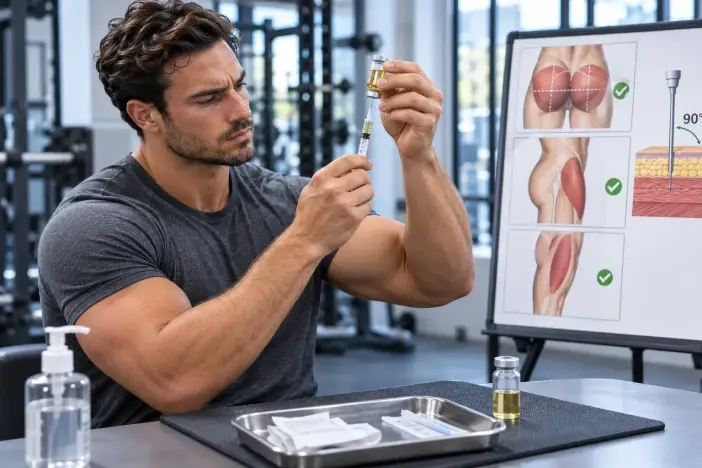
An injection done badly is not just uncomfortable. It is a depot of oil sitting where it should not be, a lump that takes weeks to clear, or in the worst case an infection. The technique itself is simple, and most of what goes wrong comes from skipping the boring parts: clean hands, the right site, slow pressure and rotation.
What the label actually says
Both approved testosterone esters carry the same core instructions. Testosterone cypionate is described as a product for intramuscular injection, it should not be given intravenously, and injections should go deep into the gluteal muscle. The label also requires periodic haemoglobin and haematocrit checks to detect polycythaemia, and notes that serum cholesterol may rise during androgen therapy.
Three things follow from that. The route is intramuscular, not into a vein. The reference site is the gluteal muscle. And the monitoring is part of the treatment, not an optional extra. The enanthate label follows the same pattern.
Before the first pin
The first injection should be taught by someone who does them: a nurse, a pharmacist or a doctor. Watching a video is not the same as having a person put the needle in your hand and correct your angle. After that, doing it yourself is routine.
What you need each time:
- Clean, dry surface and washed hands. Not a rushed job in a bathroom after training.
- Alcohol swabs for the vial top and the skin, and a fresh needle for drawing and for injecting if your setup allows it.
- A syringe matched to the volume you are drawing, so the markings mean something.
- A sharps container. A used needle in a bin is a hazard to everyone in the house.
Choosing a site
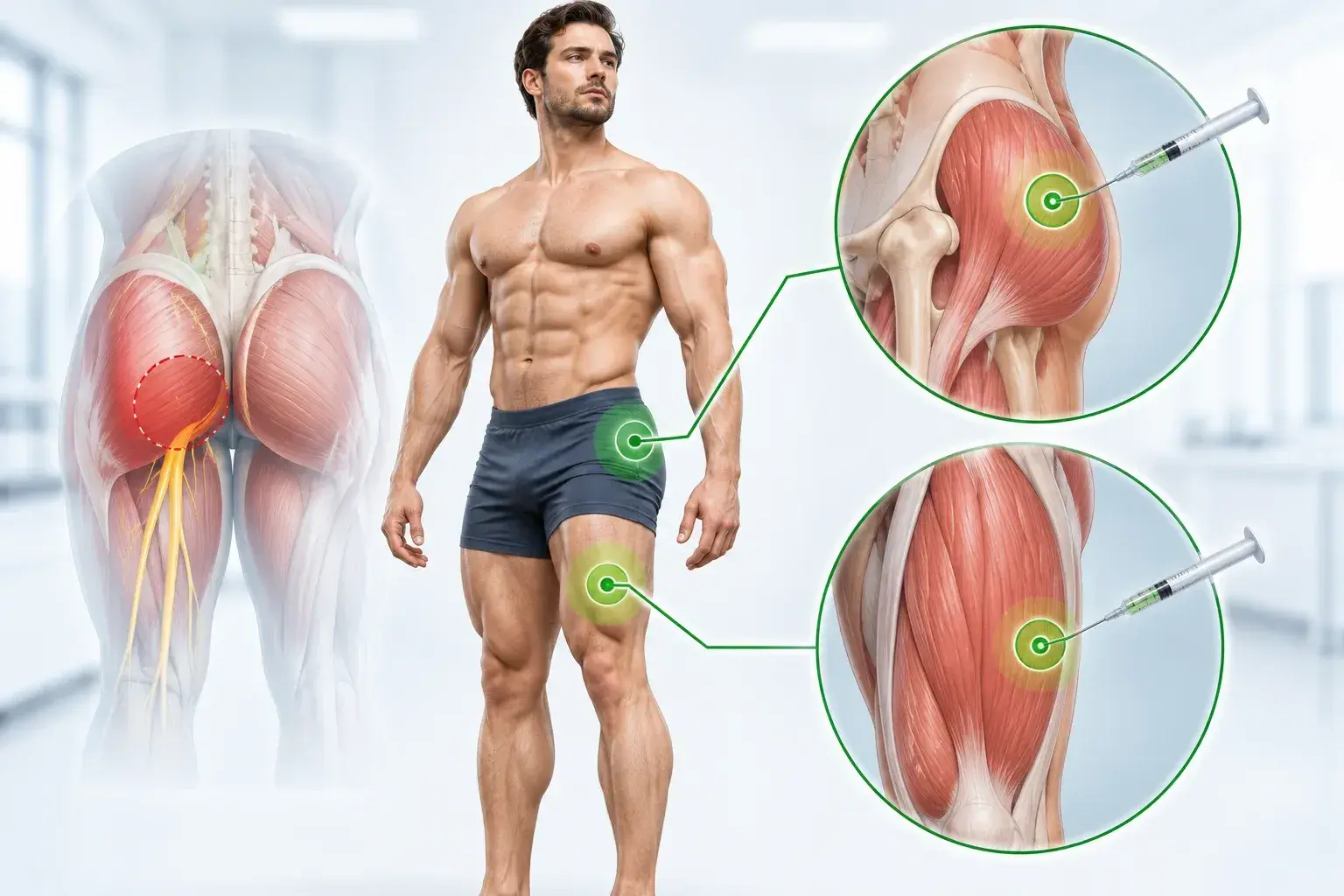
The label names the gluteal muscle, and that remains the standard site for oil-based esters because the muscle is large and takes volume well. Three sites are used in practice:
| Site | How it feels | Notes |
|---|---|---|
| Gluteal, upper outer quadrant | Least painful for most | The label site. Volume capacity is the highest, which matters for 2 to 3 ml of oil |
| Ventrogluteal, side of the hip | Similar to gluteal | Easier to reach and further from the sciatic nerve than the classic gluteal spot |
| Vastus lateralis, outer thigh | More feeling during and after | Easy to self-inject; good for smaller volumes |
| Deltoid, upper arm | Most sensitive | Small volumes only; hard to do alone with an oil |
Two anatomical rules matter more than any technique tip: stay away from the middle of the buttock where the sciatic nerve runs, and never inject into a site that is red, swollen, bruised or numb.
Step by step
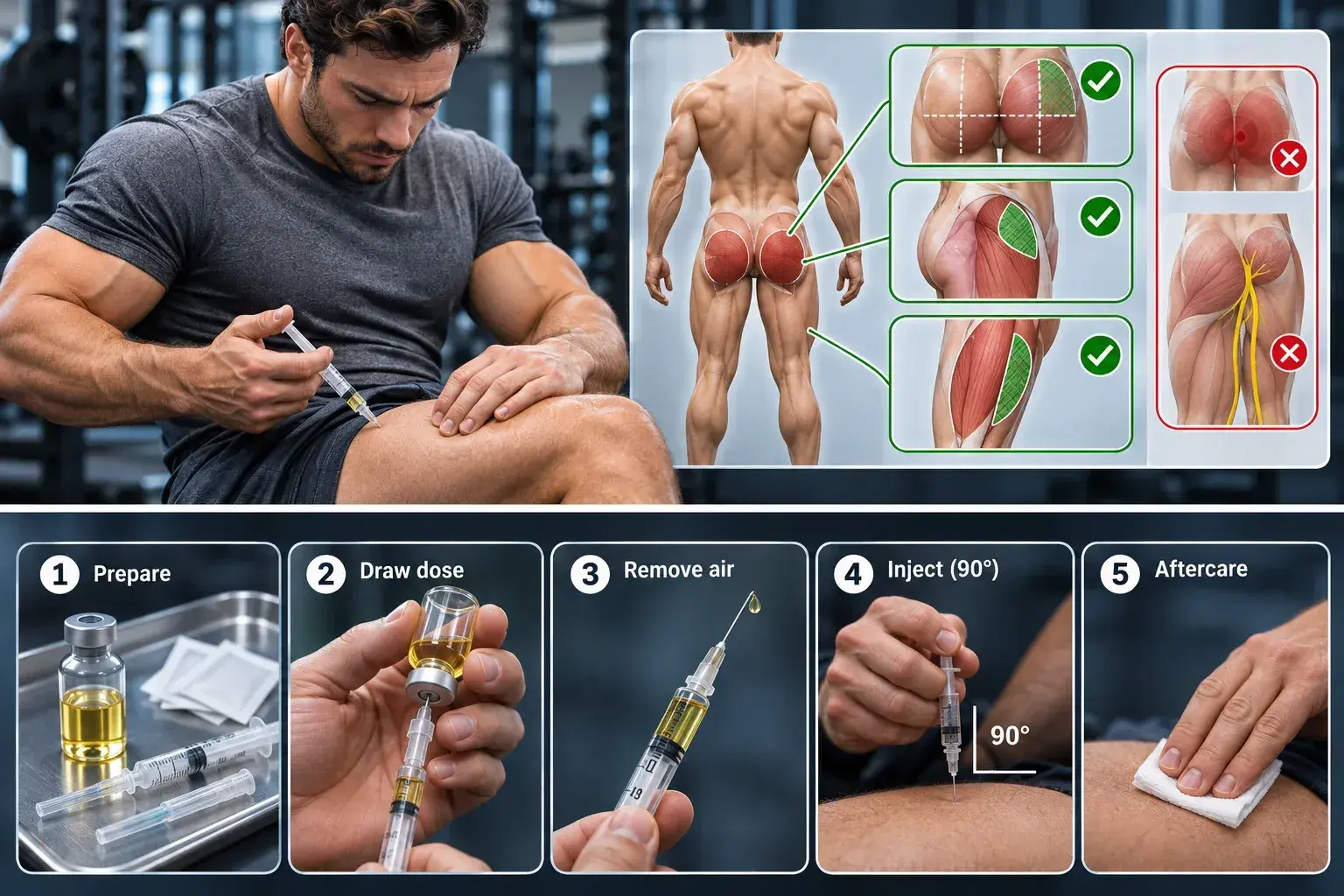
- Wash hands, prepare everything within reach, and check the vial: correct compound, correct strength, no cloudiness or particles, expiry in date.
- Swab the vial top and let it dry. Swab the skin and let it dry too; alcohol needs time to work, and injecting into wet skin stings.
- Draw air into the syringe equal to your dose, inject it into the vial, then draw the oil. Air pressure makes thick oil easier to pull.
- Swap to a fresh needle if you used a draw needle. Change it if it touched anything.
- Remove air from the syringe by pushing oil up until a drop appears at the tip.
- Stretch the skin flat or pinch the muscle depending on your body composition, and insert at 90 degrees in one confident motion. Slow insertion causes more pain than a quick one.
- Pull back nothing unless your clinician told you to. Inject slowly: oil takes 30 to 60 seconds per ml. Pressure pain means you are going too fast.
- Withdraw, press with a dry swab for a few seconds without massaging hard, and dispose of the needle in the sharps container immediately.
Rotation and scar tissue
Injecting the same spot every week builds scar tissue. It feels firmer over time, oil goes in harder and eventually the site stops absorbing properly. Rotate between sites and sides, and give one spot at least a week before returning to it. Keep a note on your phone if you cannot remember which side you used.
What goes wrong
Most problems are minor and settle: a small lump, a bruise, tenderness for a day or two. A warm compress and time usually handle them. Some signs are not minor:
- Spreading redness, heat, increasing pain or fever: possible infection, needs medical care the same day.
- Sudden shortness of breath or a coughing fit right after injecting: stop, sit down and get medical help. This is rare but it is not something to wait out.
- Numbness, tingling or shooting pain down the leg during the injection: the needle is near a nerve. Withdraw, do not push further.
- A lump that grows or stays for weeks: have it looked at.
Subcutaneous instead
Small volumes of testosterone are sometimes given subcutaneously, with a short insulin-type needle into fat rather than muscle, and some clinics use this for frequent low-dose schedules. The approved labels describe the intramuscular route, so this is a deviation from the label rather than the default. If it interests you, it is a conversation with a clinician, not a decision to make from a forum thread.
What to check afterwards
The label asks for periodic haemoglobin and haematocrit, because red cell mass rises with androgen exposure, and it warns that cholesterol may rise. In practice that means a baseline panel before you start, a check at 4 to 6 weeks and another at 8 to 12 weeks. What each marker means and how to time the draws is covered in our guide to blood work on cycle.
Injection technique does not change those numbers; only dose, ester and duration do. If haematocrit keeps climbing, the answer is not a different injection site.
Frequently Asked Questions
Sources
- DailyMed. Testosterone cypionate injection, USP CIII, prescribing information. label - intramuscular route, deep gluteal injection, not for intravenous use, periodic haemoglobin and haematocrit checks, cholesterol warning.
- DailyMed. Testosterone enanthate injection, solution, prescribing information. label - same intramuscular and gluteal instruction.
- Bhasin S. et al. Effects of graded doses of testosterone on erythropoiesis in healthy young and older men. J Clin Endocrinol Metab 2008. PMID 18160461 - dose-dependent rise in haematocrit, which is why monitoring follows the dose.