
Nov 24, 2026 · 7 min read
Testosterone Cypionate vs Enanthate: What Actually Differs
Best Anabolic Steroids
Independent research & quality review desk
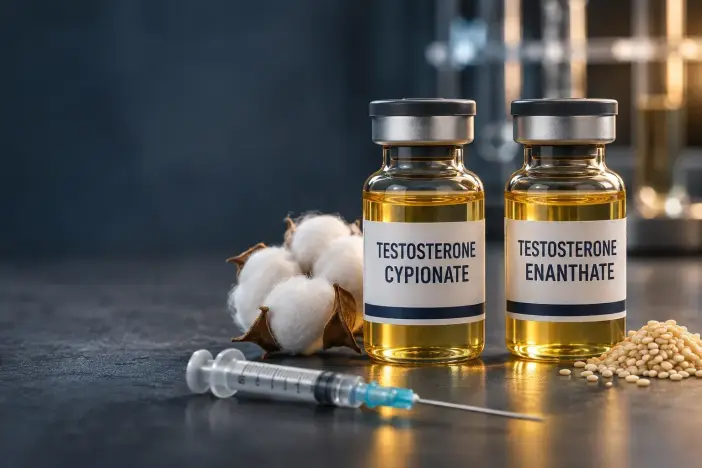
This is the least dramatic comparison in the whole catalogue, and that is the point. Testosterone cypionate and testosterone enanthate are the same hormone with two different esters attached, and the approved labels describe them in almost identical language. The differences that matter in practice are the carrier oil, the preservative and what is actually on the shelf when you need it.
What actually differs
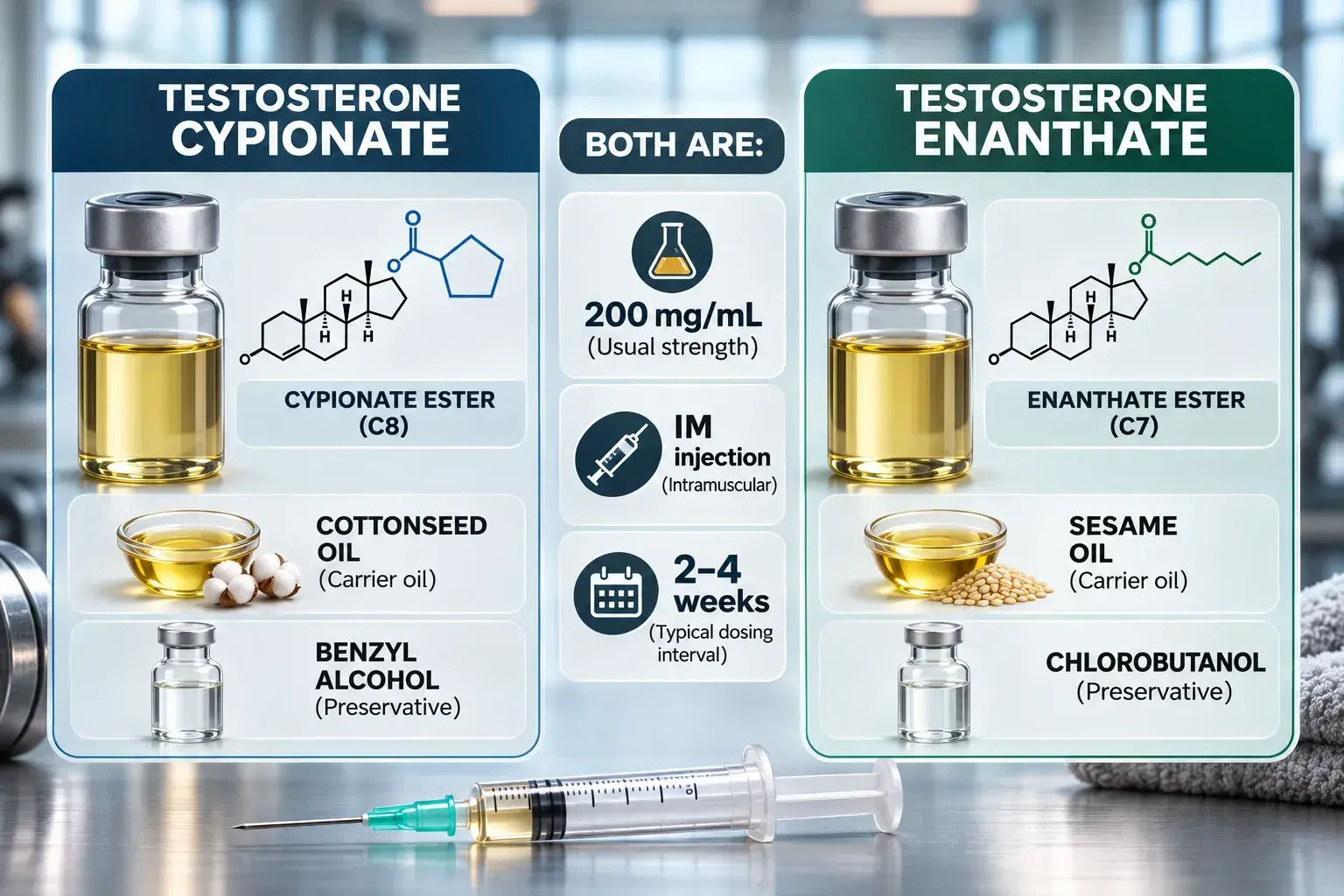
Both products are 200 mg per ml solutions for intramuscular injection. The ester is the only structural difference, and it changes what the oil carries:
| Property | Testosterone cypionate | Testosterone enanthate |
|---|---|---|
| Ester | Cypionate, a longer cyclopentylpropionate chain | Enanthate, a straight seven-carbon chain |
| Carrier oil, per label | Cottonseed oil, 560 mg per ml | Sesame oil |
| Preservative, per label | Benzyl alcohol | Chlorobutanol |
| Other excipients | Benzyl benzoate 0.2 ml per ml | None listed beyond oil and preservative |
| Labelled dosing interval | Every 2 to 4 weeks | Every 2 to 4 weeks |
| Storage, per label | 20 to 25 C, protect from light | 20 to 25 C, warm and rotate the vial between the palms before use |
Read that table twice: the dosing interval is the same, the strength is the same, the route is the same. Anyone claiming one of these is a fundamentally different drug is selling something.
What does not differ
Both labels specify intramuscular use only, warn against intravenous administration, and direct the injection deep into the gluteal muscle. Both state that testosterone in plasma is about 98 percent bound, mostly to a binding globulin, with roughly 2 percent free, and that about 90 percent of a dose is excreted in the urine as conjugates.
Both also carry the same monitoring expectation: periodic haemoglobin and haematocrit to detect polycythaemia, and awareness that serum cholesterol may rise during androgen therapy. That monitoring requirement is about the hormone, not the ester, so switching esters does not change what you need to check. Our guide to blood work on cycle covers the panel and the timing.
Release speed and peaks
Neither label publishes a half-life for the ester, and that is worth saying plainly because the internet is full of confident numbers. What the labels do say is that the ester is absorbed slowly from the lipid phase, which is why a two to four week interval is described as acceptable.
In practice both esters behave as long-acting depots. Cypionate's ester chain is slightly heavier, so per milligram it carries marginally less testosterone than enanthate, and in theory it releases a little more slowly. At the doses people actually use, that difference is smaller than the variation between two individuals, between two injection sites, and between two vials.
If you want to know your own peak and trough, the answer is measurement, not theory: total testosterone drawn at a fixed time after injection, on the same ester, twice. That tells you more than any comparison table.
How to choose
Three practical criteria, in order of importance:
- Carrier tolerance. Cottonseed and sesame are different oils, and some people react to one and not the other: a swollen, itchy site that repeats on the same product is a carrier problem, not a technique problem.
- What is actually available and verified. A product with a batch certificate of analysis beats a theoretically preferable ester with no documentation.
- Injection frequency you will actually keep. Both esters allow a wide interval, but if you prefer smaller, more frequent injections, the shorter of the two suits that habit slightly better.
Price per milligram is a valid fourth criterion, though in practice the difference is small and the risk of buying an unverified product to save a few percent is not worth it.
Switching between them
Because both are testosterone with a long ester, switching does not require a dose conversion ritual. Keep the same milligram amount per week, keep the same schedule, and expect a short overlap period while the old ester is still releasing.
What does change is your injection experience: a different oil can feel different for the first few shots. Note the site and the product, so if a lump appears you know which variable moved.
Storage and handling
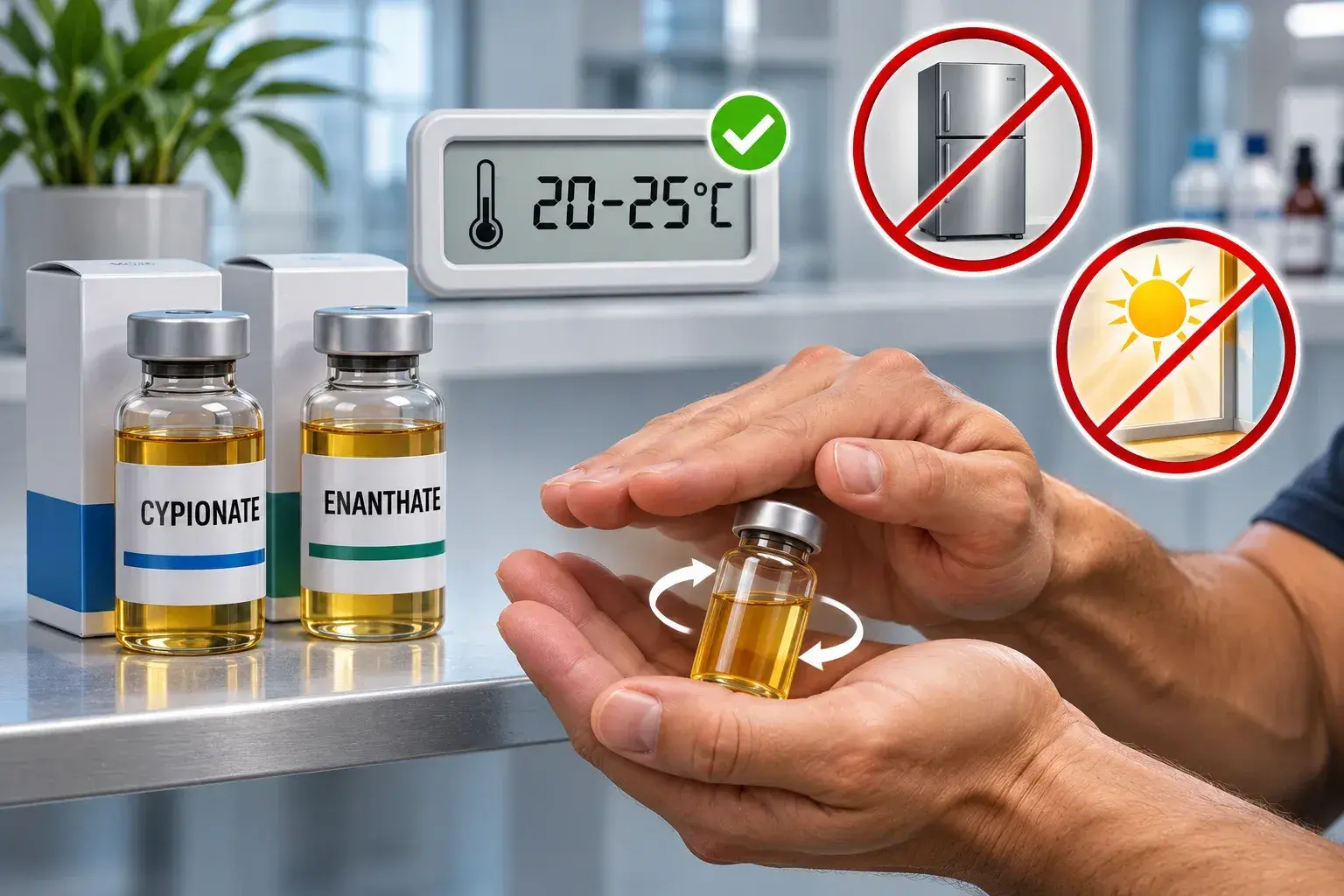
The labels are specific and both say the same thing about temperature: 20 to 25 C, protected from light, in the carton until use. Refrigeration is not required and, for an oil-based product, not helpful.
Enanthate adds one instruction that cypionate does not: warming and rotating the vial between the palms before drawing. That is about viscosity, not sterility. Do not microwave it, do not put it in hot water, and do not shake it into foam.
Check the vial before every draw: correct compound, correct strength, no particles, no cloudiness, expiry in date. Our guide on how to inject testosterone covers the rest of the routine.
Frequently Asked Questions
Sources
- DailyMed. Testosterone cypionate injection, USP CIII, prescribing information. label - 200 mg/ml, cottonseed oil, benzyl benzoate and benzyl alcohol, two to four week interval, storage 20 to 25 C, haematocrit and cholesterol monitoring.
- DailyMed. Testosterone enanthate injection, solution, prescribing information. label - 200 mg/ml in sesame oil with chlorobutanol, same two to four week interval, warming and rotating the vial before use.
- Bhasin S. et al. Effects of graded doses of testosterone on erythropoiesis in healthy young and older men. J Clin Endocrinol Metab 2008. PMID 18160461 - why haematocrit monitoring follows the dose rather than the ester.