Best Anabolic Steroids

Press Enter to search the full catalog.

US Domestic discreet shipping
Third-party batch tested
HPLC & MS verified purity
Trusted Anabolic Manufacturers Only
US Domestic discreet shipping
Third-party batch tested
HPLC & MS verified purity
Trusted Anabolic Manufacturers Only
Back to all products
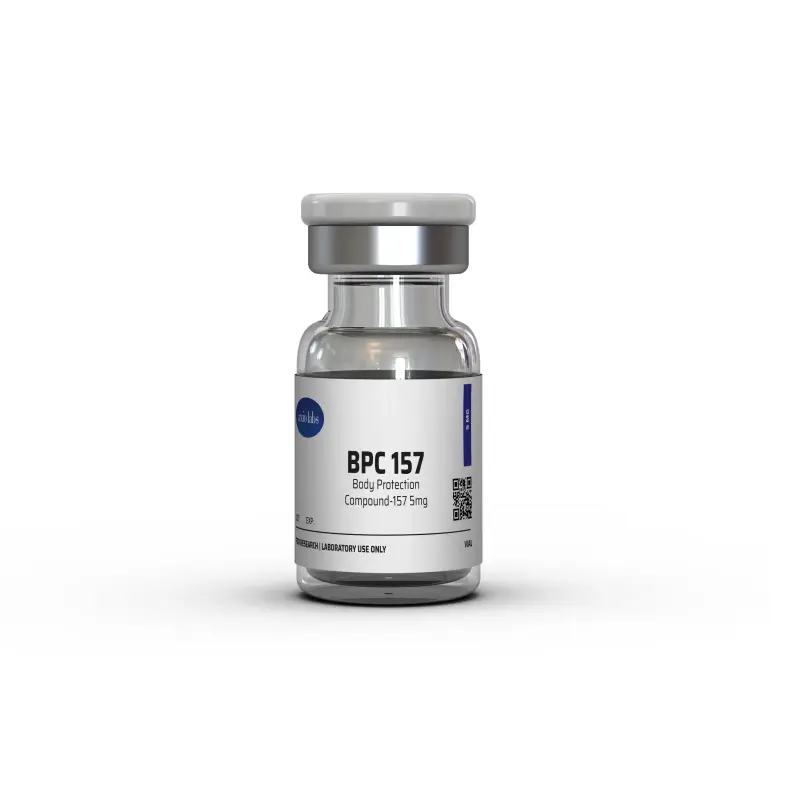
BPC 157 Repair Peptide - Axiolabs

Axiolabs

BPC 157 Repair Peptide - Axiolabs

Injection · 5mg · vial

Out of stock
CompoundBPC-157
ClassResearch peptide
Half-life7.9-30 minutes in rats
DetectionWADA S0, banned
Liver toxicityNot established
Water retentionNone
A lyophilised vial of a fifteen amino acid fragment of a gastric protein. It is a research material rather than a medicine: the published activity comes almost entirely from animal work, no human pharmacokinetic profile is fixed, and the peptide is named outright on the WADA list of substances that are not approved for human use.
BPC 157 Repair Peptide - Axiolabs
Order Now, Ships Today
Quality First

All products are manufactured under strict quality standards and independently tested before release. By purchasing, the buyer agrees to use these products in compliance with all applicable laws.

Buy BPC 157 by Axiolabs at Best Anabolic Steroids. The vial is a lyophilised powder that is mixed with bacteriostatic water before use, and it holds one of the most discussed repair peptides in the research market: a synthetic chain of fifteen amino acids modelled on a fragment of a protein found in gastric juice.

It is worth being plain about the evidence before anything else. A systematic review located thirty-six studies on this peptide, thirty-five of them preclinical and only one in humans, so what follows describes laboratory and vendor reference data rather than a treatment plan. Nothing here is approved by any regulator for human use, and in sport the substance sits in the S0 class of non-approved agents.

Product Overview

The sequence is short and stable, which is why it survives conditions that destroy larger peptides: reports describe it remaining intact in human gastric juice for more than twenty-four hours and stable in urine for four days. Its recorded actions in animal models cluster around tissue repair - faster wound closure, reduced inflammatory signalling, support for new blood vessel formation and, in some work, a rise in growth hormone receptor expression.

What stands out is how fast the compound disappears from circulation. Measured elimination is between about eight and thirty minutes in rats after intravenous or intramuscular dosing, and no human figure is published at all. That extremely short life is the reason researchers and users speak about local rather than systemic effect, and it is also why the material is handled as a laboratory item with careful cold-chain practice instead of an off-the-shelf medicine.

Dosage Protocol

There is no approved dose, so the ladder below is a restatement of vendor and reference figures for research use. Amounts are tiny and are measured in micrograms, which is why reconstitution arithmetic matters more here than in any steroid card.

Entry point 250 mcg per day subcutaneously for one to two weeks, starting at the low end
Middle range 250-500 mcg per day for two to four weeks, often split across two injections because clearance is so quick
Upper range 500 mcg per day and above, used in blocks; beyond that there are no human data and the area is simply research
Women No separate female protocol appears in the sources; none is confirmed
Route Subcutaneous, with oral routes appearing in the research literature

Reconstitution arithmetic

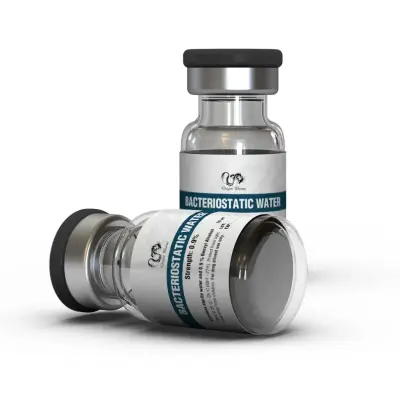
A 5 mg vial drawn up with 2 ml of bacteriostatic water gives 2.5 mg per ml, so 0.1 ml is 250 mcg, which reads as 10 units on a U-100 insulin syringe. A 10 mg vial with the same 2 ml gives 5 mg per ml, and the same 0.1 ml then carries 500 mcg. Keeping the vials, the water volume and the syringe units written down in one place removes the commonest mistake in this category.

Suggested Protocols

The peptide is used in short repair blocks, and the practical decisions are the amount, the site and how the mixed vial is kept. Rotating injection sites and working with clean technique matter more than small differences in dose, because the local reaction is the most frequently reported event.

Repair block
Two to four weeks, injected close to the area of interest in most protocols

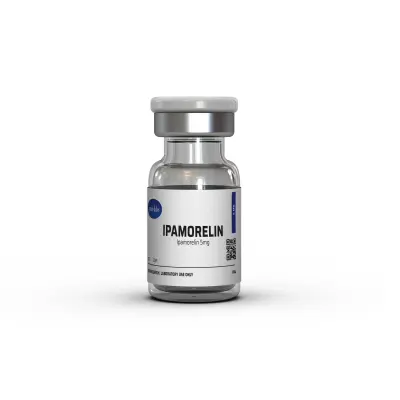
Because it is a non-hormonal peptide, it sits outside the usual cycle logic: there is no base to add, no aromatase inhibitor to plan and no recovery drug to take afterwards. Users who pair it with other material in the same catalogue generally do so for separate reasons - a growth hormone product such as AxoTropin for a different goal entirely, or an anti-estrogen like Arimiplex as part of a steroid cycle that happens to overlap.

For the same reason, most readers arrive here in the middle of a heavier plan. The Axiolabs shelf covers that side of the kitchen as well: Testaplex E 250 as a base, Exeplex when estradiol needs managing, and the recovery pair Tamoxiplex 20 and Clomiplex 50 for the end of a cycle. None of them interacts with the peptide; they simply belong to the plan the peptide was added to.

What to Expect

  • The time course is the weakest part of the evidence. Animal models show accelerated healing, but no human timeline is established, so any window quoted for people comes from user reports rather than from trials.
  • Effects are described as local. With circulating levels gone within half an hour, the working assumption in the literature is a local action at the site of administration rather than a systemic one.
  • Inflammation markers fall in laboratory work. Reductions in pro-inflammatory signalling are the most consistent finding across the preclinical material.
  • Nothing is expected from a single injection. Blocks in the references run from one to four weeks, and short courses are the cautious choice given the data gap.
  • Human safety data are thin. Reported events are mostly local, but the absence of trials is the real limitation, not a clean safety record.
  • Competitive status is settled. The substance is prohibited in sport under the S0 category covering agents with no approval for human use.

Side Effects and Management

Injection site reactionRotate sites, keep the technique clean and expect this to be the most common event. Frequent and local.
Dizziness or nausea reported by usersReduce the amount and observe. Reported anecdotally rather than from trial data.
Infection or abscess from poor techniqueSterile handling, single-use needles, and no reuse of a mixed vial beyond its shelf life. A risk whenever technique slips.
Unknown long-term profileKeep blocks short and track anything unusual. The honest position is that the data do not exist.
Interaction data absentTreat combinations as untested and tell a clinician about every compound in use. No interactions are described in the sources.

After the Course and Follow-Up

Post-cycle therapy does not belong on this card. The peptide works on local tissue signalling rather than through the hypothalamic-pituitary-gonadal axis, so it does not suppress natural testosterone production and there is no rebound to manage with a SERM. The follow-up that matters here is practical rather than hormonal.

At the endStop after the planned block; the references describe courses of one to four weeks rather than continuous use
MixingLyophilised powder is stored cold, and once mixed the solution is kept at 2-8 C and used within about a month
Do not freezeThe dry powder is not frozen, and repeated freeze-thaw cycles on the mixed solution are avoided
TrackingNote the site, amount and date of each injection, because the only reliable record of a research peptide is the user's own log
Between blocksTake a break of comparable length before repeating; there is no validated continuous schedule

Bacteriostatic water and the wider range are listed under the Axiolabs range on Best Anabolic Steroids, alongside support items such as Tamoxiplex 20 for anyone who is running a steroid cycle at the same time.
This page is educational and laboratory reference material. The Axiolabs BPC 157 vial is presented as research-grade material supplied for experimental work, not as a drug and not as a treatment for any medical condition. The amount figures restate published and vendor reference data for the peptide rather than a clinical recommendation. Nothing here should be taken as medical advice. Keep the products away from children and follow local regulations.
What is the Axiolabs BPC 157 vial?
A lyophilised research peptide: a synthetic fifteen amino acid sequence based on a fragment of a protein present in gastric juice, also written as body protection compound 157. The powder is mixed with bacteriostatic water before use. It is a laboratory material with no approval for human use anywhere.
How does BPC 157 work in the body?
The proposed mechanism is local: signalling around tissue repair, reduced inflammatory cytokines and better new vessel formation. Circulation clears the peptide within roughly eight to thirty minutes in rats, so a systemic hormonal action is not what the models describe. No human mechanism study confirms the animal picture.
How is a BPC 157 vial reconstituted, and what does a dose look like?
Add bacteriostatic water to the powder and work out the concentration from the volume used. With a 5 mg vial and 2 ml of water the strength is 2.5 mg per ml, so 0.1 ml equals 250 mcg, which is 10 units on a U-100 syringe. A 10 mg vial with the same 2 ml doubles that, so 10 units equals 500 mcg.
What amounts do research protocols use, and for how long?
Reference figures start at 250 mcg daily for one or two weeks, move to 250-500 mcg daily for two to four weeks, and go above 500 mcg daily only in exploratory use. Splitting the daily amount into two injections follows from the very short half-life. There is no approved dose, and no confirmed protocol for women.
Does BPC 157 need to be injected near the area of interest?
Most protocols place the injection close to the area of interest, and that habit follows from the pharmacokinetics: almost nothing of the peptide is left in circulation after half an hour, so local exposure is the assumption being tested. Whether site choice changes outcomes in people is not known.
What side effects are reported?
Local reactions at the injection site lead the list, followed by occasional dizziness or nausea in user accounts. No interaction profile is described. The real issue is the missing dataset: a systematic review found thirty-five preclinical studies against a single clinical one, so absence of reported harm is not evidence of safety.
Is BPC 157 banned in sport, and is it approved anywhere?
Yes to the ban: the peptide is named under the WADA S0 category for substances without approval for human use, so it is prohibited at all times. Approval is a clear no as well - no regulator has licensed it for human medicine, and every dose quoted in this card is a research reference rather than a prescription.
How should the vial be stored, and is BPC 157 the same as TB-500?
Keep the powder cold and dry, out of light, and do not freeze it; once mixed, hold the solution at 2-8 C and use it within roughly a month without refreezing. The two peptides are not interchangeable: TB-500 is a different fragment studied systemically, while BPC 157 is handled locally, and neither substitutes for the other.

No reviews yet

Be the first to share your experience with BPC 157 Repair Peptide - Axiolabs

Log in to write a review

Complete the protocol

Stack it with

View all →
Added to cart