7 min read
What Are Anabolic Steroids: How They Work and What They Do
Best Anabolic Steroids
Independent research & quality review desk
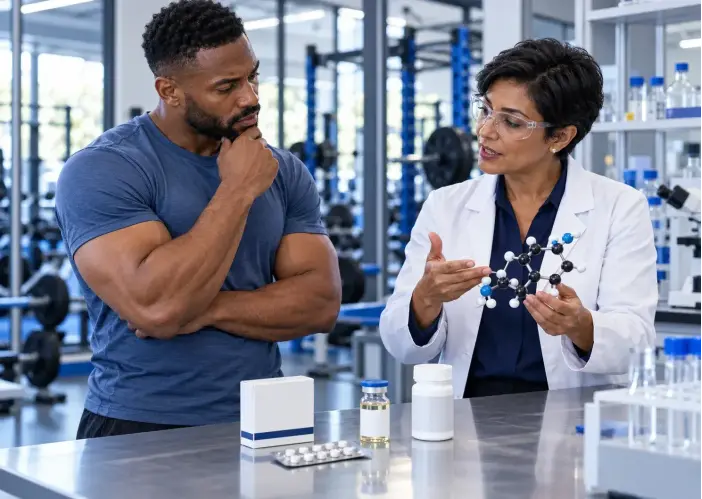
Anabolic steroids are synthetic versions of testosterone. They bind the androgen receptor, change how muscle cells read their DNA, and raise protein synthesis, which is why they add muscle when training and calories allow it. They are Schedule III controlled substances in the United States and are prescribed only for specific medical conditions.
What anabolic steroids are
Anabolic steroids, more precisely anabolic androgenic steroids or AAS, are compounds structurally related to testosterone. The name describes their two effects: anabolic means tissue building, androgenic means masculinising. Testosterone itself does both, and every synthetic version moves the balance between the two in one direction or another.
They are not the same as corticosteroids. Cortisone and prednisone act on inflammation through a different receptor and have nothing in common with muscle growth, even though both groups are called steroids in everyday speech.
- Anabolic steroids are synthetic testosterone analogues, not hormones the body makes in that form.
- They act through the androgen receptor, not through a membrane receptor or an enzyme.
- Every one of them suppresses natural testosterone production while it is present.
- They are Schedule III controlled substances in the United States.
- Muscle gain depends on training and calories; the drug only shifts the ceiling.
How they work
The molecule crosses the cell membrane and binds the androgen receptor inside the cytoplasm. That complex moves into the nucleus and attaches to specific DNA sequences, which changes the rate at which certain genes are transcribed. The result is more protein synthesis and a slower rate of protein breakdown in skeletal muscle, so the net tissue balance rises over weeks.
Two downstream effects matter for training. Androgens increase the number of satellite cells that can donate nuclei to muscle fibres, which raises the ceiling for growth. They also lower myostatin, the protein that limits muscle size, and raise IGF-1 signalling inside muscle tissue. None of this happens quickly: measurable changes appear over weeks, not days.
What they do to muscle
The practical effect is more lean mass and strength, and it scales with three things: dose, training, and enough protein and calories. In a calorie deficit the same drug mostly protects existing muscle instead of adding new tissue. That difference is the most misunderstood part of the subject.
| Situation | What the drug changes |
|---|---|
| Training with a calorie surplus | Faster gain of lean mass and strength than training alone |
| Training in a calorie deficit | Better retention of muscle while body weight falls |
| No training | Little to no useful muscle gain, with all of the side effects |
| Not enough protein | Blunted response; the raw material is missing |
What they do to the rest of the body
Every anabolic steroid is also androgenic and systemic. The list below is what the clinical literature reports most consistently, not a list of rarities.
| System | What happens |
|---|---|
| Cardiovascular | Rise in blood pressure, left ventricular changes, and in long-term users more major cardiovascular events and higher all-cause mortality |
| Lipids | Lower HDL and often higher LDL, most pronounced with oral 17-alpha-alkylated compounds |
| Blood | Higher haematocrit and haemoglobin, which thickens the blood |
| Hormonal axis | Suppression of LH and FSH, testicular shrinkage, lower sperm production, low testosterone after stopping |
| Liver | Elevated enzymes with oral compounds; rare but serious injury with prolonged use |
| Skin and hair | Acne, oily skin, accelerated hair loss in predisposed men |
| Psychological | Mood changes, irritability and, in a minority, dependence |
Legal status
In the United States anabolic steroids are Schedule III controlled substances under the Anabolic Steroid Control Act, which current product labelling states directly. They are legal only with a prescription for a recognised medical indication, such as testosterone replacement in diagnosed hypogonadism, and illegal to possess or distribute without one.
Possession without a prescription is a criminal offence in the US, and the same is true in most of Europe, though the specific rules and penalties differ by country. This site sells research-grade material and does not present any of it as a medicine.
What they do not do
- They do not burn fat. Some compounds change how the body looks in a deficit, but the fat loss itself comes from the deficit.
- They do not work without training. Muscle responds to load, and the drug only amplifies that response.
- They do not replace recovery. Sleep and rest matter as much on a cycle as off it.
- They are not safe because they are common. Frequency of use says nothing about the cardiovascular risk documented in the literature.
- They are not a shortcut to a physique. They raise the ceiling and shorten the timeline, and the side effect list comes with them.
Where to read next
- Anavar: dosage, results and side effects - a single oral compound, start to finish.
- Post-cycle therapy - what happens to the axis after a course and how recovery is assessed.
- Injectable vs oral steroids - why the form changes the risk profile.
- Testosterone cards and the full brand list for the products themselves.
Frequently Asked Questions
Sources
- PubMed 41898445 - structural biology and receptor signalling of anabolic androgenic steroids.
- PubMed 41303522 - molecular mechanisms of cardiovascular harm in AAS use.
- PubMed 42930597 - systematic review linking AAS use to all-cause mortality and major cardiovascular outcomes.
- PubMed 42644333 - narrative review of post-cycle therapy after androgen abuse.
- DailyMed: testosterone cypionate label - Schedule III status, boxed warning and listed adverse reactions.