Product Overview
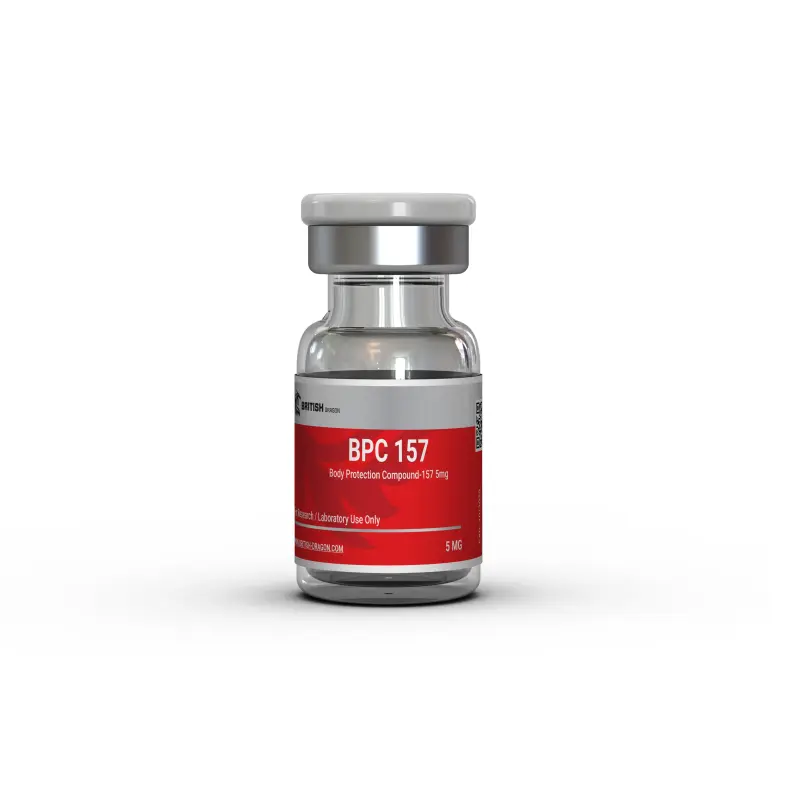
BPC 157, short for body protective compound 157, is a synthetic peptide built from fifteen amino acids and derived from a protein found in gastric juice. British Dragon supplies it as a lyophilised powder in a sealed vial for laboratory research. It is not a steroid, it is not a hormone, and it has not been approved as a medicine by any regulator, so the honest description of this product is a research material rather than a therapeutic one.
The published work on the peptide is almost entirely preclinical. A systematic review located in the reference sheet for this compound found 36 studies, of which 35 were done in animals or cell models and only one was clinical. That single clinical study is not enough to establish efficacy or a safe human dose. Reported mechanisms in the preclinical literature include accelerated tissue healing, reduced inflammatory signalling and a neuroprotective profile, but these findings come from controlled laboratory conditions and should be read as such.
Pharmacokinetics are poorly characterised in humans. In rats, elimination half-life ranged from about eight minutes to half an hour depending on the route, which is why the research literature emphasises local action over systemic exposure. Because the peptide is short-lived and unstable in the body, the practical questions for anyone working with the vial are about reconstitution, concentration arithmetic and cold-chain handling rather than about half-life planning. For catalogue context, the growth hormone product Somatrobol 100 IU is a different research item with an entirely different mechanism, and none of the hormone products stocked alongside it, such as Tamoxifen, Clomiphene or Anastrozole, has any role in a peptide research protocol.
Reconstitution and Research Amounts
Amounts below are the research references recorded on the fact sheet for this compound. They are not clinical doses, because none exist.
| Starting point | 250 mcg a day by subcutaneous injection for one to two weeks, the lowest figure in the vendor research reference |
| Common reference range | 250-500 mcg a day over two to four weeks, sometimes divided into two injections because the peptide is short-lived |
| Upper reference | 500 mcg a day and above; beyond this there is no human data at all, only animal work |
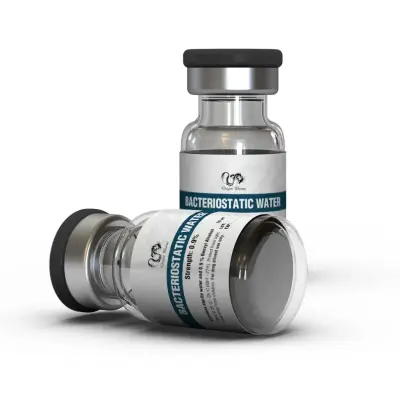
| Reconstitution | Add bacteriostatic water to the vial: 5 mg in 2 ml gives 2.5 mg per ml, 10 mg in 2 ml gives 5 mg per ml, 30 mg in 3 ml gives 10 mg per ml |
| Syringe arithmetic | On a U-100 syringe 1 unit is 0.01 ml, so 10 units equals 250 mcg at 2.5 mg per ml and 500 mcg at 5 mg per ml |
| Female | No separate female research protocol appears in the sources consulted; the reference material records no gender-specific figures |
Two practical consequences follow from those figures. The first is that the same vial can be presented at more than one strength, and the syringe reading moves with the water rather than with the powder: 5 mg in 2 ml is 2.5 mg per ml, while 10 mg in 2 ml is 5 mg per ml, so ten units drawn on a U-100 syringe carries 250 mcg in the first case and 500 mcg in the second. The second is that a half-life measured in minutes in rats is not a schedule. The published work reads the peptide as acting where it is placed rather than through lasting blood levels, and that is also why oral experiments exist at all: the pentadecapeptide is described as stable at room temperature and remains intact in gastric juice for more than a day, which is unusual for a peptide and is the reason studies have used it by mouth as well as by injection.
Suggested Protocols
The combinations below follow how reparative peptides are researched in practice. Each card opens the relevant British Dragon page where one exists, and no card implies a clinical indication.
What to Expect
All of the points below describe findings from preclinical work, since human data on efficacy is minimal.
- Tissue healing. Accelerated healing has been described in animal and cell models, which is the effect the peptide is most studied for.
- Inflammation. Reductions in pro-inflammatory cytokines have been reported in laboratory studies rather than in patients.
- Nervous system findings. A neuroprotective profile appears in preclinical data, without any confirmed human translation.
- Signalling. Increased expression of a growth hormone receptor pathway has been described in experimental models.
- Onset logic. With a half-life measured in minutes in rats, the effect is attributed to local activity rather than to lasting systemic levels.
- Evidence gap. Of the studies reviewed for the fact sheet, only one was clinical; the rest were preclinical, so claims of benefit in humans remain unproven.
- Status. The peptide is not approved by any regulator for human use and is prohibited in sport as an unapproved substance.
Side Effects and Management
Safety data in humans is thin, so the points below describe what is known and name the gaps rather than filling them.
Handling and Cold Chain
The peptide has no effect on the hormone axis, so there is no recovery step. Handling is the part that matters.