Product Overview
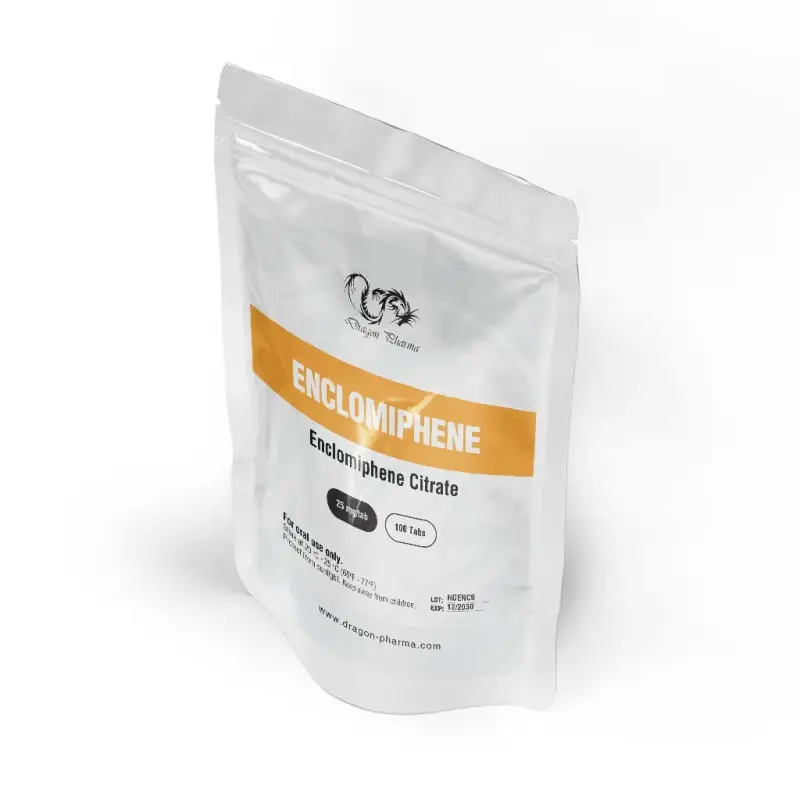
Dragon Pharma Enclomiphene Citrate is a 25 mg oral tablet and the pack holds a hundred of them. The active material is the (E)-isomer of clomifene, and that single detail explains the reason the compound is sold at all. Ordinary clomiphene is a mixture, roughly 38 percent zuclomiphene and 62 percent enclomiphene, and zuclomiphene is the more estrogenic and the more anti-gonadotropic of the two, which is why it is the half blamed for mood and vision complaints. Enclomiphene is that mixture stripped down to the isomer that raises LH and FSH.
The pharmacology is straightforward. A SERM binds estrogen receptors in the hypothalamus and pituitary and blocks the negative feedback loop, so the brain stops sensing enough estrogen and increases its gonadotropin signal. LH and FSH rise, the Leydig cells respond, and the body's own testosterone production goes up. Nothing is aromatized and no water is held, because the drug carries no androgenic or progestational activity of its own. That profile is exactly what makes it interesting after a suppressive cycle, and it is also why it is scheduled as a doping substance rather than as a cosmetic.
Two limits should be stated up front. This is not a form of testosterone replacement and it does not act when the testes cannot answer the signal, and it is not approved under this name anywhere. Clinical work on the molecule was done in hypogonadism, while most of the post-cycle popularity comes from community practice. Partners in the same corner of the catalogue include the older two-isomer Clomid and the tamoxifen product Nolvadex.
Dosage Protocol
The tablet is scored, so a half dose is practical. The figures below follow the research and community ranges recorded in the project fact base; they are not a prescription and they assume bloodwork before and after.
| Beginner | 12.5 mg a day, one half tablet, for 2-4 weeks |
| Intermediate | 25 mg a day for 2-4 weeks, sometimes stretched to 6 weeks, with gonadotropins checked |
| Advanced | 25 mg a day, occasionally split across the day, adjusted by results; going above 25 mg is not routine |
| Female | The sources for this card contain no verified female protocol, so none is given |
| Administration | Oral, once daily, no regard for food; the elimination half-life is about 10 hours and a 100-tablet pack is a very large reserve |
The pack arithmetic is worth doing before the first tablet. A hundred tablets of 25 mg is fifty days at the full step, or about a hundred days when each tablet is halved, while the window described on this card is two to four weeks, so a block uses a quarter of the bottle at most. The surplus is a supply fact and not a reason to stretch the run. Elimination takes about ten hours, which means the tablet settles at a steady level inside roughly two days of starting, so a two week block is long enough for the axis to answer the signal rather than being cut off early.
Suggested Protocols
Three ways of using the tablet are described in the sources. The first two restore the axis after suppression, and the third is the conservative option for a light oral course. Each card below opens the matching product page.
What to Expect
- First two weeks. LH and FSH move upward first, and that is visible only on bloodwork; mood and libido can swing while the axis is in transition.
- Weeks two to four. This is where studies of progonadotropins show most of the rise in the body's own testosterone.
- After the last tablet. The effect fades rather than holding indefinitely, and if the cause of the suppression is still present the axis drifts back to where it started.
- Clotting risk. Venous thrombosis is a class effect of SERMs and people with a thrombosis history are the wrong candidates at any dose.
- Sport status. The drug sits in WADA class S4 and a therapeutic-use exemption is not granted for post-cycle purposes.
- Vision. Visual disturbance is a discussed class effect of clomiphene; the project base marks it unconfirmed, so no frequency is quoted here.
- Regulatory position. There is no approved product under this name; the tablets are sold as research material.
Side Effects and Management
Because the drug is a receptor modulator rather than a hormone, its unwanted effects cluster around clotting, mood and the eyes. Rates below come from class-level descriptions, not from figures measured for this tablet.
Post-Cycle Therapy
This tablet is itself a post-cycle tool, so the plan below describes how it fits after a suppressive course and what has to be measured around it.
If estradiol itself is the problem rather than the gonadotropin signal, the aromatase route is separate: Arimidex is the usual first choice, with Aromasin and Femara as alternatives, and all of them belong behind bloodwork rather than on a fixed schedule. A shorter-acting gonadotropin option for the same window is HCG 2500 iu, and cycles that were built on Anavar 10 or Winstrol 10 still need this restart step, because even mild oral courses suppress natural output.
Reading the follow-up panel is the part most people skip. The useful comparison is against the baseline drawn before the block rather than against a laboratory reference range, and the relationship between the two hormones tells you where the limit sits: a gonadotropin signal that rises while testosterone stays flat points at the testes rather than at the brain, which is a different problem and a different conversation.