Product Overview
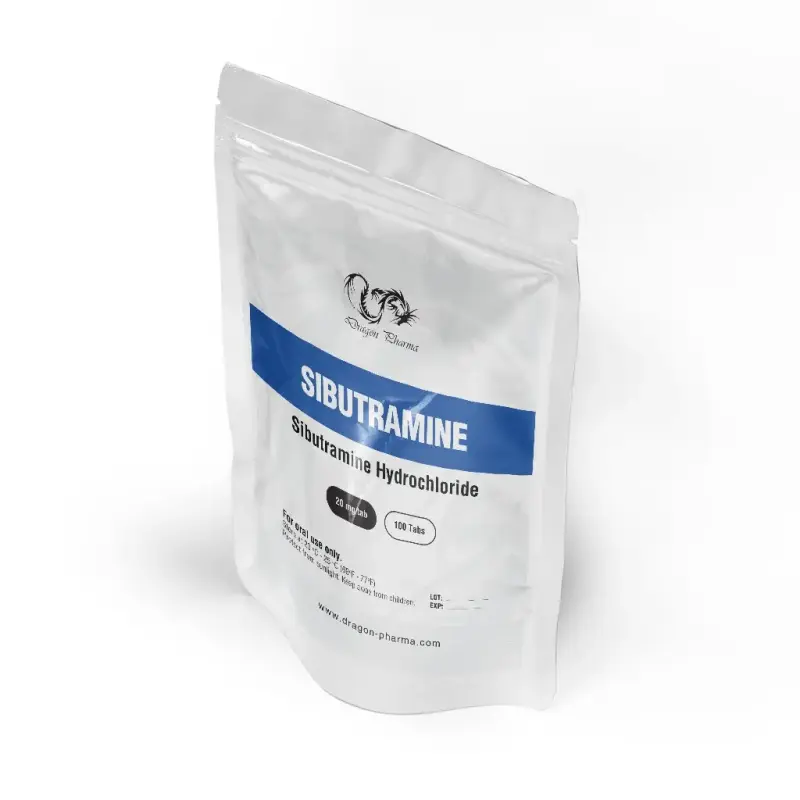
Dragon Pharma Sibutramine is sibutramine hydrochloride in 20 mg tablets, an appetite suppressant developed from the amphetamine family and classified as an SNDRI: it blocks the reuptake of serotonin, noradrenaline and dopamine, which raises the concentration of those transmitters in the synapse and reduces the drive to eat. The compound reached the market as Meridia and Reductil, was widely prescribed for obesity, and was withdrawn from the United States, the United Kingdom and the European Union in 2010 after cardiovascular events in trials came in at 11.4% against 10.0% in the control group. Packages carry 100 tablets at 20 mg; production follows the manufacturer's standard quality control, and the tablet count is confirmed on the storefront.
The pharmacology is built around metabolites rather than around the parent drug. Absorption is about 77%, plasma protein binding is about 97%, and metabolism runs through CYP3A4, producing the active metabolites M1 and M2. The parent compound has a half-life of roughly an hour, but M1 lasts around 14 hours and M2 around 16, so the practical effect extends well past what the parent figure suggests and accumulation is a genuine consideration on repeat dosing. Weight loss in the clinical data was dose-related, and the effect is pharmacological appetite reduction rather than an increase in metabolic rate.
This is a product with a narrow safety corridor. The former medical starting dose was 10 mg once daily, with a permitted step to 15 mg when weight loss was insufficient, and anything above 15 mg was not recommended on the label; the 20 mg tablet in this line sits above that ceiling, which is worth stating plainly rather than glossing over. Sibutramine is a controlled substance in the United States at Schedule IV, and its history of withdrawal means the relevant comparisons in a fat-loss plan are now the current generation of agents such as Tirze-Pep 5mg or Mazdutide rather than other stimulants.
Dosage Protocol
The table follows the historical medical labeling, because that is the only source of dosing information for this compound. It also shows where the 20 mg pack sits relative to the old maximum.
| Beginner | 10 mg once daily in the morning, the former label starting dose; medical norms described supervised use over a defined period rather than indefinite intake |
| Intermediate | 10-15 mg daily, with the step up considered only when weight loss on 10 mg was judged insufficient |
| Advanced | Above 15 mg daily was not recommended on the label; the 20 mg tablet in this line therefore exceeds the documented ceiling |
| Female | 10 mg daily, the same starting dose as for men; trials enrolled both sexes and no separate female protocol is recorded, while pregnancy and breastfeeding are a contraindication |
| Administration | Oral, once daily in the morning because of the stimulating profile, with or without food |
The morning schedule matters. Sibutramine is a stimulant in character, and a dose taken late in the day tends to cost sleep. Because M1 and M2 outlast the parent by an order of magnitude, the daily tablet builds a steady level rather than coming and going within a few hours.
Weight-Loss Protocols and Combinations
Three contexts describe how this compound was used and where it does not belong. The first is the historical medical one, and the other two are the places its cardiovascular profile makes it a poor fit.
What to Expect
- Day 1-3. Appetite drops and energy rises; dry mouth and disturbed sleep are the common early companions.
- Week 1-2. The scale moves because intake falls, with part of the early drop coming from water rather than fat.
- Week 2-6. Weight continues down while heart rate and blood pressure creep up, which is the signal that monitoring exists for.
- Week 6-12. The curve flattens into a plateau at an unchanged dose, and pressure tends to be highest in this stretch.
- Cardiovascular ceiling. The withdrawal of 2010 followed events at 11.4% against 10.0% in controls, which is why the drug is not a candidate for anyone with existing heart risk.
- Dose ceiling. The 20 mg pack is above the old 15 mg maximum, so the tablet contains more than the label ever endorsed in a single day.
- After stopping. Appetite returns, some weight comes back, and the sources describe psychological dependence as high.
Side Effects and Management
Every item below is a reason this compound left the market or stayed under supervision. Blood pressure and pulse are the two numbers that matter most, and they belong on a cuff, not in a feeling.
Discontinuation and Follow-Up
There is no hormonal recovery phase here, because sibutramine does not touch the testosterone axis. What follows is cardiovascular and behavioural monitoring.