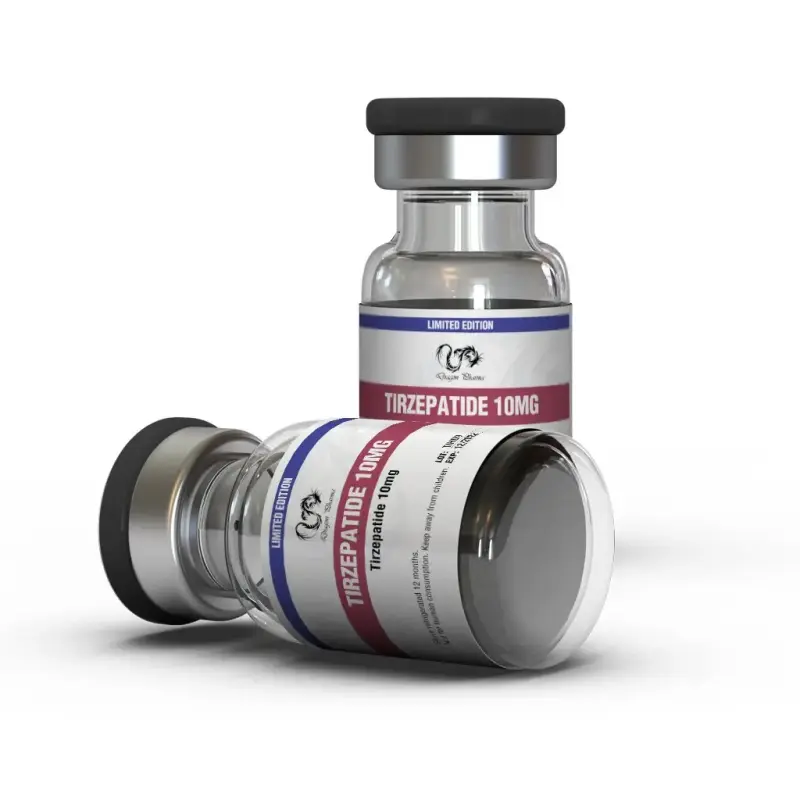
Product Overview
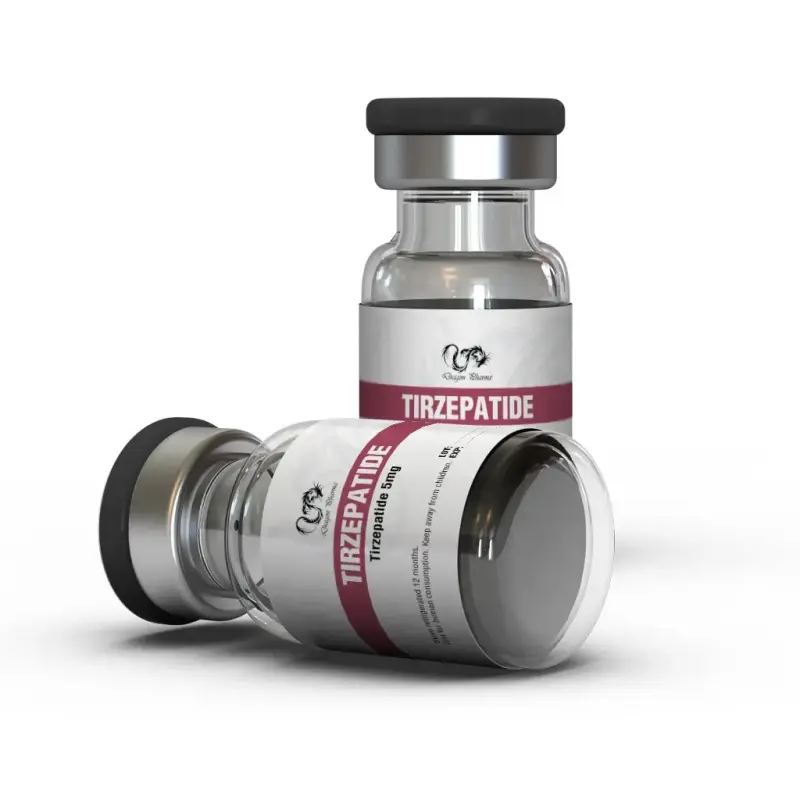
Tirzepatide is stocked on this page in two vial sizes, Tirze-Pep 5 mg and Tirze-Pep 10 mg. Both are the same 39 amino acid lipidated peptide as a lyophilised powder, and the label mass is the only thing that separates them, so the working concentration is set by how much solvent goes into the vial rather than by which one was bought.
The two sizes share one job. This is a metabolic research material studied for appetite suppression and weight reduction, dosed once a week because the molecule itself is long-acting, and titrated upward slowly across months rather than days. It suits adults already running a structured eating plan and bloodwork schedule, not someone looking for a fast fat burner and not someone who wants to add it on top of another incretin product.
Two honest notes belong at the top. The vial is a research-grade powder, not the approved injection pen, and the labelling figures quoted below come from the drug form; and after the last injection body weight returns over the following year, so the material buys time rather than a permanent result.
The Two Vial Sizes
Tirze-Pep 5 mg
The smaller vial. Two millilitres of Bacteriostatic water produce 2.5 mg per ml, which puts a 0.1 ml draw, ten units on a U-100 scale, at 250 micrograms. That maps neatly onto the 2.5 mg weekly starting step and the 5 mg step that follows it.
Tirze-Pep 10 mg
The larger vial. The same 2 ml of solvent gives 5 mg per ml, so 0.1 ml carries 500 micrograms and the higher weekly steps are reached with fewer units drawn. A bigger vial also lasts longer once mixed, which matters because the powder is reconstituted in one go.
| Tirze-Pep 5 mg + 2 ml | 2.5 mg per ml; 0.1 ml = 250 mcg = 10 units on U-100 |
| Tirze-Pep 10 mg + 2 ml | 5 mg per ml; 0.1 ml = 500 mcg = 10 units on U-100 |
| Shared by both | Same peptide, same weekly schedule, same cold chain |
Mechanism of Action
The peptide acts on two gut hormone receptors at once, GIP and GLP-1, which is where it differs from a plain GLP-1 material such as Survodutide. Signalling through both receptors slows gastric emptying, changes satiety signalling in the brain and improves glucose-dependent insulin release. The half-life of the approved form is about five and a half days, and that number is what makes a once-weekly injection workable in the first place.
Nothing in that mechanism touches testosterone production, so no recovery protocol belongs to this card. What matters instead is the titration, because the digestive tract reports every step upward and the share of people who stop climbs with the amount used.
Dosing and Escalation
Figures are the labelled steps of the approved drug and are given as reference data. The vial size does not change them.
| Beginner | 2.5 mg subcutaneously once a week for at least 4 weeks; the labelled starting step |
| Intermediate | 5 mg once a week after titration, held for 4 weeks; no faster than one increase per month |
| Advanced | 10-15 mg once a week by tolerance; the top of the SURMOUNT-1 range |
| Female | Same steps, same 2.5 mg start; no separate female protocol appears in the sources |
| Administration | Subcutaneous once a week; the long half-life sets the interval, not the dose |
Reference Sequences
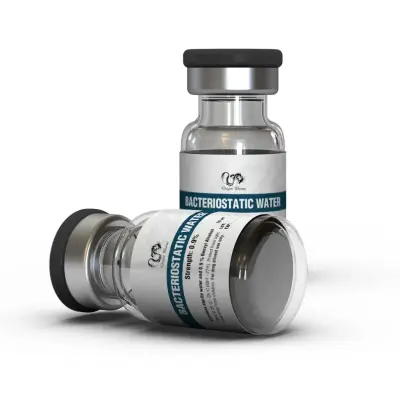
This class is run as a single agent. The items below are the support and comparison materials that usually sit around it in the catalogue.
What to Expect
- First signal. Reduced appetite is normally noticeable within the first one to two weeks at the starting step, long before the scale moves.
- Trial numbers. Over 72 weeks of SURMOUNT-1 the average body weight change reached roughly 15 percent on the 5 mg step, 19.5 percent on the 10 mg step and 20.9 percent on the 15 mg step, against 3.1 percent on placebo.
- Tolerability. Digestive reactions cluster around the weeks when the amount changes and usually settle inside one to two weeks if the pace is not accelerated.
- Not a fast burner. Weeks can pass at the starting step with little visible change; the curve is built over months.
- Material status. The vial is a laboratory-grade powder, not the approved injection, so purity, sterility and measurement accuracy rest with the user.
Side Effects and Management
Almost everything reported for this molecule is gastrointestinal and tied to the size of the step being taken. Rare class effects exist as well, and they are the reason severe abdominal pain is treated as an emergency rather than a nuisance.
Handling, Storage and Stopping
The material does not interfere with testosterone production, so there is no recovery protocol to run. What matters instead is a stable vial, a slow escalation and a plan for stopping. Related materials in the same category include AOD-9604 and L-Carnitine.
Which Vial Size to Choose
Buy by the step being run. A titration that never passes 5 mg per week consumes far less powder than one that climbs to 15 mg, and the 5 mg vial covers the low steps without leaving a half-used mixed vial in the refrigerator for weeks. The 10 mg vial is the better buy once the maintenance step is known, because fewer units per draw and fewer reconstitutions follow from it.
Either way the purchase list is short: the peptide, the Bacteriostatic water to dissolve it, and a plan for the months after the last injection. Buyers who move to the higher steps later can order the larger Tirze-Pep 10 mg separately rather than guessing at the start.