Product Overview
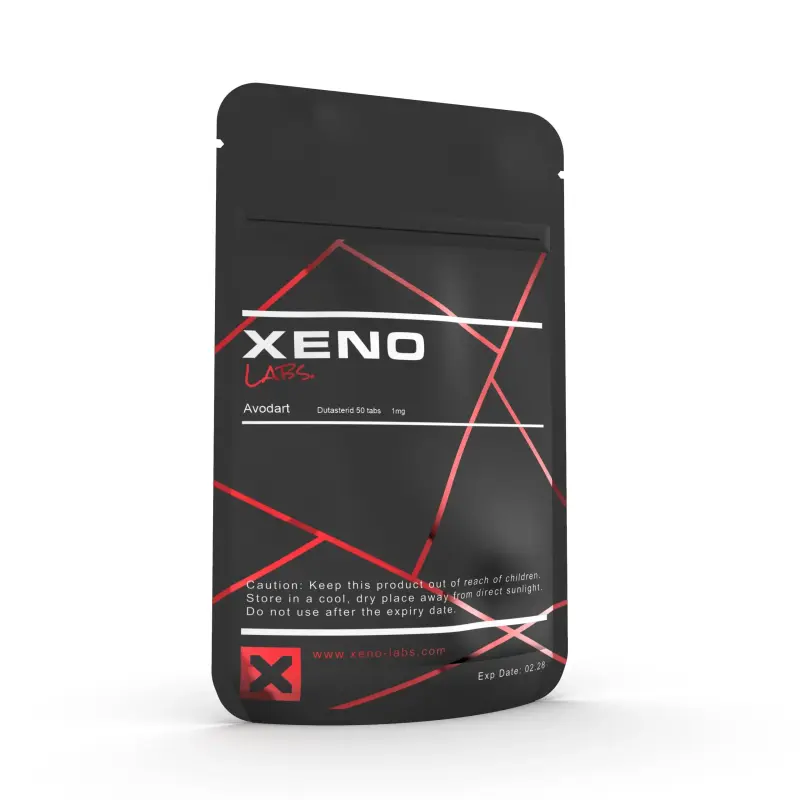
Xeno Laboratories Avodart is dutasteride, an oral inhibitor of 5-alpha reductase that blocks both the type 1 and the type 2 forms of the enzyme. That dual action is what separates it from Finasteride, which touches only the second. It is a support product in this range, unrelated to anabolic effect, and it is used for one purpose: to reduce the load of dihydrotestosterone that DHT-heavy compounds place on the hair follicle.
Two pharmacokinetic facts govern everything else. The first is that the suppression of DHT is broad and quick to establish, reaching its maximum within the first one to two weeks of daily use, and that going above the reference daily amount adds very little. The second is the half-life, which is four to five weeks, one of the longest of any oral drug in common use. The effect therefore does not stop when the tablets do. Withdrawal of the drug takes months as well, and giving blood is ruled out for half a year after the final dose, because the substance could harm a pregnant recipient.
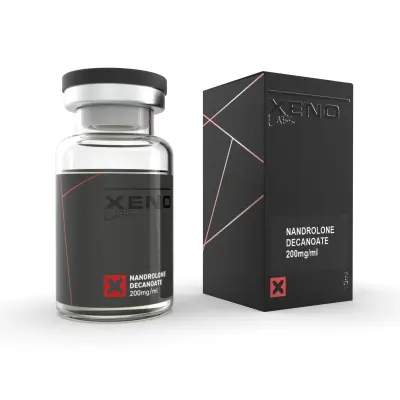
Its placement is the same as the single-type inhibitor: beside a course that generates DHT, and set apart from anything that manages estrogen. The line regularly pairs it with injectables from the testosterone series and the nandrolone series, plus the oral androgen covered under Proviron, and it is used where the family history of hair loss is strong enough to justify a longer-acting choice.
Dosage Protocol
The table reflects the reference daily amount for the substance rather than a prescription and says nothing about the strength of any single pack unit. Avodart is taken by mouth once a day, with or without food, and it is not cycled.
| Beginner | 0.5 mg a day for three to six months as the standard step |
| Intermediate | 0.5 mg a day again; a higher amount does not reduce DHT much further |
| Advanced | 0.5 mg a day long term, the amount used where the substance accumulates |
| Female | Not applicable; it is contraindicated in women of childbearing age because it disrupts male fetal development |
| Administration | Oral once daily, swallowed whole, independent of meals |
| Duration | Months of continuous use; the effect persists for weeks after the last tablet |
The single reference figure deserves emphasis because users often assume more is better. The sources describe no meaningful extra DHT reduction above 0.5 mg a day, while the accumulation of the drug in the body means any adverse effect is slow to clear. That asymmetry is the practical argument for staying at the documented amount and for treating the tablet as a long commitment rather than a short intervention.
Suggested Protocols
Three arrangements cover its use, and in each it supports a plan built around other compounds. The aim is a lower DHT load, not a switch that turns the androgen effect off.
What to Expect
- DHT falls to its lowest point within one to two weeks of daily use and then holds there.
- Shedding slows over the first months, and visible change is not judged before that point.
- Hair and prostate assessments in the research sit in a three to six month window.
- The drug leaves the body very slowly, so the effect, and any side effect, persists for weeks after the last dose.
- Sexual side effects are uncommon but not absent; in a study of 6729 men, erectile dysfunction was recorded in 9 percent of users against 5.7 percent of those on placebo.
- A regulator warning from 2011 points to a raised risk of aggressive prostate cancer, partly because the drug lowers the screening marker and hides early signs.
Side Effects and Management
Monitoring and Follow-Up
There is no post-cycle step attached to this tablet. The axis is not suppressed by it, and stopping it simply lets DHT return to its previous level over months. What it requires instead is a schedule of checks that runs longer than the course it supports.
Related pages carry the rest of that picture: Finasteride for the shorter-acting blocker, Proviron for the DHT-derived androgen, and Tamox and Clomiphene for the recovery stage that belongs to the course itself.