Best Anabolic Steroids

Press Enter to search the full catalog.

US Domestic discreet shipping
Third-party batch tested
HPLC & MS verified purity
Trusted Anabolic Manufacturers Only
US Domestic discreet shipping
Third-party batch tested
HPLC & MS verified purity
Trusted Anabolic Manufacturers Only
Back to all products
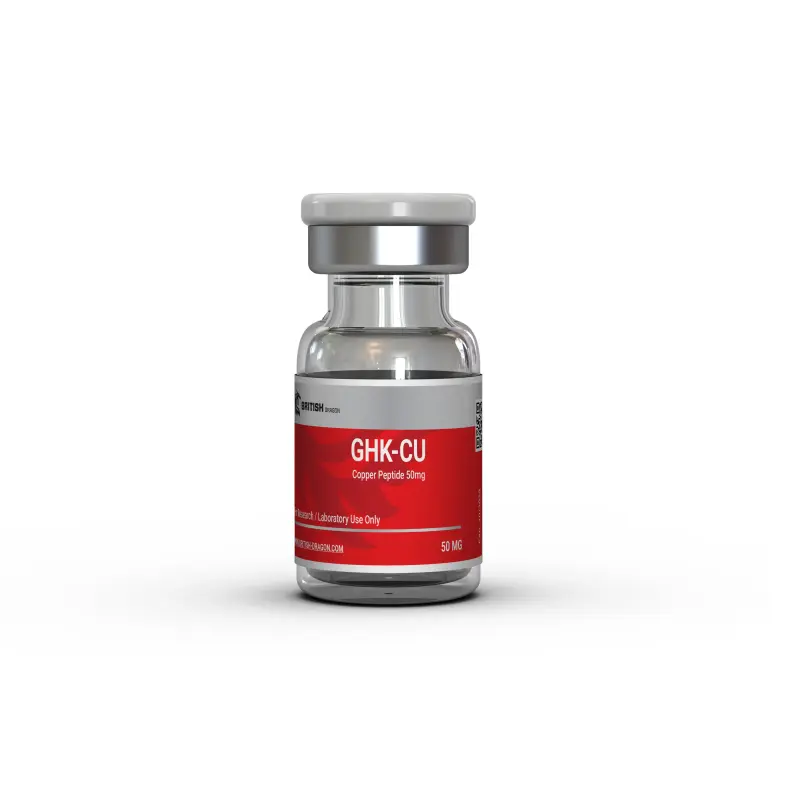
GHK-Cu Copper Peptide - British Dragon

British Dragon

GHK-Cu Copper Peptide - British Dragon

Injection · 50 mg · vial

Out of stock
CompoundGHK-Cu
ClassCopper Peptide
Half-lifeNot established
DetectionNo WADA listing found
Liver toxicityLow
Water retentionNone
GHK-Cu is a copper-binding tripeptide that occurs naturally in human plasma, supplied by British Dragon as a lyophilised powder for research in a 50 mg vial. No human half-life has been established and there is no validated human dose; almost all of the literature describes work on skin models or topical application. The copper complex is what gives a freshly mixed solution its blue-green colour. Supplied by British Dragon.
GHK-Cu Copper Peptide - British Dragon
Order Now, Ships Today
Quality First

All products are manufactured under strict quality standards and independently tested before release. By purchasing, the buyer agrees to use these products in compliance with all applicable laws.

Product Overview

GHK-Cu is a copper peptide: a three-amino-acid chain, glycyl-histidyl-lysine, bound to a copper ion in a one-to-one complex. It is found naturally in human plasma and is studied for its role in skin remodelling, collagen synthesis and inflammatory signalling. British Dragon supplies it as a lyophilised powder in a 50 mg vial, which is a research material and not an approved medicine.

The honest summary of the evidence is that nearly everything published on this peptide comes from cell cultures, skin models or topical use. The reference sheet for the compound records that no human half-life has been established and that there is no validated human dose, so the research amounts quoted later on this page are laboratory reference points rather than clinical figures. Anyone reading a confident dosage schedule for injectable GHK-Cu is reading an estimate, not a measurement.

One practical point distinguishes this vial from other peptides in the catalogue: copper. The complex is a metal-peptide, so the solution carries a distinct blue-green tint once mixed, and users with a copper sensitivity should take that seriously. Like every peptide here, GHK-Cu does not act on the hormone axis at all, which means the hormone products in the same catalogue, including Somatrobol 100 IU, Anastrozole, Tamoxifen and Clomiphene, have no bearing on how it is handled.

The chemistry is what separates this vial from every other peptide in the same section. The chain is glycyl-histidyl-lysine, three amino acids that occur naturally in human plasma, and it is supplied as a one-to-one complex with copper(II) rather than as the bare peptide chain. In that arrangement the metal travels with the molecule and the ratio is fixed at one copper ion per chain instead of being a loose addition. That is why the material is read as a metal-peptide rather than as a generic repair peptide, and why the fill is a single defined complex with a stated stoichiometry.

Reconstitution and Research Amounts

The figures below are the research reference points recorded for this compound. No validated human dose exists.

Reconstitution Adding 2-5 ml of bacteriostatic water to the 50 mg vial gives roughly 10-25 mg per ml; the supplier guidance is recorded in that range
Research amount 1-2 mg per day systemically in laboratory models, which is a research reference and not a human dose
Duration Determined by the individual study design; no validated duration exists for human use
Common route in the literature Topical application dominates the published work; data on subcutaneous use in humans is essentially absent
Stoichiometry A one-to-one copper(II) complex, which is the defining feature of the molecule
Female The sources consulted record no gender-specific protocol; the research references are not divided by sex

Two checks make the vial easier to work with. Colour is the first: a one-to-one copper complex mixed at the concentrations the supplier guidance describes is blue-green, so a pale, grey or colourless liquid signals that something in the preparation is wrong. Labelling is the second: writing the volume of water added and the resulting milligrams per millilitre on the vial takes the arithmetic out of memory, and with 2 to 5 ml of solvent going into the same 50 mg fill the finished strength can differ by a factor of two and a half.

Suggested Protocols

The arrangements below follow how copper peptides are handled in research settings. Linked cards open British Dragon pages where one exists, and none of them implies a clinical use.

Skin-model study
GHK-Cu - 1-2 mg per day in model work
Applied topically in most published work; duration is set by the study rather than by a fixed schedule
Repair research set
GHK-Cu - research amount per study design + Somatrobol 100 IU - separate research item
Stored and reconstituted separately; the growth hormone item follows its own cold-chain rules and the two are never drawn into one syringe
Catalogue navigation
Listed only because these hormone items sit near the peptide section of the site; a copper peptide has no interaction with them

Positions in this part of the catalogue are described rather than combined. GHK-Cu is the copper position, the one material in the group with a metal bound to it and the one whose literature is overwhelmingly topical, while the other reparative peptides nearby are separate molecules in separate vials drawn separately. Nothing in the sources describes this complex mixed with another peptide, and the metal itself is a reason to treat it as its own material rather than as a generic member of the repair family.

What to Expect

All points below describe findings from models and topical work, because human timelines have not been established.

  • No human timeline. The data is limited to models, where accelerated wound healing and wound contraction have been described.
  • Collagen and matrix. Stimulation of collagen and glycosaminoglycan synthesis in fibroblasts is reported in the literature.
  • Inflammation. An anti-inflammatory action is described in laboratory work rather than in patients.
  • Dosing limits. With no human half-life available, any dosing calculation rests on supplier reference points alone.
  • Safety gap. There is no separate human safety dataset for systemic use, only topical experience.
  • Colour. A correctly mixed solution is blue-green because of the copper complex; a colourless vial suggests a different product.
  • Sport status. No official WADA listing was located for this peptide, which is not the same as being confirmed as permitted, so treated as unresolved.

Side Effects and Management

Human safety data for systemic use is thin, so the items below describe what is reported and mark what is unknown.

Injection site reactionRotate the site and work aseptically; human data on frequency is limited.
Topical irritationStop applying and observe if the skin reacts. Uncommon.
No separate human side-effect profileKeep exposure short and observe; there is no validated profile to rely on.
Copper hypersensitivityDo not use where copper intolerance is known; this is the specific caution for a metal-peptide complex.
Allergic reactionStop at once and seek medical advice if signs appear. Rare.
Unverified sterilityAs a research product, sterile practice and accurate measurement rest with the user.

Handling and Cold Chain

The peptide does not affect the hormone axis, so there is no recovery phase. Storage and mixing are the parts that matter.

Powder storageKeep the lyophilised vial cold and away from light; avoid freezing the powder
Reconstituted storageRefrigerate the blue-green solution and use it within the documented window; the exact shelf life of our vial is not independently confirmed
Mixing noteSwirl gently rather than shaking, and do not combine with any product whose instructions forbid mixing
Between blocksA break is common between courses, although no validated schedule exists
Recovery stepNot applicable: GHK-Cu does not suppress the axis, so post-cycle therapy is not required

Copper is the item to hold in mind when reading the list above. A metal-peptide complex is a different proposition for anyone with a known copper sensitivity, and the topical literature is where most human experience sits, which means the systemic picture is thinner than the local one. As a research powder the vial carries no sterility guarantee for human use, so technique, dilution accuracy and written records are the user's side of the work rather than something the product supplies.
This material is published for educational and research reference purposes only. The compounds described are research-grade materials supplied for laboratory work and are not presented here as medicines or as a treatment for any condition. Dosing information reflects published clinical and reference data for the active substances, not a recommendation or a prescription. Nothing on this page should be read as medical advice. Keep all products out of reach of children and follow the regulations that apply in your country.
What is British Dragon GHK-Cu?
It is a copper peptide made of the tripeptide glycyl-histidyl-lysine bound to one copper ion. It occurs naturally in human plasma and is studied for skin remodelling, collagen synthesis and inflammation. British Dragon supplies it as a lyophilised research powder in a 50 mg vial.
What is the half-life of GHK-Cu?
No human half-life has been established, and the reference material says so explicitly rather than supplying a figure. That absence is why dosing intervals have to be borrowed from research practice instead of being derived from pharmacokinetics.
How do you reconstitute a 50 mg GHK-Cu vial?
Add 2 to 5 ml of bacteriostatic water to the powder, which gives roughly 10 to 25 mg per ml, then swirl gently and let it dissolve fully. Direct the water down the wall of the vial rather than onto the powder. Store the mixed solution in the fridge and keep handling sterile.
Why is the mixed solution blue-green?
Because it is a copper complex. The copper(II) ion bound in a one-to-one ratio to the tripeptide produces the colour, so a blue-green tint is the expected sign that the correct molecule is present. A colourless solution, or one with visible particles, is a reason to question the vial.
Is topical or injectable GHK-Cu better?
The published evidence is overwhelmingly topical, on skin models and wound studies. Subcutaneous use in humans has little data behind it, so there is no fair comparison to make. The topical route has more literature; the injectable route has convenience for research but almost no human safety record.
What research amount is used, and how long does a block run?
Model work uses roughly 1 to 2 mg per day in a systemic setting, which is a laboratory reference and not a human dose, and topical studies use their own concentrations. Duration is set by the study design, and no validated human duration exists, so short blocks with observation are the sensible default.
What are the main side effects and cautions?
Local irritation is the reported complaint, whether at an injection site or on skin. The specific caution for this molecule is copper sensitivity, since the complex carries a metal ion. There is no separate human safety dataset for systemic use, so unknowns should be treated as unknown rather than assumed safe.
Does GHK-Cu require post-cycle therapy?
No. The peptide has no effect on the gonadal axis, so it does not suppress natural hormone production and there is nothing for a SERM to restart. Recovery products have no role in a GHK-Cu study, and between blocks a simple pause is enough.

No reviews yet

Be the first to share your experience with GHK-Cu Copper Peptide - British Dragon

Log in to write a review

Complete the protocol

Stack it with

View all →
Added to cart