Best Anabolic Steroids

Press Enter to search the full catalog.

US Domestic discreet shipping
Third-party batch tested
HPLC & MS verified purity
Trusted Anabolic Manufacturers Only
US Domestic discreet shipping
Third-party batch tested
HPLC & MS verified purity
Trusted Anabolic Manufacturers Only
Back to all products
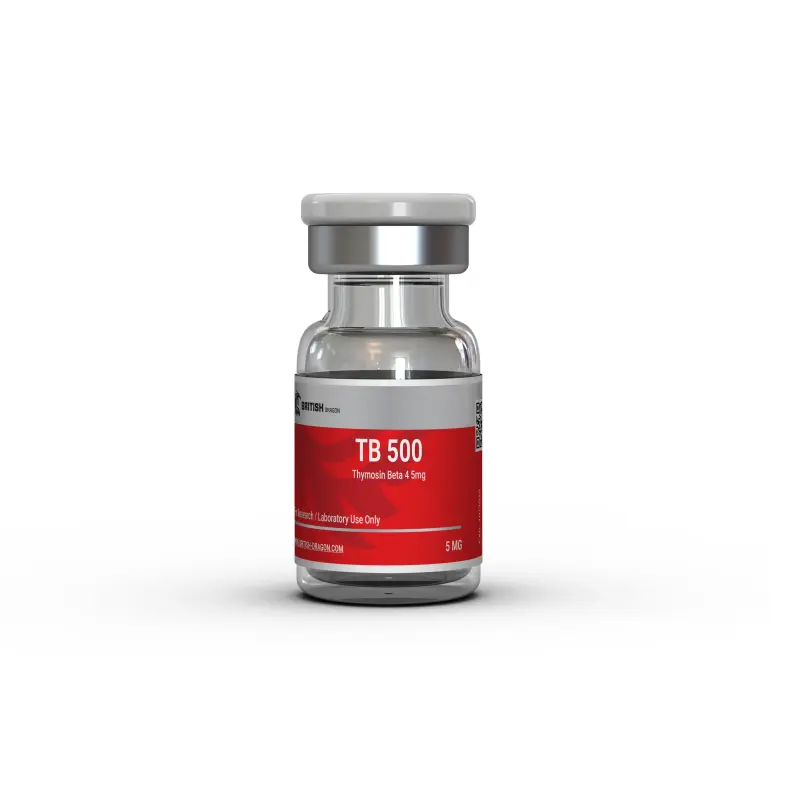
TB 500 Thymosin Beta 4 - British Dragon

British Dragon

TB 500 Thymosin Beta 4 - British Dragon

Injection · 5 mg · vial

Out of stock
CompoundTB 500 (Thymosin Beta-4)
ClassResearch Peptide
Half-lifeNot established
DetectionMetabolite in animals only
Liver toxicityLow
Water retentionNone
TB 500 is a synthetic fragment of thymosin beta 4, supplied by British Dragon as a lyophilised powder for laboratory research rather than as an approved medicine. No human half-life has been established, and the vendor states that directly, so the loading schedules below come from supplier references and not from clinical data. The peptide is prohibited in sport, where it sits in a banned class. Supplied by British Dragon.
TB 500 Thymosin Beta 4 - British Dragon
Order Now, Ships Today
Quality First

All products are manufactured under strict quality standards and independently tested before release. By purchasing, the buyer agrees to use these products in compliance with all applicable laws.

Product Overview

TB 500 is the short name for a synthetic fragment of thymosin beta 4, a protein that occurs naturally in most cells and is associated with actin regulation and cell migration. British Dragon supplies the fragment as a freeze-dried powder in a sealed vial. It is a peptide, not a steroid and not a hormone, and it holds no approval from any medicines regulator, so the accurate way to describe it is a research material for laboratory work.

The reference sheet for this compound is explicit about what is missing. No human half-life is established, no validated human dose exists, and the vendor profile states outright that the human half-life is not known. Everything in the published literature that touches on soft-tissue repair and cell migration comes from animal or cell models. That does not make the peptide useless as a research subject, but it does mean any timeline or dosage figure quoted for a human is an extrapolation rather than a measurement.

What the peptide is not is a growth hormone or a steroid, and the two are frequently confused in online discussion. The growth hormone product stocked in the same catalogue, Somatrobol 100 IU, works on an entirely different pathway, is reconstituted on its own schedule and is never mixed into the same syringe. Hormone items such as Mesterolone, Exemestane or Clomiphene have no place in a peptide study, because a peptide does not touch the hormone axis.

Reconstitution and Research Amounts

Amounts below are supplier research references, not clinical doses, because no clinical dose has been established for this fragment.

Loading phase 2.0-2.5 mg twice weekly, which totals 4.0-5.0 mg per week, during weeks one to four
Maintenance phase 2.0-2.5 mg once weekly; at this rate a 5 mg vial covers roughly two to two and a half weeks
Block length Six to eight weeks, followed by a break of comparable duration, which is a supplier recommendation rather than a clinical finding
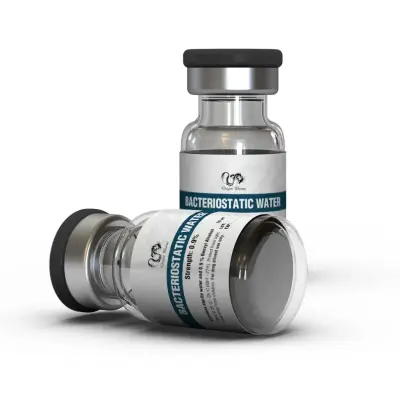
Reconstitution Add bacteriostatic water to the vial and calculate concentration from the fill volume; the arithmetic is described in the project file base for this peptide
Female The reference sources consulted give no gender-specific figures at all for this peptide
Storage of solution Once mixed, keep the vial cold and consume the contents inside the period stated for it; the shelf life of a specific vial is not confirmed by independent testing

The arithmetic of a course is worth settling before the first draw, because the vial is small against the loading schedule. Two and a half milligrams twice a week is five milligrams a week, so the loading month consumes about a vial a week on its own, and the maintenance phase that follows stretches one vial across roughly two to two and a half weeks. A six to eight week block therefore runs through several vials, which is a supply calculation rather than a remark about the peptide. Reconstitution is the other variable: concentration is set entirely by the volume of bacteriostatic water added, and nothing printed on the label changes when a different volume goes in.

Suggested Protocols

The arrangements below match how reparative peptides are handled in a research setting. Where a British Dragon page exists it is linked, and no card implies a medical use.

Loading and maintenance study
TB 500 - 2.5 mg twice weekly
Four weeks of loading, then one weekly maintenance shot for a further two to four weeks before a break
Repair research set
TB 500 - 2.5 mg twice weekly + Somatrobol 100 IU - separate research item
Handled apart from each other: different reconstitution volumes and different storage windows, and they are not combined in one syringe
Catalogue navigation
Shown only because these oral items appear beside peptide listings in the same section; they act on the hormone axis and have no research role here

Two positions are usually described rather than one. TB 500 is handled as the systemic half of a repair study, since the fragment is associated with cell migration and actin regulation, while BPC 157 is the local half and is placed near the area of interest. GHK-Cu makes a third position, a copper peptide whose evidence is mostly topical. The three are different molecules with different mechanisms, they are stored and drawn separately, and none of them substitutes for another.

What to Expect

Everything listed is drawn from supplier descriptions and animal work, since human efficacy data is absent.

  • Mobility and discomfort. Supplier text describes the first changes in movement and soreness somewhere inside the first one to three weeks.
  • Course length. The full supplier protocol runs six to eight weeks; short single shots have no established timeline at all.
  • Human data gap. Half-life, safety and effectiveness in people are all unestablished, so every timeline quoted is a supplier figure rather than a trial result.
  • Sterility and dosing. As a research product, correct handling and accurate measurement rest entirely with the user.
  • Banned in sport. The reference material records the peptide as prohibited by WADA, which matters to any tested athlete.
  • Cold chain. The reconstituted solution needs refrigeration; the precise shelf life for our vial is not confirmed by an independent assay.
  • Not interchangeable. TB 500 and BPC 157 are different peptides with different mechanisms, and neither substitutes for the other.

Detection is a separate question from prohibition. In veterinary work the N-acetylated metabolite of the fragment, LKKTETQ, has been measured in the urine and plasma of horses, which shows the peptide is broken down and that fragments can be followed in a sample; no human window of the same kind is established anywhere in the sources, so the reference sheet leaves the human figure open rather than attaching a clearance time to it.

Side Effects and Management

Human safety information is limited, so this section names what is reported and flags the gaps instead of closing them.

Local soreness at the shotAlternate the injection point and keep technique sterile; how often this occurs in people is not well documented.
Headache or mild malaiseReported by some users; lower the amount and pause if it continues. Not independently confirmed.
Theoretical proliferation concernCell-proliferation effects are a theoretical worry in an oncology context; avoid use without medical advice in that setting.
No validated human safety profileKeep any exposure short and observe; the class carries the uncertainty of all research peptides.
Local redness or itchingCold compress and a pause usually settle it. Uncommon.
Mixing riskDo not combine with products whose instructions forbid mixing in one syringe.

Handling and Cold Chain

Nothing in this vial touches the gonadal axis, so there is no recovery phase to plan. Handling is where the attention belongs.
Powder storageStore the unopened vial in the fridge and shield it from light; never freeze the powder
Reconstituted storageRefrigerate the solution and use it within the documented period, avoiding repeated freeze-thaw cycles
Concentration checkWork from the fill volume printed for the vial when calculating how much peptide each unit of solution carries
Between blocksSupplier guidance is a break of similar length between courses; there is no validated schedule
Recovery stepIrrelevant here: TB 500 leaves natural hormone output alone, so no restart protocol applies
This material is published for educational and research reference purposes only. The compounds described are research-grade materials supplied for laboratory work and are not presented here as medicines or as a treatment for any condition. Dosing information reflects published clinical and reference data for the active substances, not a recommendation or a prescription. Nothing on this page should be read as medical advice. Keep all products out of reach of children and follow the regulations that apply in your country.
What is British Dragon TB 500?
It is a synthetic fragment of thymosin beta 4, a protein found in most cells, sold as a lyophilised powder for laboratory research. It is neither a steroid nor a growth hormone, and it has no regulatory approval for human use anywhere.
Is TB 500 the same thing as thymosin beta 4?
TB 500 is a fragment of the full protein rather than the whole molecule. The fragment retains the region associated with cell migration, which is why it is the form normally sold for research. The two names are often used interchangeably online, but strictly they are not identical substances.
How do you reconstitute a TB 500 vial?
Let the water run down the side of the vial instead of hitting the powder directly, then swirl gently rather than shaking, which can damage the peptide. Once dissolved and clear, keep the vial refrigerated. Concentration is calculated from the volume added against the fill printed on the label.
What is the loading phase and how many units does a 5 mg vial give?
The supplier reference is 2.0-2.5 mg twice weekly for four weeks, then 2.0-2.5 mg once weekly. At the maintenance rate a 5 mg vial lasts roughly two to two and a half weeks. Syringe units depend on the volume of water used, so the arithmetic has to be worked out for each vial rather than assumed.
What is the half-life of TB 500 in humans?
It has not been established. The vendor profile states plainly that the human half-life is unknown, and no published figure was found for people. Any half-life quoted for this peptide in a human context is an estimate rather than a measurement, so dosing intervals are built on supplier practice alone.
Is TB 500 banned in sport?
The reference material records it as prohibited by WADA and lists it in a banned class, which is the position to assume for any tested athlete. The classification applies to the substance regardless of whether it is used for recovery, research or performance.
How does TB 500 differ from BPC 157?
They are separate peptides working through different mechanisms, and neither replaces the other. TB 500 is a thymosin beta 4 fragment associated with actin regulation and cell migration, while BPC 157 is a fifteen-amino-acid peptide derived from gastric protein. Combining them is common in research settings, but they cannot be treated as equivalents.
How do you store a TB 500 vial?
Keep the unopened lyophilised vial cold and out of the light, and do not freeze the powder. After reconstitution, refrigerate the solution and avoid repeated warming and cooling. The precise shelf life for a given vial is not confirmed by independent assay, so short storage is the safer assumption.

No reviews yet

Be the first to share your experience with TB 500 Thymosin Beta 4 - British Dragon

Log in to write a review

Complete the protocol

Stack it with

View all →
Added to cart