Product Overview
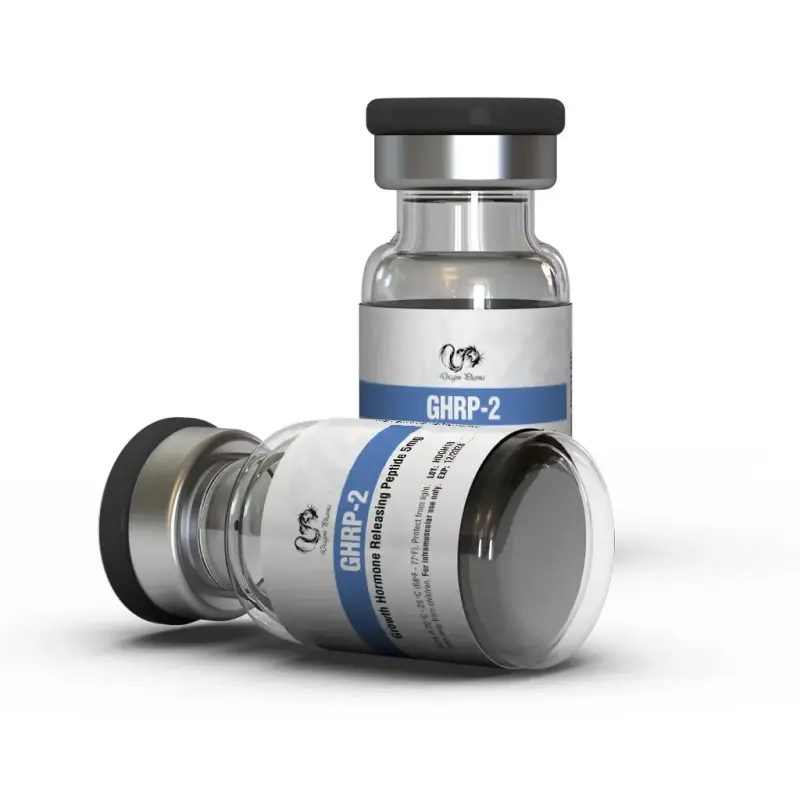
This card covers the 5 mg lyophilised vial of GHRP-2, known by the international non-proprietary name pralmorelin and developed under the codes KP-102 and GPA-748. The molecule is a short synthetic peptide with a molar mass of 817.992 that binds the ghrelin receptor, so it triggers growth hormone release from the pituitary through the GHSR pathway rather than through the releasing-hormone receptor. Sequence similarity with GHRH is absent, which is the reason the two receptor systems are studied as separate channels.
What sets pralmorelin apart inside its own group is speed. After intravenous administration the elimination half-life falls between 25.2 and 41.4 minutes, and the sources describe it as the shortest-acting secretagogue of the family. Oral absorption stays under one percent, so the pharmacokinetic work behind those figures used injected doses, and any expectation of a once-daily swallow is unsupported. Because the pulse is so brief, research arrangements rely on repeated small injections rather than on a weekly shot.
The compound also has a genuine regulatory footprint, which is unusual in this shelf. Japan approved a single diagnostic intravenous dose for evaluating growth hormone deficiency, sold as GHRP Kaken 100, and that diagnostic setting is the only licensed use recorded in the sources. Development for growth hormone deficiency and short stature reached phase II but never arrived on the market, reportedly because the growth hormone response in deficient patients came in lower than expected. The material on this page is a research vial, not that diagnostic product, and it should be compared with Ipamorelin 5mg for selectivity and with Hexarelin 5 mg for the neighbouring hexapeptide chemistry.
Diagnostic Dose and Research Amounts
There is no performance protocol for this peptide and no approved therapeutic regimen either. The rows below keep the one clinical figure in the sources separate from the arithmetic of the vial, because confusing the two is the most common error around it.
| Diagnostic step | 100 mcg intravenously as a single test dose in the Japanese assessment of growth hormone deficiency; secondary sources only, the primary label was not checked in this research pass |
| Clinical filing | A nomination document describes oral tablets and capsules of 0.5-5 mg, which is a regulatory submission and not a working scheme |
| Vial arithmetic | 5 mg diluted in 2 ml gives 2.5 mg per ml, so ten units of a U-100 syringe correspond to 250 mcg |
| Published route | Intravenous bolus in the human pharmacokinetic work; oral bioavailability is under one percent |
| Injection pattern | With clearance in tens of minutes, research writing describes frequent fractional dosing; no single protocol with figures was found in the sources |
| Female | No verified female protocol appears in the material behind this page; the male performance case is equally absent |
| Approval status | Diagnostic use in Japan only; the vial sold here is an unapproved research item |
Peptide Pairings
Three study arrangements appear repeatedly. None was evaluated as a combination in a controlled trial, so they describe how the peptide is written about rather than what has been proven.
What to Expect
- Growth hormone release. Plasma growth hormone rises sharply after an intravenous dose and the signal is gone within roughly an hour, which follows directly from a half-life of 25 to 41 minutes.
- Appetite. Acute administration reliably produces hunger and raises food intake in people. This is a confirmed human effect, not a forum anecdote.
- Stress-hormone axis. ACTH and cortisol are stimulated, which review material lists as the distinguishing feature against ipamorelin.
- Published detection methods. Assays for pralmorelin in biological samples have been published, although no detection window in urine or blood is stated in the sources.
- Development history. Phase II for growth hormone deficiency and short stature, never marketed for those indications, and the reported reason was a weaker than expected growth hormone response in patients.
- Regulatory ceiling. The only licensed use anywhere is a diagnostic injection in Japan; in sport the class is prohibited at all times under WADA S2.
Side Effects and Management
The documented profile is short and dominated by appetite and by the hormonal axis. Where a figure comes only from user reports or from the broader class, that is stated in the row.
Bench Monitoring and Stability
No post-cycle protocol applies: a growth hormone secretagogue does not suppress the gonadal axis, so there is nothing to restart when the material is stopped. The work that does matter is keeping the vial usable and logging what changes.
Dissolving any of these vials needs a solvent, and Bacteriostatic water is the standard one. For comparison arms inside the same section, Tesamorelin provides a GHRH analogue with approved-form data behind it, and MK 677 is the orally active ghrelin-receptor route that avoids injection arithmetic altogether.