Best Anabolic Steroids

Press Enter to search the full catalog.

US Domestic discreet shipping
Third-party batch tested
HPLC & MS verified purity
Trusted Anabolic Manufacturers Only
US Domestic discreet shipping
Third-party batch tested
HPLC & MS verified purity
Trusted Anabolic Manufacturers Only
Back to all products
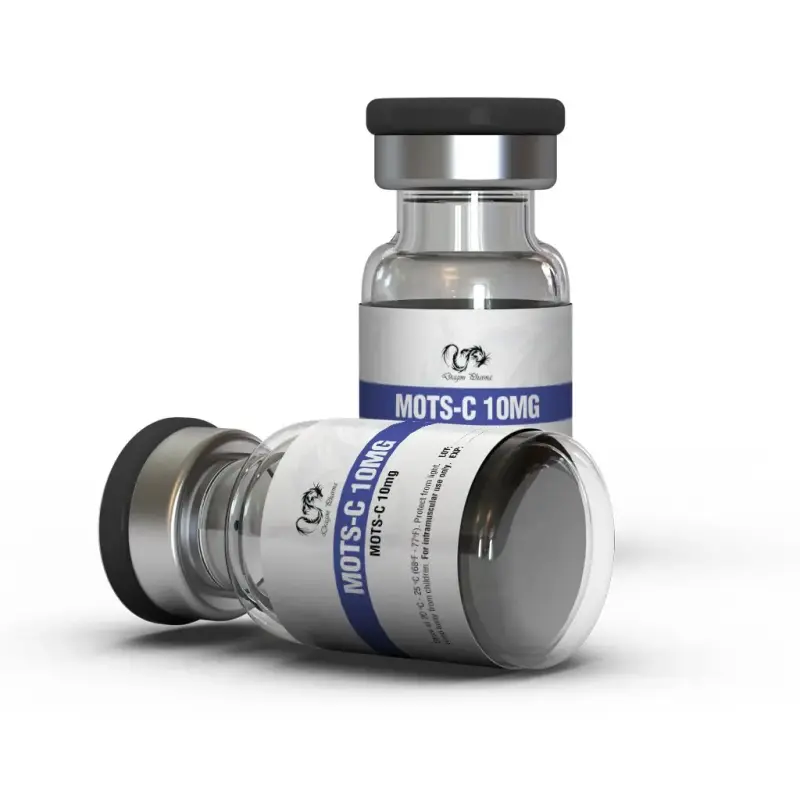
MOTS-c Peptide - Dragon Pharma

Dragon Pharma

MOTS-c Peptide - Dragon Pharma

Injection · 10 mg · vial

In stock · ships within 24h Out of stock Ships from International · U.S Domestic
CompoundMOTS-c
ClassMitochondrial peptide
Half-lifeNot established
DetectionBanned, WADA S4.4
Liver toxicityNo human data
Water retentionNone
MOTS-c is a sixteen amino acid peptide encoded by a mitochondrial gene, not an anabolic compound and not a hormone, so this card carries research amounts and mixing arithmetic instead of cycle protocols. It is prohibited in sport at all times under WADA class S4.4, and a therapeutic use exemption is described as very unlikely. Exercise is the natural trigger for the peptide, which is why laboratory write-ups keep it next to training research rather than recovery drugs.
Shipping

Not available in this combination

MOTS-c Peptide - Dragon Pharma
Order Now, Ships Today
$70.00
1
Quality First

All products are manufactured under strict quality standards and independently tested before release. By purchasing, the buyer agrees to use these products in compliance with all applicable laws.

Product Overview

Dragon Pharma MOTS-c is a single lyophilised vial holding 10 mg of a mitochondrial-derived peptide. The name abbreviates the mitochondrial open reading frame of 12S rRNA, type c, and the molecule is sixteen amino acids long, encoded by a gene that sits in mitochondrial DNA rather than in the cell nucleus. It therefore belongs to the small family of peptides the mitochondria produce themselves, which is why it occupies a research category of its own.

Researchers became interested in it because its plasma level responds to physical effort. Levels rise after exercise, and the peptide has been described as an exercise mimetic, which means the search is for some of the metabolic signalling that training produces. The published interest centres on glucose handling in skeletal muscle, where the peptide is studied as a regulator rather than as a fuel. That is the honest frame for this vial: the mechanism is metabolic and the readouts are biochemical.

Weight of evidence matters here. Almost everything available comes from mouse models and from observational work measuring the peptide in human plasma, and the animal findings describe better physical performance, less obesity and a longer healthy lifespan. Interventional human work on the peptide itself is close to nonexistent, and the single registered trial uses a fixed schedule with unpublished results. Searching for this material usually leads to the same shelf as NAD+, Epitalon 50 mg and Semax 5 mg, and the same catalogue holds GW501516 and AOD 9604 5 mg for the other metabolic angles.

Dosage Protocol

This peptide has no established human dose and no approved label, so the figures below are vendor and protocol-review amounts plus the arithmetic of mixing the 10 mg vial. They are reference values for laboratory work, not a treatment schedule.

10 mg with 1 mlEach millilitre then contains 10 mg, so ten syringe units measure 1 mg and fifty of them measure 5 mg
10 mg with 2 mlEach millilitre contains 5 mg, so twenty units measure 1 mg and a hundred of them measure 5 mg
Research amounts5-10 mg on two or three days of the week, or 10 mg once weekly, in courses of four to eight weeks; 5 mg per administration over four weeks is quoted as the lower bound
Titration noteSome protocol reviews describe 2.5-10 mg with the amount raised over four weeks, which is a description rather than a validated step
Medical referenceThe one registered interventional study (NCT07505745, phase 2a, Hudson Biotech, started February 2026) uses a fixed amount once a day for twelve weeks subcutaneously; results are not published
Vial lifeA 10 mg vial covers roughly two days at 5 mg a day, or about four weeks at 5 mg twice a week, which is arithmetic rather than instruction
Route and timingSubcutaneous, usually in the first half of the day; the peptide is associated with training, so laboratory notes place it alongside the training block
FemaleNo separate protocol for women exists in the sources; there is no established human amount for either sex

Suggested Protocols

The groupings below come from protocol reviews and project reference data rather than from clinical trials. Every card opens a product page inside the Dragon Pharma section.

Metabolic research course
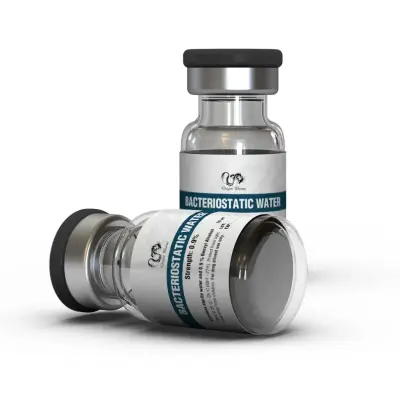
MOTS-c 10 mg vial - 5-10 mg on two or three days of the week + Bacteriostatic water - solvent for the powder
Four to eight weeks is the window that protocol reviews describe; glucose and insulin sensitivity are the readouts a researcher would follow, since no outcome biomarkers outside trials exist
Longevity shelf
MOTS-c + NAD+ + Epitalon 50 mg
Grouped in laboratory notes as compounds with mitochondrial and cellular-aging angles; no published study has combined them
Exercise mimetic comparison
MOTS-c - mitochondrial route + GW501516 + L-Carnitine 500
Kept side by side in comparison notes because all three touch fuel handling; their mechanisms differ, which is why they are not presented as interchangeable

What to Expect

  • No day-one marker. The sources contain no human timeline, so there is nothing to watch in the first three days and no laboratory value that moves on schedule.
  • Vendor reports on energy. Weeks one and two are where user write-ups discuss changes in energy and endurance; none of that has clinical confirmation.
  • Typical course window. Four to eight weeks is the usual research block described in protocol reviews.
  • Metabolic focus. The peptide is studied in relation to glucose metabolism in skeletal muscle, and its own level climbs in response to physical training.
  • Animal data only, mostly. In mice, administration is linked with better physical condition, reduced obesity and a longer healthy lifespan; that does not transfer to people automatically.
  • No approval anywhere. The peptide is not licensed for any condition in any market.
  • Testing reality. In sport it is prohibited at all times under class S4.4, and the sources describe a therapeutic use exemption as extremely unlikely to obtain.

Side Effects and Management

There is no clinical safety database for this peptide, so the reactions below are the ones reported in user accounts plus the practical risks of handling a research vial. Reports are not evidence of frequency, and the absence of problems in short courses proves nothing.

Fast or pounding heartbeatReduce the amount and observe; these are user reports rather than clinical findings, so no dose relationship is established.
Injection site redness or irritationRotate sites, keep technique aseptic and let the solvent warm to room temperature before use; local reactions are the most frequently described effect.
InsomniaMove the injection earlier in the day; sleep disturbance is one of the reasons the first half of the day is the usual timing.
Fever and general malaiseA pronounced reaction is a reason to stop rather than continue; reports exist but are rare and unconfirmed.
Unknown long-term profileShort courses with breaks and self-observation are all the sources can support, because human safety data are described as insufficient.
Mixing mistakesCalculate units from the table above every time; with milligram amounts in a millilitre, an arithmetic slip is the most predictable risk of the whole exercise.

Handling, Storage and Testing Status

Nothing here replaces a recovery protocol, because there is no endocrine suppression to reverse. What the vial does need is correct handling, since the peptide degrades in the same way any lyophilised material does.
DissolvingBacteriostatic water is run down the vial wall; the 10 mg fill becomes 10 mg per ml with 1 ml or 5 mg per ml with 2 ml.
Calculating unitsOn an insulin syringe one unit is a hundredth of a millilitre, so ten units of a 10 mg per ml solution carry 1 mg and twenty units of a 5 mg per ml solution carry the same 1 mg.
Reconstituted vialKeep at 2-8 C and use within roughly four weeks; freezing the solution and repeated freeze-thaw cycling are both avoided, which is a vendor rule rather than a regulatory standard.
Powder storage2-8 C in the dark, or a freezer for long storage; light is the enemy of both forms.
MonitoringNo outcome biomarker exists outside clinical trials; glucose and insulin sensitivity are the reference points a researcher would track, and there is no human data on liver enzymes.
Testing statusProhibited at all times as a metabolic modulator under WADA class S4.4, which is a permanent listing rather than a competition-only restriction.
This material is published for educational and research reference purposes only. The compounds described are research-grade materials supplied for laboratory work and are not presented here as medicines or as a treatment for any condition. Dosing information reflects published clinical and reference data for the active substances, not a recommendation or a prescription. Nothing on this page should be read as medical advice. Keep all products out of reach of children and follow the regulations that apply in your country.
What is MOTS-c?
It is a sixteen amino acid peptide encoded by a gene inside mitochondrial DNA rather than in the cell nucleus, which is what makes it unusual. It circulates in the body, its level rises with exercise, and it is studied as a signalling molecule for metabolic regulation. It is not a hormone, not an anabolic steroid and not an approved medicine.
What does MOTS-c do?
The research interest is in glucose metabolism in skeletal muscle, where the peptide is investigated as a regulator. Because its own level climbs after training, it is often called an exercise mimetic. In mice, administration has been linked with better physical performance, less obesity and a longer healthy lifespan. Human evidence for any of that is essentially absent.
What amount of MOTS-c do research protocols describe?
Protocol reviews and vendor material describe 5-10 mg two or three times a week, or 10 mg a week, in courses of four to eight weeks, with 5 mg per administration over four weeks as the lower bound and a 2.5-10 mg titration mentioned in some reviews. None of it is a clinical dose. The one registered human trial uses a fixed schedule once daily for twelve weeks, and its results are not published.
How do you inject MOTS-c?
The powder is dissolved with bacteriostatic water added down the vial wall, and the injection is subcutaneous, usually early in the day. A vial dissolved in 1 ml contains 10 mg per ml, where ten syringe units measure 1 mg; dissolved in 2 ml it contains 5 mg per ml, where twenty units measure the same 1 mg. Rotate the sites and keep the injected volume small.
How long does a 10 mg MOTS-c vial last?
That is arithmetic rather than protocol. At 5 mg a day the vial covers about two days, which is why that amount is quoted as the lower bound of a four-week research block. At 5 mg twice a week the same 10 mg stretches to roughly four weeks, which fits the four to eight week window the reviews describe.
MOTS-c side effects and banned status?
User accounts mention a faster pulse, insomnia, injection site irritation and occasionally fever or malaise, with no clinical frequency data behind any of them. On the sporting side the position is clear: class S4.4 of the WADA list covers metabolic modulators and the prohibition is permanent, so it applies in and out of competition.
MOTS-c vs AICAR vs GW501516?
All three are described as exercise mimetics and all three sit on the prohibited list, but they act through different mechanisms. AICAR and GW501516 work on the AMPK and PPAR-delta pathways, while MOTS-c is an endogenous mitochondrial peptide studied for its effect on glucose handling in muscle. Shared label does not mean shared pharmacology.
Is Dragon Pharma MOTS-c legit or are there fake batches around?
A lyophilised vial cannot be verified visually, so the useful checks are the dosing information on the vial, the lot and expiry codes, and the seal inside undamaged brand packaging. Reconstitution behaviour is the practical test: the powder should dissolve into a clear solution with no lumps or residue. Forum threads answer delivery questions and cannot confirm what is inside a vial.

No reviews yet

Be the first to share your experience with MOTS-c Peptide - Dragon Pharma

Log in to write a review
MOTS-c Peptide - Dragon Pharma
International

Complete the protocol

Stack it with

View all →
Added to cart