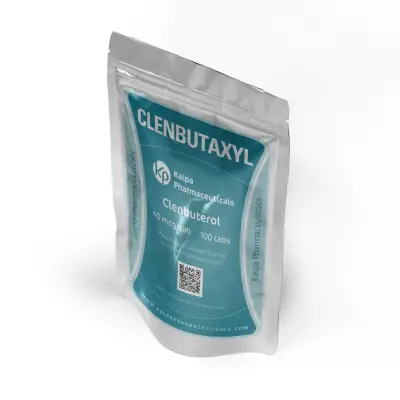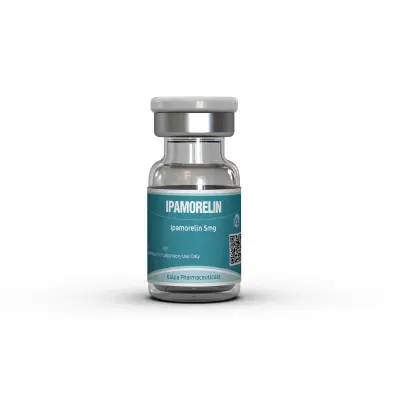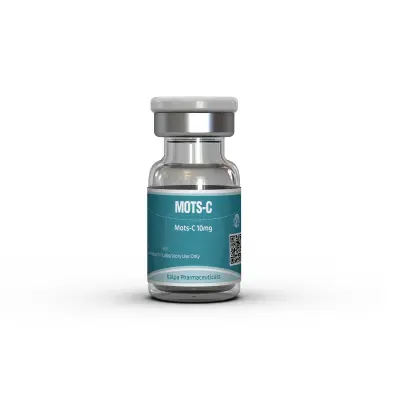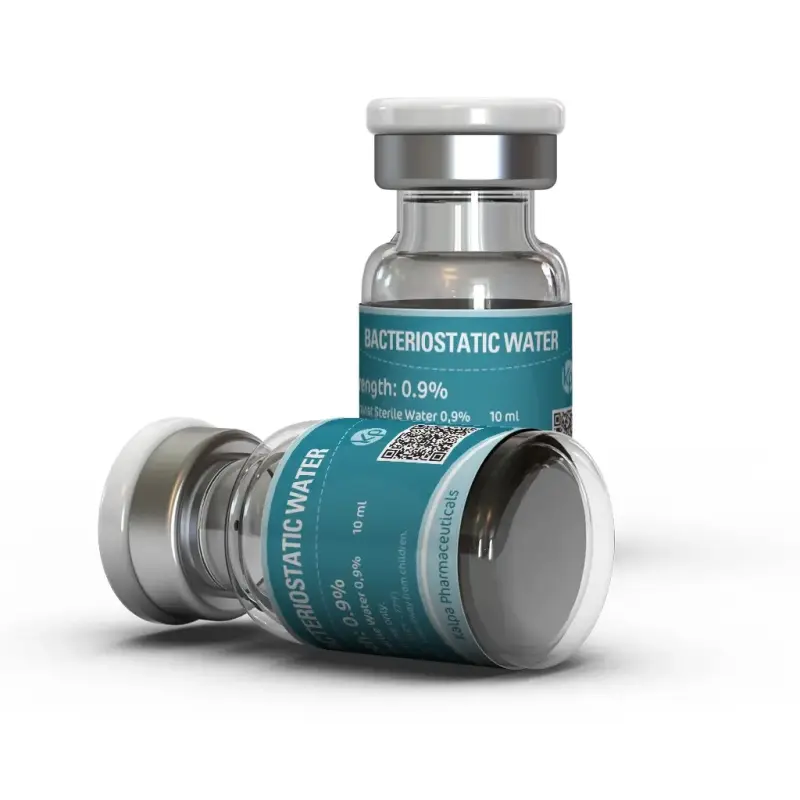
Kalpa Pharmaceuticals Bacteriostatic Water is available at Best Anabolic Steroids as the consumable that turns a freeze-dried vial into an injectable solution. The contents are simple: sterile, non-pyrogenic water carrying 0.9 percent benzyl alcohol as a preservative, with a pH around 5.7 in a range of roughly 4.5 to 7.0. The preservative is the only reason this product exists in a multi-dose bottle instead of a single-use ampoule, because it holds the solution back from bacterial growth each time a needle enters the stopper.
The manufacturer's labelling is narrow on purpose. Bacteriostatic water for injection is indicated for dissolving or diluting drugs intended for intravenous, intramuscular or subcutaneous use, following the instructions of the medicine being dissolved. It is not a drink, not a rehydration fluid and not something to inject alone. The same label names the populations and routes where it must not be used, and those warnings are repeated below rather than softened.
Product Overview
Two products are commonly confused. Bacteriostatic water contains a preservative and comes in a multi-dose container, which makes it the practical choice when one bottle has to serve several draws over days or weeks. Sterile water for injection contains no preservative at all and belongs to single-use work, including preparations for newborn care where benzyl alcohol is not acceptable. Buying the wrong one is the most common error in this category, and it usually shows up as a solution that has to be discarded long before the vial is empty.
What the bottle does not contain matters just as much. There is no hormone, no peptide and no active drug inside, so the product cannot be described in the usual terms of half-life or liver load. Kalpa Pharmaceuticals ships it as part of the same injectable range as Kalpatropin 100 IU and BPC 157, which is why most orders pair the two. The volume of the Kalpa bottle is not recorded in the project fact base, so the arithmetic below is written for the common 10 ml multi-dose format and works from the peptide vial's nominal strength in every case.
Dosage Protocol
There is no dose of this product. What is dosed is the solution it makes, and the deciding number is the concentration you want on the insulin syringe. The table describes volumes rather than amounts of drug.
| Beginner | 1-2 ml per peptide vial, enough to dissolve the cake fully without diluting the solution so far that a dose becomes hard to measure |
| Intermediate | Work from the vial label: 5 mg of powder plus 2 ml of water gives 2.5 mg per ml, so 0.1 ml is 250 mcg |
| Advanced | Choose the volume that makes the target dose land on an easy mark on a U-100 syringe, and never add so much that the solution becomes inconveniently weak |
| Female | The same arithmetic applies. This is a solvent, so there is no separate female schedule |
| Administration | Reconstitution only. Swirl gently, never shake, and stop short of any volume that leaves the solution cloudy |
Two reference points keep the maths simple. One tenth of a millilitre equals 10 units on a U-100 insulin syringe, and adding 2 ml to a 5 mg vial makes every 10 units equal 250 mcg. Write the new concentration on the vial once it is mixed; a peeled label is how doses go wrong later.
Suggested Protocols
In practice the bottle belongs to three routines: reconstituting a lyophilised peptide, keeping the mixed solution usable for the following weeks, and maintaining aseptic technique across repeated draws.
The same aseptic routine applies to every injectable in this range, from Testoxyl Enanthate 400 through to Masteroxyl 100 and Nandroxyl 250: clean hands, a fresh alcohol swab, and no needle left standing in a stopper.
What to Expect
- A clear solution, quickly. Properly dissolved powder gives a transparent liquid without flecks. A cloudy mix, a floating ring or visible particles means the draw is finished, not that it needs more water.
- Pressure equalisation. Adding liquid to a sealed vial raises the internal pressure. Let the plunger settle naturally instead of forcing it, and vent the vial if the stopper starts pushing back.
- A preservative working in the background. The benzyl alcohol holds down bacterial growth between draws, which is exactly why a multi-dose bottle can be used across weeks and a single-use ampoule cannot.
- A 28-day default after the first puncture. The CDC and USP reference window for a multi-dose vial is 28 days once the stopper has been entered, with refrigeration in the 2-8 C range as the usual practice.
- Years of shelf life before that. An unopened bottle is generally good for two to three years if kept at room temperature, which is why stock bought ahead stays useful.
- Nothing to feel. The solution carries no active drug, so there is no onset, no half-life and no effect to look for beyond clean dilution of whatever is being dissolved.
Side Effects and Management
The risks attached to this product are risks of technique and of route, not of pharmacology. They appear when the wrong water, the wrong route or a dirty needle is involved.
Three warnings from the label are absolute. The product is not for newborn infants because of benzyl alcohol toxicity, it must not be used to replace lost body fluid, and it must not be used for epidural or spinal anaesthesia.
Post-Cycle Therapy and Follow-Up
There is nothing to recover here, because the bottle does not touch the hormonal axis. No SERM, no aromatase inhibitor and no blood panel exists for a diluent, and anyone selling it as a recovery product has the chemistry wrong. What this product does have is a life cycle, and that is what gets managed instead.
Order spare bottles with the peptides rather than after them. A peptide pack with no water cannot be used, and running out mid-course is the moment people start improvising with whatever liquid is in the cupboard.