Best Anabolic Steroids

Press Enter to search the full catalog.

US Domestic discreet shipping
Third-party batch tested
HPLC & MS verified purity
Trusted Anabolic Manufacturers Only
US Domestic discreet shipping
Third-party batch tested
HPLC & MS verified purity
Trusted Anabolic Manufacturers Only
Back to all products
GHK-Cu 50 mg Copper Peptide - Kalpa Pharmaceuticals

Kalpa Pharmaceuticals

GHK-Cu 50 mg Copper Peptide - Kalpa Pharmaceuticals

Injection · 50mg · vial

Out of stock
CompoundGHK-Cu
ClassResearch peptide
Half-lifeNot established
DetectionNo WADA entry found
Liver toxicityLow
Water retentionNone
A 50 mg vial of the copper-binding tripeptide, a complex of one small peptide and one copper ion in a one-to-one ratio. The blue-green colour of the mixed solution is the copper, not a defect. No human half-life is established, most published work used cell cultures or topical application, and the peptide does not appear in the prohibited list searched for this page.
GHK-Cu 50 mg Copper Peptide - Kalpa Pharmaceuticals
Order Now, Ships Today
Quality First

All products are manufactured under strict quality standards and independently tested before release. By purchasing, the buyer agrees to use these products in compliance with all applicable laws.

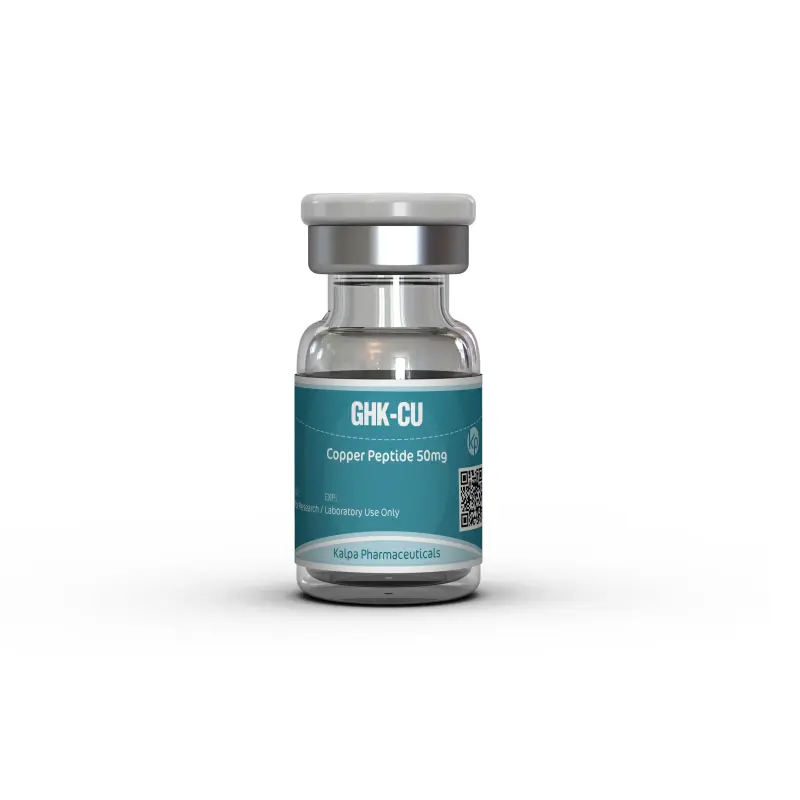
Buy GHK-Cu 50 mg by Kalpa Pharmaceuticals at Best Anabolic Steroids. The pack is a single freeze-dried vial holding fifty milligrams of a copper peptide: three amino acids joined to one copper ion in a fixed one-to-one complex. The sequence occurs naturally in human plasma and appears in saliva and urine, which is what makes it interesting to researchers rather than exotic.

Anyone mixing it will notice the colour immediately. Once bacteriostatic water is added, the solution turns pale blue-green, and that tint is the copper in the complex. It is the simplest way to tell a genuine preparation from a vial of water, and it should stay clear rather than cloudy.

Product Overview

The peptide is a small molecule, which changes how its data reads. Most published work has been done in cell culture or with topical application, where the compound was studied for its effect on collagen synthesis, glycosaminoglycans and wound contraction in fibroblast models. That is a substantial body of laboratory evidence and a very thin body of human evidence at the same time.

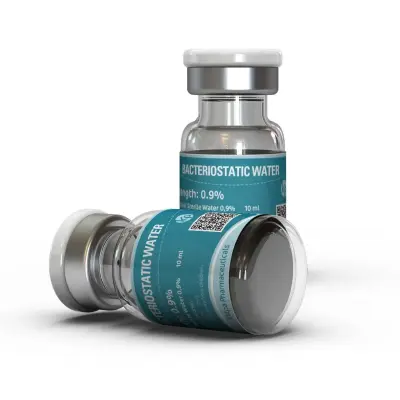
Two gaps define how the vial should be treated. First, no human half-life has been established for GHK-Cu, and the sources state that directly rather than offering a range. Second, no human dosing schedule for injection exists, so every number circulating in the market is an extrapolation from models or a vendor convention. Anyone comparing this peptide with a licensed medicine is comparing a research tool with a drug, and the two do not share a standard. The Kali catalogue keeps the same handling rules across its peptide line, from Bacteriostatic Water to the repair vial BPC 157 and the metabolic packs Mounjarixyl and Kalpatropin 100 IU.

Dosage Protocol

There is no human dose, so this table is a set of mixing volumes and research amounts rather than a protocol. Every figure below is arithmetic or a model-based convention.

Beginner Dissolve a 50 mg vial in 5 ml of water for 10 mg per ml, so 0.1 ml is 1 mg and 10 units on a U-100 syringe is 1 mg
Intermediate Two millilitres of water gives 25 mg per ml, which suits small volumes but doubles the cost of a measuring error
Advanced Research amounts quoted in model work sit near 1-2 mg per day systemically; no reviewed human dose supports that figure
Female Nothing separate appears in the sources reviewed; the material is a research item rather than a dosed medicine
Administration Subcutaneous or intramuscular for the mixed vial; the same compound is studied topically, which is where most data sits

Three habits protect the material. Mix gently and never shake, because a foaming peptide degrades. Keep the sealed vial cold and the mixed vial in the refrigerator, using it inside the vendor window. And record the concentration on the label the same minute it is mixed, since 10 units means 1 mg only at the 10 mg per ml ratio.

Suggested Protocols

This peptide is rarely discussed on its own. It is placed next to other repair-focused compounds, and the protocols below describe that context rather than a formal stack.

Skin and tissue focus
Short blocks with a matching break. The two peptides are not interchangeable and the combined human data does not exist
Longer recovery context
Growth hormone has human data and a defined injectable history; the copper peptide does not, which is the honest reason to keep them in separate categories

Where an oil-based course is running at the same time, the hygiene rules do not change: a mixed peptide is handled exactly like Masteroxyl 100, with a fresh needle and a swabbed stopper every time.

What to Expect

  • No human timeline exists. The described effects come from wound models and cell studies, so any expectation about speed rests on vendor wording rather than on trial data.
  • What the literature describes. Stimulated collagen and glycosaminoglycan production in fibroblasts, faster wound contraction in animal models, and an anti-inflammatory signal in the same experiments.
  • A solution that looks like copper. A blue-green tint after mixing is expected. Cloudiness, particles or a colour shift after storage are not, and that vial should be discarded.
  • Most data is topical, not injected. Applying the compound to skin is where the study base is thickest; injecting it is a community practice without a human safety record.
  • Vendor arithmetic, not a dose. Every milligram figure in circulation is a starting convention, because no human pharmacokinetic profile has been fixed for this peptide.
  • An unclear sporting status. No entry for GHK-Cu was found in the prohibited list searched for this fact sheet, which is not the same as an assurance that it is permitted.

Side Effects and Management

Reaction at the injection siteSite rotation and clean technique. Human data is limited, so reports are the main source.
Irritation with topical useStop applying and observe. Uncommon and usually local.
No established human side effect profileKeep blocks short and watch closely. The central limitation of the compound.
Copper sensitivityDo not use with a known intolerance to copper. Theoretical and worth respecting.
Signs of an allergic reactionStop at once and seek medical help. Rare but not impossible with any peptide.

The copper content also means the material is not a cosmetic additive with no systemic reach. Anything injected enters circulation, and a compound without an established human safety record belongs in short, carefully observed blocks rather than in a permanent routine.

Post-Cycle Therapy and Follow-Up

Nothing about this peptide requires a restart protocol. GHK-Cu has no effect on testosterone production, so there is no suppression and nothing for a SERM to do at the end of a block. The end of a course is simply a pause.

OnsetNot applicable. The gonadal axis is not involved at any dose
Option ANot applicable. No SERM protocol exists for this peptide
Option BNot applicable. No aromatase inhibitor applies either
Between blocksCommunity practice is a break between courses; no validated schedule has been published
Follow-upWatch skin condition and general wellbeing. There is no specific laboratory marker to follow

Where an androgen such as Nandroxyl 250 runs alongside, its own recovery plan governs the end of the course and the peptide simply stops. Anyone injecting a research material for weeks should also keep the injection log they would keep for anything else: date, volume, site and any reaction.
This material is published for educational and research reference purposes only. The compounds described are research-grade materials supplied for laboratory work and are not presented here as medicines or as a treatment for any condition. Dosing information reflects published clinical and reference data for the active substances, not a recommendation or a prescription. Nothing on this page should be read as medical advice. Keep all products out of reach of children and follow the regulations that apply in your country.
What is GHK-Cu?
A copper-binding tripeptide, meaning three amino acids bound to one copper ion in a one-to-one complex. The sequence is found naturally in human plasma and is also present in saliva and urine. It is studied for its effects on collagen synthesis and tissue repair, and it is not an approved medicine.
What is the half-life of GHK-Cu?
It has not been established in humans, and the reference sources say so plainly rather than giving a range. That is why planning around a clearance window is guesswork, and why the vial should be treated as a research material with no pharmacokinetic schedule attached.
How do I reconstitute a 50 mg vial?
Add bacteriostatic water down the inside wall and swirl gently. Five millilitres gives 10 mg per ml, which makes 0.1 ml - or 10 units on a U-100 syringe - equal to 1 mg. Two millilitres gives 25 mg per ml for a smaller injection. Either way, write the ratio on the label before you put the vial down.
Why does the mixed solution look blue-green?
That colour is the copper ion in the complex, and it is normal. A clear solution with a blue-green tint is what a dissolved copper peptide looks like. Cloudiness, floating particles or a change in appearance after time in the refrigerator are the opposite signal and mean the vial should be thrown away.
Is topical or injectable use better studied?
Topical. The collagen and wound-healing work is largely cell-culture and skin-application research. Injecting the peptide is a market practice rather than a studied route, and there is no human injection safety data to compare against the topical experience.
What are the main side effects of GHK-Cu?
Local injection reactions and topical irritation are the ones reported, and a known copper intolerance is a reason to avoid the material altogether. Beyond that, the honest answer is that no systematic human profile exists, so short blocks and observation are the practical safeguard.
Does GHK-Cu require PCT, and is it banned in sport?
No PCT, because the peptide does not touch the hormonal axis. On the sporting question, no entry for GHK-Cu was found in the prohibited list searched for this page, but an absence of an entry is not a clearance certificate, and any competitor should check the current list before a test.
Is Kalpa GHK-Cu 50 mg real or a counterfeit batch?
The Kali label is established and copied, so check the printed batch number, the expiry and the condition of the seal, and compare the vial against the photograph on this page. The colour after mixing is a useful secondary check: a copper peptide solution should carry that blue-green tone rather than looking like plain water.

No reviews yet

Be the first to share your experience with GHK-Cu 50 mg Copper Peptide - Kalpa Pharmaceuticals

Log in to write a review

Complete the protocol

Stack it with

View all →
Added to cart