Best Anabolic Steroids

Press Enter to search the full catalog.

US Domestic discreet shipping
Third-party batch tested
HPLC & MS verified purity
Trusted Anabolic Manufacturers Only
US Domestic discreet shipping
Third-party batch tested
HPLC & MS verified purity
Trusted Anabolic Manufacturers Only
Back to all products
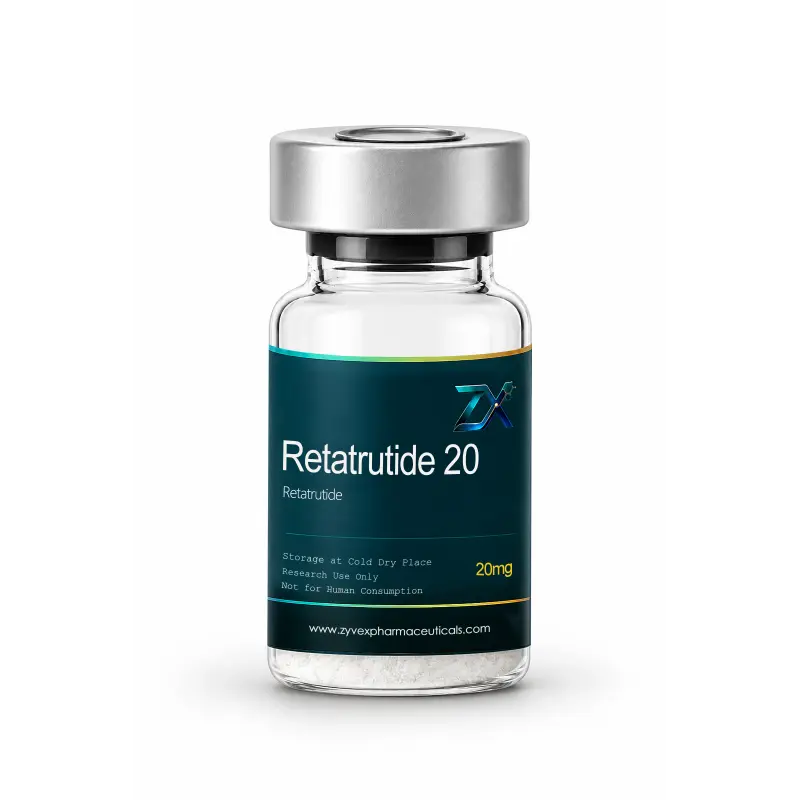
Retatrutide 20 mg Triple Agonist - Zyvex Pharmaceuticals

Zyvex Pharmaceuticals

Retatrutide 20 mg Triple Agonist - Zyvex Pharmaceuticals

Injection · 20 mg · vial

Out of stock
CompoundRetatrutide
ClassGIP/GLP-1/glucagon agonist
Half-lifeNot published
DetectionNot banned (monitored)
Liver toxicityLow
Water retentionLow
An investigational triple agonist that acts on GIP, GLP-1 and glucagon receptors, supplied as a lyophilised powder for once-weekly subcutaneous injection. There is no licensed label, no approved dose, and no published human half-life in the sources checked, so the weekly interval comes from trial practice rather than from a measured number. Weight change accrues over many months, and the class sits in the WADA monitoring programme rather than on the prohibited list.
Retatrutide 20 mg Triple Agonist - Zyvex Pharmaceuticals
Order Now, Ships Today
Quality First

All products are manufactured under strict quality standards and independently tested before release. By purchasing, the buyer agrees to use these products in compliance with all applicable laws.

Product Overview

Zyvex Pharmaceuticals supplies Retatrutide 20 through Best Anabolic Steroids as a lyophilised powder for once-weekly subcutaneous injection. The active substance is retatrutide, known in the research literature by its code LY3437943 and developed by Eli Lilly as a single molecule that engages three receptors at once. It is the third generation of the incretin idea: where semaglutide acts on GLP-1 alone and tirzepatide on two receptors, this one adds glucagon signalling to the pair.

Nothing about the material has been licensed. There is no approved dose, no marketing label, no published human half-life in the sources checked here, and no discontinuation study describing what happens when someone stops. What exists is trial data: phase 2 reported weight reductions of 8.7, 17.1, 22.8 and 24.2 percent at 48 weeks across ascending doses, and the phase 3 TRIUMPH-1 trial of 80 weeks in 2339 adults reported the share of participants leaving the obesity category altogether. Those are results for an investigational product under protocol, not a schedule for a reconstituted vial.

Buyers come to it for body weight, and it is normally a single weekly injection with nothing else attached. The realistic companion purchase is a way to protect lean tissue while appetite is suppressed, which is where Ostarine MK 2866 or Ligandrol LGD 4033 enters the order. Anyone who wants a longer safety record and an approved product should look at Semaglutide 10 on the same shelf first.

How the Triple Agonist Works

Three pathways, one injection. GLP-1 signalling stretches gastric emptying and lowers the volume taken in before satiety; GIP signalling acts on fat cell metabolism and on the same appetite centres; glucagon signalling raises energy expenditure, which is the part that separates this molecule from its predecessors. Because the three act in parallel, the effect on body weight is larger in trials than the single-receptor drugs produce, and so is the metabolic footprint.

The kinetics are the weak point of the file. No published half-life for humans could be found in the sources, and the weekly interval is described there as the practical consequence of long duration of action rather than as a figure derived from clearance. That matters for two reasons: no one can calculate how long a dose lasts after the last injection, and no one can say how quickly a side effect will resolve when the drug stops.

Sporting status is the same pattern as the rest of the class. Retatrutide is not on the WADA prohibited list, no therapeutic use exemption is needed, and the incretin class is part of the monitoring programme, so a sample may be screened for it without a finding being a violation. The sources note that no laboratory detection window has been established for the peptide form.

Dosage Protocol

All figures here describe doses used in research protocols for an investigational substance. They are not an approved schedule, and no licensed dose exists.

Step Amount per week Length Notes
Entry Low, titrated upward at least 4 weeks In phase 2, side effects were more frequent when people started at 4 mg and were milder when they started at 2 mg
Middle 4 mg and 8 mg studied 24-48 weeks in phase 2 The amount moves up on tolerance, not on a calendar
Upper 9 mg and 12 mg planned up to 80-104 weeks in phase 3 The highest doses ever studied; no approval exists for any of them
Female No separate protocol found - The sources describe no female-specific schedule
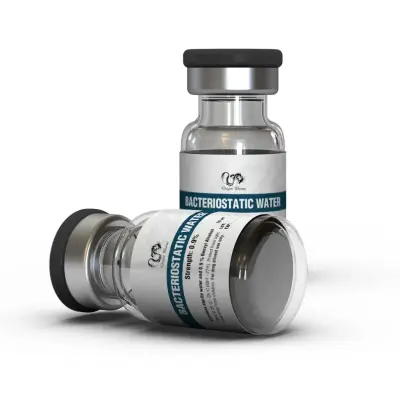
Administration Subcutaneous, once weekly - The interval follows the long duration of action, and the powder is mixed with bacteriostatic water

Two rules sit above the numbers. The entry step is held for at least four weeks before any increase, because the gastrointestinal effects cluster around titration; and the weight result is measured in months, which makes short courses a poor way to judge the substance.

Suggested Protocols

Retatrutide is a monotherapy in every study that exists. The pairings below are catalogue patterns for the problems a large deficit creates, not tested combinations.

Lean tissue protection
16 weeks. The appetite effect does the work; the anabolic side keeps training quality from collapsing while calories are low. Both oral options carry liver considerations.
Training output during titration
8 weeks. Conditioning support and sleep quality are the two things that suffer first in a deep deficit; the growth hormone secretagogue raises appetite, so the timing of the dose matters.
Comparison on one shelf
Read as alternatives rather than a combination: stacking two incretin agonists has no study behind it, and adding a stimulant raises resting heart rate on top of a class effect that already does so.

What to Expect

  • Appetite first. Reduced intake is felt within the opening weeks, well before body weight changes, and it is the effect users notice first.
  • Months, not weeks. At 48 weeks the phase 2 arms reported weight reductions that climbed with dose, from 8.7 percent to a high of 24.2 percent, and the phase 3 programme followed people for 80 weeks. A four week trial of the material cannot show anything.
  • Titration is the tolerance. Nausea, diarrhoea and vomiting show up on the way up the ladder and are visibly milder with slow steps; the phase 2 experience with 2 mg versus 4 mg starts is the clearest evidence for that.
  • Pulse. A small rise in resting heart rate was reported, peaking around week 24 and declining afterwards. Worth measuring before adding anything with stimulant properties.
  • The limit. No approved dose, no label, no human half-life and no study of what happens after stopping. The vial is a research material and the dosing decisions sit with the user.
  • Under-eating is a real risk. Appetite suppression can overshoot into too little protein and too few calories, which costs lean tissue rather than fat, and that is a nutrition problem before it is a drug problem.

Side Effects and Management

Nausea, vomiting, diarrhoeaSlow titration, smaller meals, plenty of fluid and a step back down if needed. Dose related and concentrated around each increase
Appetite loss beyond the targetTrack protein and total calories rather than trusting hunger; falling intake is the direction this substance pushes. Dose related
Fatigue and headachesUsually appear on titration steps and settle; a pause or a smaller increase is the usual answer. Less common than the gut effects
Rising resting heart rateMonitor pulse, keep stimulants out of the plan and mention a sustained rise to a doctor. Small, peaks around week 24 in the trial data
Pancreatitis and gallbladder diseaseSevere belly pain, especially under the right ribs, means stopping and getting medical assessment the same day. Rare, class risk
Glucose interactionAnyone on diabetes medication needs medical supervision, because combining the two can push glucose low. Depends on the other drugs in use

Reconstitution, Storage and Stopping

The powder is mixed with bacteriostatic water and the concentration is computed from the volume added to the nominal fill; the sources describe the ratio rather than a fixed number of units. Keep the unmixed vial cold and away from light, and refrigerate the solution once it is prepared. The exact shelf life for this vial is not confirmed in the sources, which is an argument for mixing what will be used rather than a large batch.

StorageLyophilised vial kept cold and dark; the mixed solution refrigerated, with the exact shelf life for this fill unconfirmed
StoppingNo recovery protocol applies, because the incretin receptors are not the hormonal axis; the sources describe no discontinuation study at all
Instead of PCTA gradual step down in dose and a plan for food intake, since appetite returns when the drug clears
Follow-upWeight, gastrointestinal symptoms, resting pulse and metabolic markers, with glucose checked when any diabetes medication is involved

Buying Retatrutide 20 by Zyvex Pharmaceuticals

The pack belongs to the Zyvex Pharmaceuticals shelf as a lyophilised research fill, and one card carries everything needed to order it: the receptor class, the research steps and the handling notes. The single-receptor alternative is Semaglutide 10, the stimulant pairing appears as Clenbuterol, and the muscle-retention products usually ordered with a weight-loss vial are Ostarine MK 2866 and Ligandrol LGD 4033. Shipping destinations, payment routes and plain packaging are all confirmed at checkout, and questions about the fill are answered before the order is placed.

This page is written as reference material for an investigational research substance. Retatrutide as supplied by Zyvex Pharmaceuticals is a research-grade peptide: it has no approved indication, no licensed dose and no published human half-life, and the trial results quoted above belong to a development programme rather than to this vial. Nothing here is medical advice or a treatment recommendation, and the material should not be used to address any medical condition. Keep the vial and the reconstituted solution away from children and observe local regulations.
What is retatrutide, and how is it different from a GLP-1 drug?
It is a single molecule that engages three receptors: GIP, GLP-1 and glucagon. A plain GLP-1 agonist works one pathway; this one adds a second incretin signal and a glucagon signal that raises energy expenditure, which is why the trial weight reductions are larger than the single-receptor products produce. In the literature it appears under the code LY3437943.
Is retatrutide approved, or is it still investigational?
No approval exists anywhere yet, and without a licensed label there is also no approved dose, so every amount quoted in research material is a protocol figure. The Zyvex vial is a research-grade fill of the same substance and does not carry approval by virtue of containing it. For an approved alternative with a defined ladder, see Semaglutide 10.
Is there a published human half-life for retatrutide?
No published human value could be found in the sources, so the half-life row on this page reads Not published rather than carrying a guess. The weekly schedule comes from trial practice and from the long duration of action described in manufacturer and review material. Without a measured half-life, nobody can say how long a final dose keeps working.
What is the starting dose, and how does titration work?
Phase 2 studied starting steps at 2 mg and at 4 mg, and side effects were more frequent in the group that started higher, which is the argument for beginning low. Each step is held for at least four weeks before an increase, the middle steps studied were 4 mg and 8 mg, and phase 3 planned upper steps of 9 mg and 12 mg. None of those figures is an approved dose.
How much weight loss has been reported in the trials?
At 48 weeks the phase 2 arms reported weight reductions that climbed with dose, from 8.7 percent to a high of 24.2 percent. The phase 3 TRIUMPH-1 trial ran 80 weeks in 2339 adults and reported the share of participants who left the obesity category. Those results describe protocol participants on investigational doses, and they are not a forecast for a research vial used at home.
How do you reconstitute and store the vial?
Bacteriostatic water is added to the powder, and every later amount is calculated from the concentration that results, not from the nominal fill printed on the label. Keep the sealed vial cold and dark, move the mixed solution to the refrigerator, and note that the exact shelf life for this fill is not confirmed in the sources, so small batches are safer than a large one.
What side effects should be expected, and how are they reduced?
The gut leads the list: nausea, vomiting and diarrhoea, worst around every dose increase and milder when titration is slow. Appetite can fall far enough to threaten protein intake, fatigue and headaches show up on step-ups, and resting pulse crept up slightly with a peak near week 24. The class risks sit behind these: pancreatitis, gallbladder disease, and a drop in glucose when diabetes medication is in the picture.
Does retatrutide need PCT, and what happens when it stops?
No post-cycle therapy is needed, because the incretin receptors are not part of the hormonal axis that recovery drugs act on. The awkward part is the opposite: no discontinuation study for this substance could be found in the sources, so what happens after the last injection is not documented. A step down in dose with a plan for food intake is the practical substitute.

No reviews yet

Be the first to share your experience with Retatrutide 20 mg Triple Agonist - Zyvex Pharmaceuticals

Log in to write a review

Complete the protocol

Stack it with

View all →
Added to cart