Best Anabolic Steroids

Press Enter to search the full catalog.

US Domestic discreet shipping
Third-party batch tested
HPLC & MS verified purity
Trusted Anabolic Manufacturers Only
US Domestic discreet shipping
Third-party batch tested
HPLC & MS verified purity
Trusted Anabolic Manufacturers Only
Back to all products
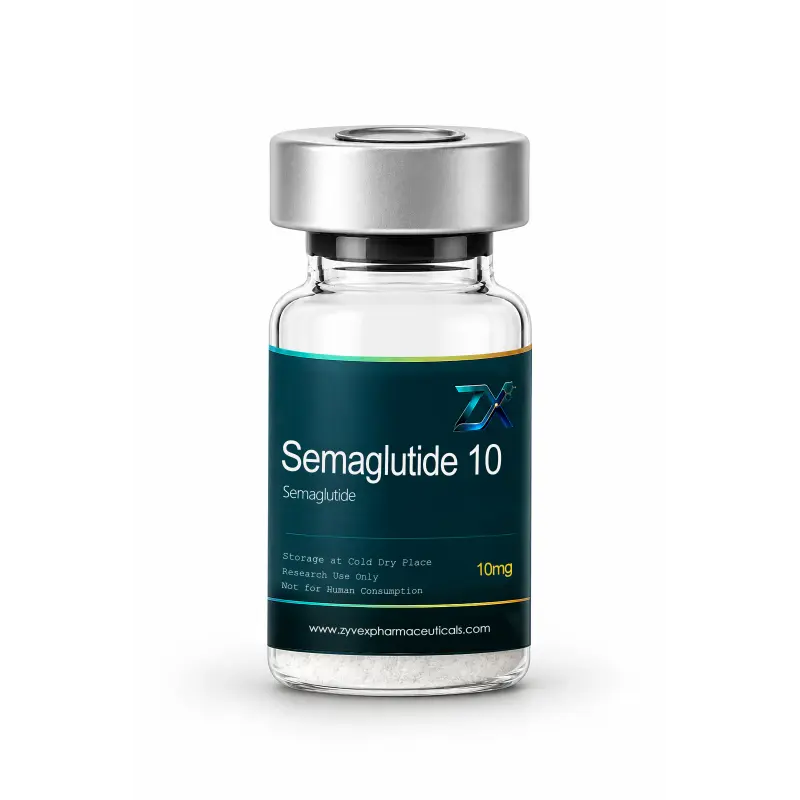
Semaglutide 10 mg GLP-1 Vial - Zyvex Pharmaceuticals

Zyvex Pharmaceuticals

Semaglutide 10 mg GLP-1 Vial - Zyvex Pharmaceuticals

Injection · 10 mg · vial

Out of stock
CompoundSemaglutide
ClassGLP-1 receptor agonist
Half-lifeAbout 1 week
DetectionNot banned (monitored)
Liver toxicityNo data
Water retentionNone
A synthetic analogue of the gut hormone GLP-1, supplied as a lyophilised vial for weekly subcutaneous use. The approved medicines built on this molecule carry a published dose ladder and a boxed warning about thyroid C-cell tumours in rodents; the research vial carries neither an approved dose nor a safety review. About a week is the half-life of the approved form, and the class sits in the WADA monitoring programme rather than on the prohibited list.
Semaglutide 10 mg GLP-1 Vial - Zyvex Pharmaceuticals
Order Now, Ships Today
Quality First

All products are manufactured under strict quality standards and independently tested before release. By purchasing, the buyer agrees to use these products in compliance with all applicable laws.

Product Overview

Best Anabolic Steroids lists Semaglutide 10 from Zyvex Pharmaceuticals as a lyophilised powder for weekly subcutaneous use, with semaglutide recorded as the active substance. The molecule is a synthetic analogue of GLP-1, the gut hormone released after a meal, and it was designed by lengthening the peptide and adding a side chain so that it sticks to albumin and survives for days instead of minutes. That single modification is why the same family of drugs works on a weekly schedule.

Two worlds share this molecule and they should not be confused. The approved product exists under the names Ozempic and Rybelsus for type 2 diabetes and Wegovy for weight management, with a defined dose ladder, a boxed warning and clinical trials behind it. The vial on this page is the research format of the same active substance: no approved dose, no safety review and no quality assurance by a regulator. The FDA has issued warnings about exactly this category, noting that unapproved versions of GLP-1 drugs have not been assessed for safety, effectiveness or quality, and a buyer who wants the established product should be reading a pharmacy leaflet rather than a research catalogue.

In practice the substance is bought for appetite and body weight. Weight reduction measured in trials is substantial, the appetite effect arrives earlier than the scale movement, and the plan is normally built as a single weekly injection. The training side of such a plan is a separate order: Ligandrol LGD 4033 or Ostarine MK 2866 covers the muscle-retention question while the GLP-1 handles intake.

How It Works

Semaglutide is an agonist at the GLP-1 receptor. It raises insulin release in a glucose-dependent manner, stretches out gastric emptying and lowers the amount a person eats before feeling satisfied. The appetite change is central rather than peripheral: the drug works on the signals that decide how much is enough, which is why users describe smaller portions rather than a deliberate diet.

The pharmacokinetics are unusually long for a peptide. Half-life in the approved form is about one week, and after the last injection the substance can still be measured in blood for several weeks, which means a missed dose matters less than patients expect and an unwanted effect takes time to fade. Neither the prohibited list nor the exemption process applies to GLP-1 agonists, but the incretin class is watched under the monitoring programme, so a routine sample may be screened for it without a finding counting as a violation.

One gap in the record is worth stating. The sources used for this card contain no data on liver toxicity for semaglutide, and no documented effect on water retention, so both would be guesses. The sheet reports them as unconfirmed rather than assigning a rating.

Dosage Protocol

The ladder below belongs to the approved prescription product and is reproduced as a medical reference point. The Zyvex vial has no approved dose of its own, and nobody should read the table as a schedule for a research fill.

Step Weekly amount Step length Notes
Entry 0.25 mg subcutaneously 4 weeks An adaptation step: the point is tolerance, not weight change
Second and third 0.5 mg, then 1 mg 4 weeks each The band in which appetite change and weight loss are usually reported
Upper steps 1.7 mg, then 2.4 mg 4 weeks each 2.4 mg weekly is the approved maximum, and it is the dose used in the trial quoted below
Female No separately confirmed dose - The approved ladder is not stratified by sex, and the sources give no female-specific figure
Administration Once weekly - Subcutaneous injection; the interval is set by the week-long half-life

The trial that anchors those figures is STEP-1, which enrolled 1961 adults who did not have diabetes and gave them 68 weeks of weekly 2.4 mg injections with a lifestyle programme: average body weight dropped 14.9 percent, while the placebo group lost 2.4 percent. That is a result for the prescription product at its maximum dose, not a prediction for a reconstituted research vial.

Suggested Protocols

Semaglutide is a single weekly injection and is normally run alone. The partners below are catalogue suggestions for the two things a fast deficit threatens: muscle and training quality.

Weight loss with muscle retention
12 weeks. Two anabolic-style options are listed because a large deficit is where training performance usually collapses first; neither is free of liver considerations.
Conditioning while appetite is suppressed
8 to 10 weeks. Resting heart rate is the shared concern here: the GLP-1 class raises it slightly and the stimulant raises it further, so the two are not run at their peaks together.
Comparing the two weight-loss lines
Listed for comparison rather than combination: one vial acts on a single incretin receptor, the other on three, and the third increases appetite instead of reducing it.

What to Expect

  • First weeks. Appetite falls before the scale does. Portions shrink, the sense of fullness arrives earlier, and the entry step is deliberately too low to produce much weight change.
  • From 0.5 mg upward. Noticeable weight loss begins here; the headline 14.9 percent figure belongs to the top of the ladder and to 68 weeks of continuous use. Nothing about it transfers to a differently filled research vial.
  • Tolerability follows the ladder. Gastrointestinal complaints are dose dependent and cluster around each increase, which is why slow titration matters more than the final number on the syringe.
  • Heart rate. A resting rise of about 3 beats per minute is described for the class. Small, consistent, and worth knowing before adding a stimulant to the same plan.
  • The limit. About two thirds of the weight lost comes back within a year of stopping, and the average return to the starting weight takes roughly 18 months. The drug manages appetite while it runs; it does not remove the reason the appetite existed.
  • Warnings to respect. The approval for this molecule is boxed-warned over C-cell thyroid tumours in rodents and is contraindicated where medullary thyroid cancer appears in a personal or family history, or with MEN-2.

Side Effects and Management

Nausea and vomitingPortion size and meal composition do more good than anything else; keep each step small and pause an increase that bites. Dosing related, peaking with every rise
Diarrhoea, constipation, abdominal painFluids, fibre and a review of the dose if it persists; these are the ordinary effects of the class. Frequent but usually manageable
Belching, indigestion, rarely gastroparesisFollows slowed stomach emptying; steady titration helps, and persistent vomiting needs a doctor rather than a lower dose. Uncommon, class effect
Gallbladder problemsPain under the right ribs after rapid weight loss is a reason to seek medical assessment promptly. Increased risk with fast loss
Resting heart rate increaseTrack pulse and blood pressure through the course and leave stimulants out of the stack. About 3 beats per minute, expected
Thyroid C-cell tumour signalA rodent finding behind the boxed warning on the approved product; anyone with a relevant personal or family history should not use the class at all. Contraindication, not a dose question

Reconstitution, Storage and Stopping

The reference arithmetic in the sources uses a 5 mg fill with 1 ml of bacteriostatic water, which gives 5 mg per ml; the ratio scales with the nominal fill of the vial, so the concentration is set by the volume added and every dose is read from that figure. Once mixed, the solution is kept at 2 to 8 C and is described as usable for 28 to 30 days. The powder itself stays cold and out of light until the day it is needed.

StorageMixed solution at 2 to 8 C for 28 to 30 days; the dry powder cold and protected from light
StoppingNo recovery protocol applies, because the substance does not suppress the hormonal axis; the specific problem after the last dose is weight regain
Maintenance after stoppingContinuing a lowered dose is a decision for a prescriber; the sources describe no self-directed maintenance schedule for a research vial
Follow-upWeight, blood pressure, resting pulse, glucose and thyroid function as indicated, plus a review of any gastrointestinal symptom that does not settle

Buying Semaglutide 10 by Zyvex Pharmaceuticals

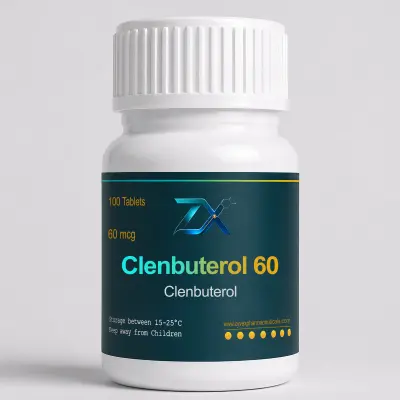
This fill appears in the Zyvex Pharmaceuticals catalogue as a lyophilised pack for once-a-week subcutaneous injection, with the approved ladder reprinted on the card as reference material rather than as a schedule for the pack. The other weight-management option on the same shelf is Retatrutide 20, the stimulant route sits next door as Clenbuterol, and the muscle-retention products ordered alongside these vials are Ostarine MK 2866 and Ibutamoren MK 677. Checkout confirms which payment methods and destinations are open to you, every parcel leaves in a plain outer box, and a question about the fill is answered before dispatch.
This page is reference material about a research substance and is not a prescription, a label or medical advice. Semaglutide as supplied by Zyvex Pharmaceuticals is a research-grade vial with no approved dose and no regulatory review; the approved medicines that contain this molecule are prescription products obtained through a pharmacy and a physician. Dose ladders, trial results and warnings quoted above describe those approved products and are included so the buyer can see the difference. Do not use this material to self-treat any condition. Keep the vial and the mixed solution out of reach of children and follow the law where you live.
Is Semaglutide 10 a steroid or a peptide, and how does it work?
It is a peptide and not a steroid: a lab-made version of GLP-1, the hormone the gut releases after eating, and an agonist at its receptor. It raises insulin release in a glucose-dependent way, delays the stomach and lowers how much food goes in before satiety arrives. Nothing in it touches an androgen receptor, which is why it is filed with the weight-loss products rather than with the anabolics.
What dose escalation schedule do the approved products use?
The prescription ladder opens at 0.25 mg weekly and climbs through 0.5, 1 and 1.7 mg to a ceiling of 2.4 mg, holding each step for four weeks. The opening step exists for tolerance, not for results. Our lyophilised vial has no approved dose of its own, so the ladder is reproduced as a medical reference only.
What weight change shows up in the trials, and what follows the last injection?
STEP-1 took 1961 adults who did not have diabetes and ran 68 weeks of weekly 2.4 mg injections: body weight fell by an average of 14.9 percent, against 2.4 percent in the placebo arm. Once the drug stops, about two thirds of that reduction comes back over the following twelve months, and the average return to the starting weight takes roughly 18 months. Compare that with Retatrutide 20, which acts on three receptors instead of one.
How do you reconstitute the vial and store the solution?
The sources give a 5 mg fill with 1 ml of bacteriostatic water as the worked example, producing 5 mg per ml; the ratio scales with the fill, so concentration is decided by the volume of solvent and doses are read from that number, not from the vial size. Keep the mixed solution at 2 to 8 C and use it within the 28 to 30 days described.
What are the most common side effects?
The gut carries the burden: nausea, vomiting, diarrhoea, constipation and belly pain head the list, every one of them tied to dose and worst while the amount is climbing. Delayed gastric emptying adds belching and indigestion and, rarely, gastroparesis; the class also raises the risk of gallbladder disease, nudges resting pulse up and comes with a boxed warning over C-cell thyroid tumours in rodents.
Is the research vial the same as Ozempic or Wegovy?
The active molecule is the same, the product is not. Ozempic, Rybelsus and Wegovy are approved prescription medicines with a fixed dose ladder, batch release and a monitored safety record; the vial here is a research format with no approved dose and no independent quality review. The FDA has warned that these unapproved versions were never assessed for quality, safety or effectiveness.
Is semaglutide banned in sport?
No. The prohibited list does not include GLP-1 agonists and no therapeutic use exemption is required, but the whole incretin class is watched under the monitoring programme, so a screen may look for it without any finding counting as a violation. The sources set no separate detection window for the class.
Does semaglutide require PCT?
No. Post-cycle therapy restores gonadotropin signalling after an androgen suppresses it, and this peptide has no effect on that axis. What follows the last injection is a different problem: appetite returns and weight comes back, which is why the sources discuss maintenance and food habits rather than SERMs. No self-directed maintenance schedule for a research vial is described.

No reviews yet

Be the first to share your experience with Semaglutide 10 mg GLP-1 Vial - Zyvex Pharmaceuticals

Log in to write a review

Complete the protocol

Stack it with

View all →
Added to cart