Best Anabolic Steroids

Press Enter to search the full catalog.

US Domestic discreet shipping
Third-party batch tested
HPLC & MS verified purity
Trusted Anabolic Manufacturers Only
US Domestic discreet shipping
Third-party batch tested
HPLC & MS verified purity
Trusted Anabolic Manufacturers Only
Back to all products
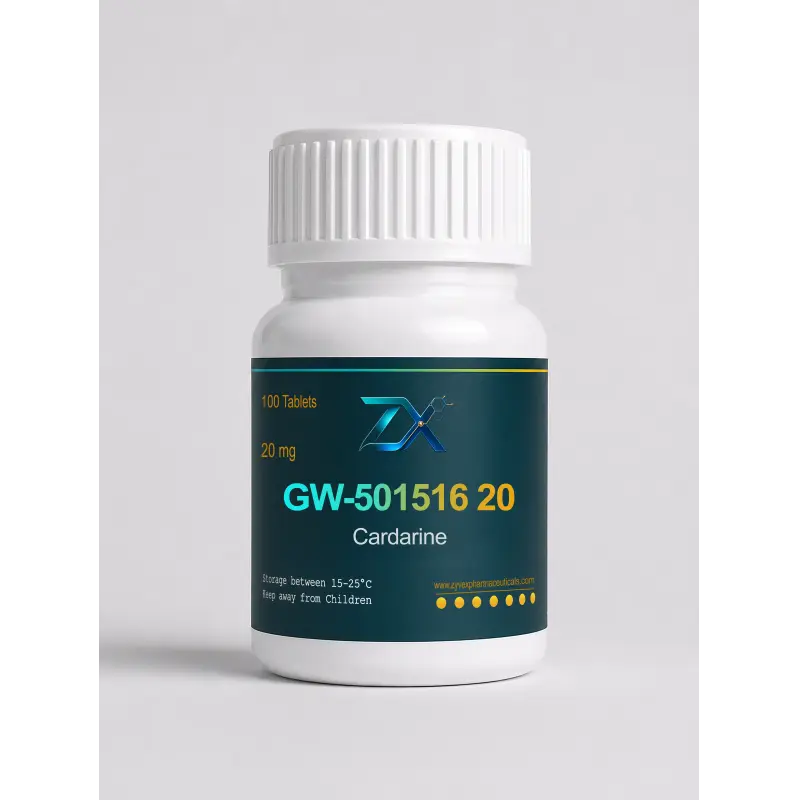
Cardarine GW-501516 - Zyvex Pharmaceuticals

Zyvex Pharmaceuticals

Cardarine GW-501516 - Zyvex Pharmaceuticals

Oral · 20 mg/tab · 100 tabs

Out of stock
CompoundCardarine (GW-501516)
ClassPPAR-delta agonist
Half-lifeNot established
DetectionUp to 40 days
Liver toxicityNot established
Water retentionNone
An oral metabolic modulator whose target is a nuclear receptor, not an androgen receptor. Two rows read Not established because the cited literature publishes no half-life for the compound and assigns no hepatic rating to a PPAR agonist; those cells stay empty instead of carrying a guess. The strongest documented number runs the other way from steroids: metabolites of the drug can be picked up in urine for up to 40 days following a single tablet. Development stopped in 2007 on a rodent cancer finding and WADA prohibits the substance.
Cardarine GW-501516 - Zyvex Pharmaceuticals
Order Now, Ships Today
Quality First

All products are manufactured under strict quality standards and independently tested before release. By purchasing, the buyer agrees to use these products in compliance with all applicable laws.

Product Overview

Best Anabolic Steroids stocks Cardarine from Zyvex Pharmaceuticals as an oral product filed under fat loss, with GW-501516 as its active substance. The shelf it sits on groups it with SARMs and that grouping is commercial, not chemical. GW-501516 activates a nuclear receptor called PPAR-delta; it binds no androgen receptor, it does not aromatise and it does not switch off natural testosterone production. A plan built around this product therefore has no place for an anti-estrogen, and no crash waits at the end of it.

Its history is the part most listings leave out. The compound was discovered in the 1990s by Ligand Pharmaceuticals working with GlaxoSmithKline and taken forward as a metabolic agent. The programme ended in 2007, after tumours developed quickly in several organs of the mice and rats that received 3 mg per kilogram each day, and WADA added the substance to the prohibited list in 2009 together with warnings that it is not safe. Both of those facts are treated here as product information rather than as a footnote, because the endurance stories that made the material popular were never matched by a completed human safety dossier.

What buyers are chasing is fuel use. Treated rodents ran much further before exhaustion, and that one result created the market. Human observations stay modest: shifts in blood lipids and in body composition are discussed in reviews and in user write-ups, timelines of two to four weeks appear in community posts, and no finished human trial supports them. In catalogued plans the product is an endurance layer beside a SARM such as Ligandrol LGD 4033 or Ostarine MK 2866, run short and at low dose exactly because the rodent signal is not a comfortable one.

How the Compound Behaves

PPAR-delta governs a set of genes tied to fatty acid oxidation. A synthetic ligand that switches those genes on moves working muscle toward burning fat for fuel and away from storing it, which is the whole of the mechanistic story and the source of the tablet-instead-of-cardio reputation. Nothing about that pathway adds muscle protein, and nothing about it removes anabolic drive from the system.

Clearance is poorly documented. The cited sources publish no elimination half-life for GW-501516, and no hepatic toxicity rating belongs on a PPAR agonist, so the short card on this page reports Not established in both rows rather than inventing a figure for symmetry with the steroid pages. Detection is the single well measured item and it is long: urine keeps showing sulfone metabolites for as long as 40 days after one dose, even though the unchanged drug is gone within about five days. For anyone in a testing pool, the 40 day number is the one that matters.

A steady level is easy to hold, since the tablet is taken once a day and the material is not injected. That simplicity is also the reason it gets combined too freely. Each extra compound in a stack adds its own unknowns to a substance whose human profile is already thin, and the section on side effects below treats the animal finding as the planning constraint rather than the headache reports.

Dosage Protocol

The figures below restate practice described in sources and user reports for GW-501516. They are reference points for a research plan, not a prescription, and no approved dose exists for this substance anywhere.

Level Daily amount Length Notes
Beginner 10 mg 8 weeks The lowest figure in the sources; a single oral dose each day
Intermediate 10-20 mg 8-12 weeks The band that appears most often in write-ups; morning intake
Advanced 20 mg up to 12 weeks Ceiling of the described range; nothing above it is documented
Female No confirmed protocol - The sources describe no separate female schedule for this compound
Administration Oral, once daily - Swallowed with a meal; no injection, no site rotation, no solvent

One human figure sits behind the band in the table: a forensic hair analysis case report describing intake of 10-20 mg per day for the compound. Everything above 20 mg is extrapolation, and the animal cancer finding came from a dose that translates into a far higher human equivalent than the table allows.

Suggested Protocols

None of these arrangements has been tested as a combination. They describe the shapes in which the product turns up on a training plan, with each partner contributing a different job.

Endurance layer over a lean plan
8 weeks. Conditioning and recovery work sit on different pathways, so no anti-estrogen is part of the plan and no recovery window follows the last tablet.
Conditioning inside a calorie deficit
8 to 10 weeks. Two stimulant-style tools in one plan raise resting heart rate and sleep disruption, so the blocks are kept apart rather than overlapped.
Fuel use next to intake control
Listed for comparison, not as a tested combination: one tool changes how muscle spends fuel, the other changes how much food arrives, and the third supplies the training signal.

What to Expect

  • Weeks 1 to 2. Very little that can be measured. Appetite, weight and hormone values stay where they were, and any change at this point is training, not the tablet.
  • Weeks 2 to 4. The window in which community write-ups place the first endurance change: longer sessions before fatigue, quicker recovery between efforts on the same calories.
  • Weeks 4 to 8. Steadier conditioning and, in reviews, a shift in blood lipids described as favourable. Scale weight barely moves unless food intake does.
  • The limit. The rodent cancer finding at 3 mg per kilogram per day is the reason runs are short. There is no human study that defines a safe ceiling, so 8 weeks is the usual length and 12 weeks the outer edge.
  • The thin record. Human safety data remain scarce. Headache, nausea and fatigue are the complaints that appear in reports, and they are tied to dose far more often than to duration.
  • Coming off. No hormonal crash and no shutdown to reverse. The training effect fades over the following weeks, and the one marker that lingers is the urine metabolite, up to 40 days after the final dose.

Side Effects and Management

Cancer signal in rodent studiesThe planning constraint, not a dose to manage: keep the block short, stay at the documented amounts and do not treat the animal finding as irrelevant. Seen in mice and rats at 3 mg per kilogram per day
Headache and nauseaReduce the amount and take the tablet with food. Reported by users and usually mild
Fatigue or flatnessMove the dose to the morning and check sleep and calories before blaming the compound. Individual
Very little human safety dataShort runs, one compound at a time and honest self-monitoring are the only controls available while the record stays thin. Not established in published sources
Untested combinationsNo interaction data exist for this substance; each extra product in the stack adds an unknown rather than a safeguard. No data in sources
Long detection windowMetabolites of the drug are traceable for as long as 40 days after one tablet, so a tested athlete should assume coverage through that whole period. Documented in urine analysis work

Cycle Support and Recovery

There is no post-cycle therapy for this product in the usual sense, and the reason is structural. Recovery drugs work by restarting a suppressed gonadotropin signal, and a PPAR-delta agonist never suppresses one. Copying a steroid recovery from another page onto this plan would add two compounds with their own side effects and nothing to act on.

OnsetNot applicable. The hormonal axis keeps running throughout, so there is no shutdown to time a recovery against
Option ANone: Nolvadex Tamoxifen Tablets have no target here, because nothing needs restarting
Option BClomid Clomiphene Tablets are equally out of place; gonadotropin release was never reduced by this material
Short runsA short block changes nothing about the need for recovery, because the need was never there; sources describe no withdrawal effect at all
Follow-upNo specific biomarker of stopping is defined in the sources. Liver enzymes and a lipid panel are the reasonable general checks after a long block

Buying Cardarine GW-501516 by Zyvex Pharmaceuticals

The pack is listed inside the Zyvex Pharmaceuticals range with its oral format and dosing notes on the card, so the daily amount can be fixed before the order goes in. Neighbours on the same shelf include Semaglutide 10 and Retatrutide 20 for appetite-led approaches to the same goal, and Clenbuterol for the stimulant route. Payment methods and shipping regions are shown at checkout, parcels leave in plain packaging, and stock questions can be answered before the order is placed.
This page is reference material about a research substance. The Zyvex Pharmaceuticals product described here is supplied for laboratory and experimental work; it is not a medicine, it has no approved dose, and nothing written above should be read as medical advice or as a treatment recommendation. Dose bands are restated from published reports and vendor material for the active substance. The rodent cancer finding and the WADA listing are stated because they are part of the record, and anyone weighing use has to weigh those two facts first. Keep the product out of reach of children and observe the law where you are.
Is Cardarine a SARM or an anabolic steroid?
Neither. GW-501516 is a PPAR-delta agonist, a synthetic ligand for a nuclear receptor that controls fatty acid oxidation. It binds no androgen receptor, so it adds no muscle-building signal, causes no water retention and leaves natural testosterone production untouched. Shops file it with the SARMs because that is where buyers look for it, not because the chemistry belongs there.
How much Cardarine is taken, and for how long?
The band that appears in sources runs 10 mg daily for a first block and 10-20 mg daily afterwards, taken once a day with a meal. Runs are usually 8 weeks, with 12 weeks as the outer edge. The only human figure behind that band is a hair analysis case report describing 10-20 mg per day.
What dose of Cardarine caused cancer in the animal studies?
Development stopped in 2007, when mice and rats on 3 mg per kilogram each day developed tumours across several organs within a short period. That is a higher exposure than any of the dose bands on this page produces, but it is also why the recommended runs here are short and why no source describes a safe human ceiling.
Why were the Cardarine human studies stopped?
Because the rodent results ended the programme. Two species developed cancers across multiple organs, the sponsor stopped development, and no completed human safety study followed. Everything published about human use since then comes from case reports, user reports and analytical work on urine samples.
Does Cardarine improve endurance, and how quickly?
The endurance story comes from animal work, where high doses let rodents run considerably further before exhaustion. In human write-ups the first change is usually placed two to four weeks into a block, and it is described as longer sessions and quicker recovery rather than as a jump in performance. There is no controlled human trial behind that timeline.
Is Cardarine banned in sport?
Yes. WADA listed GW-501516 in 2009 within the hormone and metabolic modulators class and has issued additional safety warnings about the substance. Urine continues to show sulfone metabolites for as long as 40 days after one dose, so the window for a test is far longer than the time the drug itself spends in the body.
Do you need PCT after a Cardarine cycle?
No. Post-cycle therapy exists to restart gonadotropin signalling after a suppressed axis, and this compound never suppresses it, so Nolvadex Tamoxifen Tablets or a similar drug would have nothing to act on. The sources define no withdrawal marker for GW-501516 at all.
Is there a confirmed Cardarine dose for women?
None is described. Because the target is not hormonal, the virilisation question that dominates female steroid planning does not arise, but with no human safety data and no published female schedule there is nothing to dose against either. The same no confirmed protocol row applies.

No reviews yet

Be the first to share your experience with Cardarine GW-501516 - Zyvex Pharmaceuticals

Log in to write a review

Complete the protocol

Stack it with

View all →
Added to cart