Best Anabolic Steroids

Press Enter to search the full catalog.

US Domestic discreet shipping
Third-party batch tested
HPLC & MS verified purity
Trusted Anabolic Manufacturers Only
US Domestic discreet shipping
Third-party batch tested
HPLC & MS verified purity
Trusted Anabolic Manufacturers Only
Back to all products
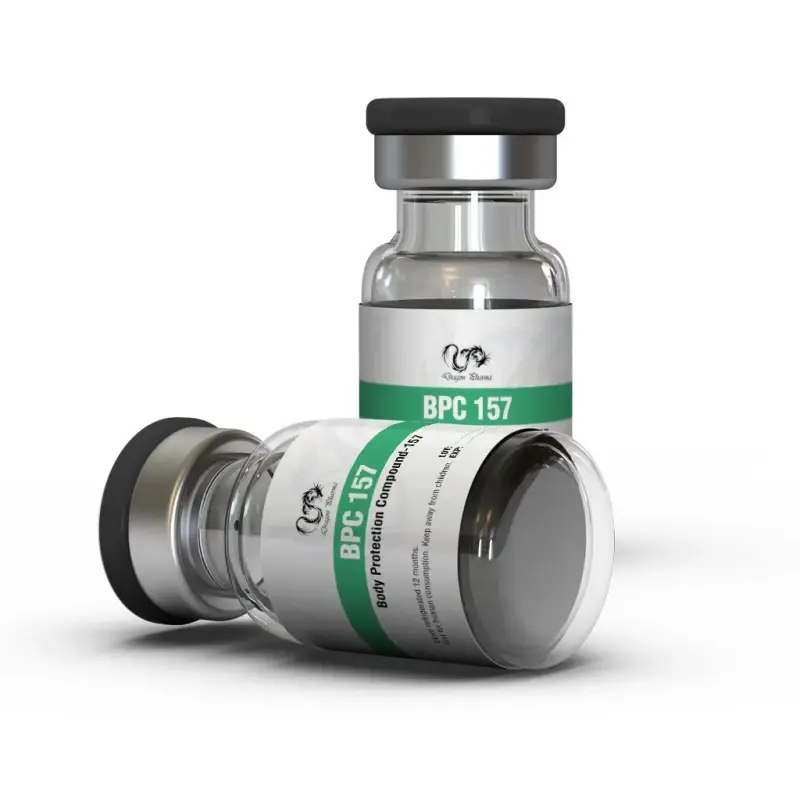
BPC 157 - Dragon Pharma

Dragon Pharma

BPC 157 - Dragon Pharma

Injection · 5 mg · vial

In stock · ships within 24h Out of stock Ships from International · U.S Domestic
CompoundBPC-157 pentadecapeptide
ClassResearch peptide
Half-life7.9-30 minutes (rats)
DetectionNot applicable (urine 4 days)
Liver toxicityLow
Water retentionNone
A single 5 mg lyophilised vial of a fifteen amino acid peptide that animal models link to tissue repair and gut protection. Human pharmacokinetics were never established, the measured half-life comes from rat work, and the material sits in WADA class S0, so it is read here as a laboratory reference substance. The 4 day urine figure describes how long the substance stays stable in urine, not a doping control window.
Shipping

Not available in this combination

BPC 157 - Dragon Pharma
Order Now, Ships Today
$40.00
1
Quality First

All products are manufactured under strict quality standards and independently tested before release. By purchasing, the buyer agrees to use these products in compliance with all applicable laws.

Product Overview

Dragon Pharma BPC 157 ships as one lyophilised vial holding 5 mg of the pentadecapeptide. The molecule is fifteen amino acids long and comes from a fragment of a protein found in gastric juice, which is why the older name for it is body protection compound. Production follows GMP practice and the peptide mass is printed on the label, so concentration is calculated from the volume of solvent added rather than estimated from a fill line. It is a laboratory reference material and not an approved medicine, and that status does not change with dose or route.

The research interest behind the vial is animal work. Rodent models have used this peptide in tissue repair and gut protection protocols, and the elimination half-life measured in those studies runs between 7.9 and 30 minutes after intravenous or intramuscular administration. No human half-life has been established, which is why a 2025 review of the clinical literature describes the human evidence base as limited. Researchers who want a second repair peptide on the bench usually order TB 500, and a pre-combined format exists as BPC-157 and TB-500 blend.

The vial fits laboratory and reference work where the readouts are tissue-level and the timelines are measured in weeks. Community descriptions concentrate on local application near tendons and joints, and short courses are usual simply because no validated duration exists in the literature. Every vial needs a solvent, so Bacteriostatic water is the natural companion purchase. Anyone subject to testing should note that the peptide is named in WADA class S0 and is prohibited at all times.

Dosage Protocol

There is no approved human dose for this peptide, so the figures below are the research and vendor reference values that are published for the material rather than clinical instructions. The arithmetic that follows is taken from the vendor method and scaled to the 5 mg fill of this vial.

Research amount 250-500 mcg per day is the amount quoted in vendor descriptions; no confirmed human dose exists
Course length Short courses are the community norm; no validated duration is published
Route Subcutaneous or intramuscular; community write-ups describe local application near the tissue of interest
Reconstitution Bacteriostatic water; the vendor reference uses 5 mg with 2 ml of solvent, where 250 mcg equals 10 units on a U-100 scale
Female No separate protocol was found; there is no established human dose for either sex
Administration Rotate the injection site and keep the injected volume small; the active life of the peptide is measured in minutes rather than days

Stacking and Combinations

Sources describe no fixed combination protocol for this peptide, so the cards below show the reference groupings that appear in practice rather than a validated plan. Each pill links to the product page and every item lives inside the Dragon Pharma section.

Tissue repair research
BPC 157 5 mg vial - 250-500 mcg per day + TB 500 - systemic partner peptide
Short blocks in community practice; the two peptides differ in distribution, BPC 157 locally and TB 500 systemically
Single vial against blend
Choose by experiment design: a single-peptide vial isolates one variable, the blend reduces the number of vials on the bench
Wider peptide panel
BPC 157 5 mg vial + Ipamorelin 5 mg + CJC-1295 Dac 5 mg
Reference grouping only; the peptide literature does not describe an interaction between these materials

What to Expect

  • Timelines. Human timelines are not established; the published effect data come from animal models, so expectations are built on vendor descriptions instead.
  • Reported comfort change. Users often describe less discomfort around tendons and joints within the first week or two of a short block.
  • Safety reading. The literature notes few serious events, but systematic human safety data are missing, so absence of reports is not evidence of a clean profile.
  • Half-life limit. The 7.9-30 minute figure was measured in rats; the short window is the main argument for repeated or local administration.
  • Handling burden. This is a research product, so sterility and dosing accuracy rest entirely with the user and the solvent used.
  • Testing status. The peptide appears in the 2026 WADA list in class S0, which matters to any athlete under a testing programme.
  • Cold chain. A reconstituted solution needs refrigeration, and the exact shelf life for this 5 mg vial is not confirmed in the sources used here.

Side Effects and Management

Reported events are mostly local and mild. The larger issue is that controlled human data are thin, so management decisions are based on technique and observation rather than on a documented risk profile.

Injection site irritationRotate sites and use clean technique; human data on frequency are limited.
Pain or redness at the siteCold compress and a pause between doses; reported infrequently in user write-ups.
Headache or mild malaiseReduce the amount or pause; these reports are not independently confirmed.
Unclear safety profile in humansKeep blocks short and observe; this is a class-level risk for research peptides.
Theoretical vascular effectExercise caution with any oncological history; the concern is theoretical and unproven.
Reconstitution errorUse Bacteriostatic water and calculate concentration from the label mass, not from the fill line.

Reconstitution and Storage

Handling is the part of this vial that is fully documented, so these rows collect the practical reference values. Related research materials from the same section include MOTS-c, GHK-CU and Tesamorelin.
SolventBacteriostatic water added to the lyophilised vial; add the solvent down the wall and swirl, never shake
ConcentrationThe vendor reference method uses 5 mg plus 2 ml; applied to a 5 mg fill the same arithmetic places a 250 mcg amount in 0.25 ml
Dry storageKeep the sealed lyophilisate cold and protected from light until first use
Mixed storageRefrigerate the reconstituted solution; do not freeze it
Shelf lifeNot confirmed for this vial in the sources used; the project file lists stability in urine at 4 days, which is a detection figure and not a storage figure
Follow-upNo specific laboratory markers exist for this peptide; observation of the tissue of interest is the practical endpoint
This page is published as an educational and research reference. The material described is a laboratory peptide supplied for research work, not an approved medicine and not a treatment for any condition. The amounts printed above are published vendor and animal-study reference values rather than a recommendation or a prescription, and they are not medical advice. Keep every product out of the reach of children and respect the rules that apply where you live.
What is Dragon Pharma BPC 157?
It is a synthetic pentadecapeptide, fifteen amino acids long, supplied by Dragon Pharma as a single 2 mg lyophilised vial. The sequence comes from a fragment of a protein found in gastric juice, which is where the name body protection compound originates. The vial is a research reference material and not an approved drug, and the label states the peptide mass so concentration can be calculated after adding solvent.
How do you reconstitute a 2 mg BPC 157 vial?
Add Bacteriostatic water to the vial and swirl gently instead of shaking, because the peptide is fragile. The published vendor reference uses 5 mg of powder with 2 ml of solvent, where a 250 mcg amount corresponds to 10 units on a U-100 scale; the same arithmetic applied to a 2 mg fill puts that amount at 0.25 ml. Keep the reconstituted solution refrigerated and out of the freezer.
What is the half-life of BPC-157?
Published rat data put the elimination half-life between 7.9 and 30 minutes after intravenous or intramuscular dosing. No human half-life has been established, so the rat figure is the only one that can be quoted honestly. That short window is the reason the material is often described with repeated or locally targeted administration in community write-ups.
What research amounts are described for BPC-157?
Vendor descriptions quote 250 to 500 mcg per day, and nothing more authoritative than that exists for humans. Community practice runs the material in short blocks because no validated duration has been published. Because the amount is a vendor reference and not a clinical dose, the material is presented here as research data only.
What is the difference between BPC-157 and TB-500?
They are different peptides with different origins. BPC-157 is a fifteen amino acid fragment of a gastric juice protein that is usually described with local application, while TB 500 is a thymosin fragment handled as a systemic material. Both are sold as lyophilised vials, and the two are also available together in a single blend vial.
What side effects are reported with BPC-157?
Reports in user write-ups are mostly local: irritation, pain or redness where the material was placed. Headache and mild malaise appear occasionally and are not independently confirmed. The honest summary is that systematic human safety data are missing, which is why short blocks and careful observation are the usual approach, and why a theoretical vascular concern is flagged for anyone with an oncological history.
Is BPC-157 banned by WADA?
Yes. The peptide is listed in class S0, the category reserved for non-approved substances, and it has been prohibited at all times since 2022. It is also named in the 2026 prohibited list. For a tested athlete that means the substance is out of scope regardless of dose, route or timing in the season.
Can a fake Dragon Pharma BPC 157 still show a working batch code?
It can, which is exactly why a code on its own is weak evidence. Batch codes are printed and reused by counterfeiters, so the check has to go further: verify the code through the manufacturer channel, compare label print quality and cap crimping against known genuine photos, and treat a code that resolves on a reseller site rather than the brand site with caution. Forum threads on supplier verification are a useful cross-check but not proof.

No reviews yet

Be the first to share your experience with BPC 157 - Dragon Pharma

Log in to write a review
BPC 157 - Dragon Pharma
International

Complete the protocol

Stack it with

View all →
Added to cart