Product Overview
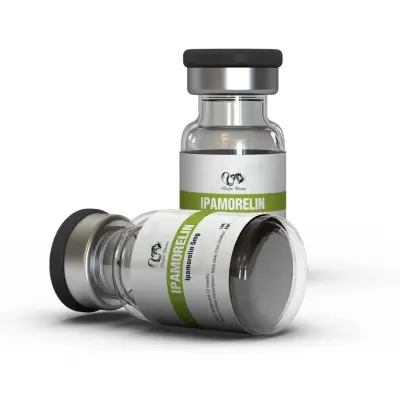
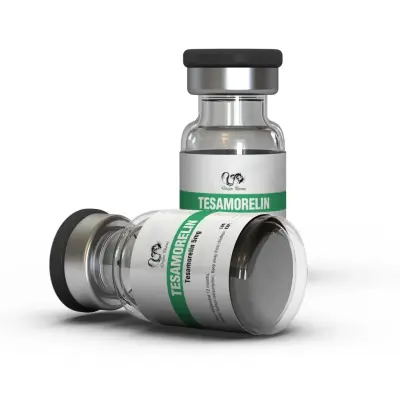
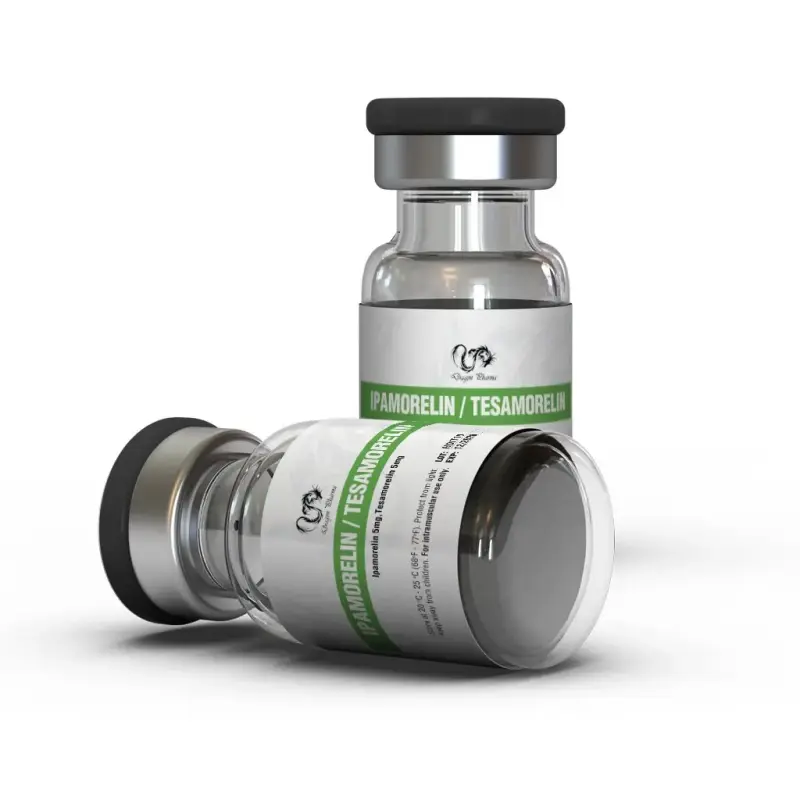
This vial combines two different ways of asking the pituitary for growth hormone. Tesamorelin is a synthetic form of growth hormone releasing hormone, built from 44 amino acids with a trans-3-hexenoic acid group on the N-terminal end, and it was approved in 2010 as Egrifta for excess visceral fat in HIV-associated lipodystrophy. Ipamorelin is a pentapeptide (development code NNC 26-0161) that binds the ghrelin receptor and is selective enough to raise growth hormone with a much smaller cortisol signal than the older secretagogues. They sit in one vial because they pull two different levers on the same output: tesamorelin works through the growth hormone releasing hormone receptor and ipamorelin through the GHS receptor, and the two routes do not overlap, so a single injection recruits both pathways instead of doubling up on one.
The half-lives tell the story of the blend better than any marketing list can. The approved tesamorelin presentation has a bioavailability no higher than four percent after subcutaneous injection and clears in 26 to 38 minutes; ipamorelin runs for around two hours after subcutaneous or intravenous dosing. The mixture therefore produces one release profile - a short peak riding on a slightly longer one - which means the blend follows the fast side of its own curve and no part of it supports a rare weekly injection.
The Dragon Pharma vial holds 10 mg of powder in total, with the ratio of the two peptides printed on the label. The honest boundary is that this specific combination has never been tested clinically: the mixture of an approved molecule with an unapproved research peptide has no study behind it, so any dose figure is extrapolation. For anyone comparing single-agent options, the section separately lists Ipamorelin 5mg on its own and Tesamorelin as a standalone GHRH analogue, and the difference in data quality between them is worth understanding before choosing a blend.
Blend Dosing and Reconstitution
There is no approved dose for this product because the product itself is not approved. The rows below keep the one clinical figure in the sources apart from vendor practice and from the arithmetic of the vial.
| Clinical anchor | The approved Egrifta presentations are dosed at 1.4 mg (SV) and 2 mg subcutaneously once daily. That is the single-drug label, not a blend instruction |
| Vendor practice | 200-300 mcg of ipamorelin two or three times daily, or 1-2 mg of the blend once daily, usually fasted before sleep, over a course of 8-12 weeks. These are vendor protocols, not clinical trial protocols |
| Reconstitution | Bacteriostatic water, added slowly and never shaken. 10 mg in 1 ml gives 10 mg/ml; 10 mg in 2 ml gives 5 mg/ml |
| Unit arithmetic | On a U-100 scale, where one unit is 0.01 ml, 10 units of the 10 mg/ml solution correspond to 1 mg; the 5 mg/ml solution needs 20 units for the same 1 mg |
| Vial yield | At 1 mg daily one 10 mg vial covers about 10 days; at 500 mcg daily it covers about 20 days. This is arithmetic, not a recommendation |
| Timing | Subcutaneous in the evening on an empty stomach, at least two to three hours after eating, because both components clear quickly |
| Female | No verified female schedule appears in the sources behind this page; no confirmed blend protocol exists for men either |
Growth Hormone Research Stacks
Three arrangements show up in the material. The mixture itself is already a two-receptor combination, so the cards below are about what gets studied alongside it, not about proven synergy.
What to Expect
- Days 1-3. A reaction where the needle went in is the most likely early event. No systemic change is described for the first days in the sources.
- Weeks 1-2. User accounts talk about better sleep and quicker recovery. There is no clinical measurement of either for this blend.
- Weeks 2-4. An IGF-1 shift can only be seen on a laboratory report. Without a blood draw there is no way to tell whether the pituitary responded at all.
- Weeks 4-8. The window that vendor protocols usually describe for a course of this kind.
- The approved anchor. In patients with HIV lipodystrophy, tesamorelin reduced visceral fat. That is a different drug form in a different patient group and does not transfer to a healthy user of a blend.
- Limits. Ipamorelin is unapproved and its phase II programme in postoperative ileus was stopped for lack of efficacy; growth hormone releasing factors and their secretagogues sit in WADA class S2 and are banned at all times.
Side Effects and Management
Most of what is documented belongs to the approved tesamorelin form rather than to the mixture. Where that is the case, the row says so, because a blend inherits neither the benefits nor the risks of its parts automatically.
IGF-1 Monitoring and Storage
No post-cycle protocol belongs to a growth hormone secretagogue, because neither component suppresses the gonadal axis. The real aftercare is laboratory work, since the endpoint of a release peptide cannot be judged by feel.
Mixing needs a solvent: Bacteriostatic water is the matching item in this section. For comparison work one step down the pathway, IGF-1 LR3 supplies the hormone that a releasing peptide is trying to raise, though the two have nothing in common pharmacologically.