Product Overview
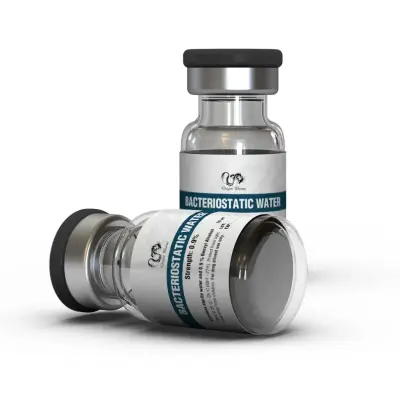
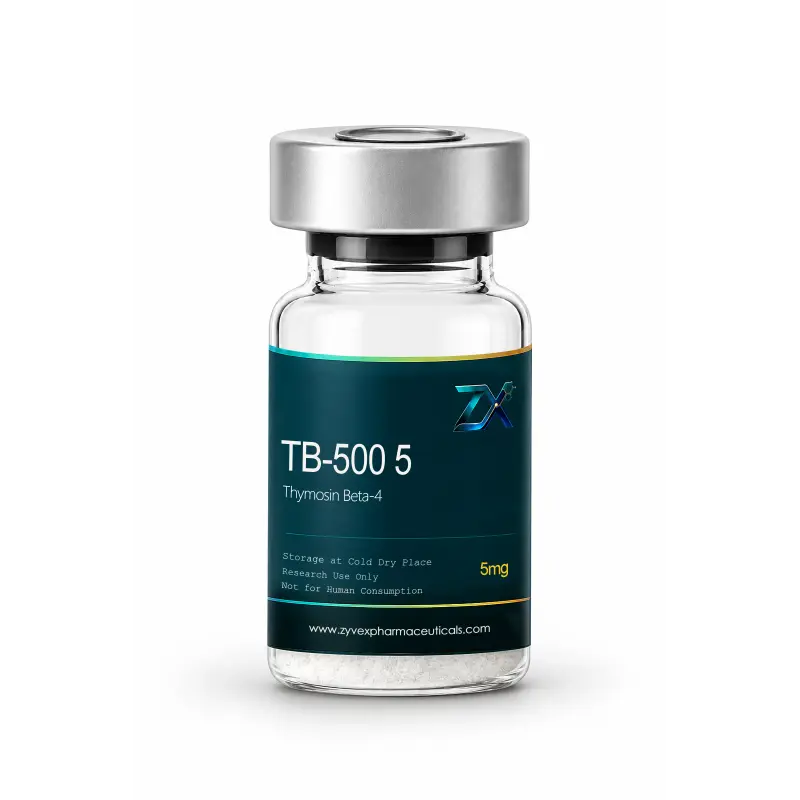
Best Anabolic Steroids lists TB-500 from Zyvex Pharmaceuticals as a lyophilised powder for reconstitution under a single vial, with Thymosin Beta 4 recorded as the active substance. Chemically the vial holds the synthetic fragment of a naturally occurring peptide, and it is catalogued under the short code TB-500 rather than the full protein name. Like every compound on the peptide shelf it arrives as a powder and is mixed with bacteriostatic water at the bench, not sold as a ready-made solution.
The file on this peptide is shorter than most buyers expect. Elimination in humans has never been measured, the sources leave the half-life field empty, and the same sources note that no human dosing, safety or efficacy data have been established. What does exist is veterinary work: the N-acetylated fragment LKKTETQ turned up in horse urine and plasma samples, which is analytical proof that the peptide and its breakdown products are traceable in body fluids, but it says nothing about the human window. The dosing rhythm described further down this page is therefore vendor protocol, not clinical guidance, and the page says so at every step.
Use is concentrated on soft tissue. Community descriptions centre on recovery from training and on joints and connective tissue, and the peptide is normally run as a course with a break afterwards rather than continuously. The peptide next to it in nearly every plan is BPC 157, and the split of labour is well defined: TB-500 is described as the systemic partner while the pentadecapeptide is the one applied locally. GHK-CU 50 covers the skin and collagen end of the same shelf. The three are different molecules with different mechanisms and none of them substitutes for another.
How the Peptide Behaves
The mechanism described in the literature is cell migration and the organisation of actin, which is what a repair peptide does: it moves repair cells to where they are needed rather than signalling growth. The fragment is short, water-soluble and stable in powdered form, and it is the reason the vial can be shipped at ambient temperature and stored for long periods before it is mixed.
Because nothing about the mechanism is hormonal, the peptide does not suppress natural testosterone production and no recovery protocol belongs at the end of a course. What it does require is a cold chain once the powder is dissolved. The reconstituted solution is kept refrigerated, and the sources state no expiry for this particular fill, which is an argument for mixing small volumes and using them promptly rather than preparing a large batch in advance.
The other structural feature worth knowing is the difference from its usual companion. The two peptides act through different routes, and sources who write about them warn explicitly against treating them as interchangeable. Someone planning a repair block picks one as the systemic component and one as the local component, which is why they appear side by side in the protocol cards below rather than as alternatives to one another.
Dosage Protocol
Everything in this table comes from vendor protocol material, not from a clinical trial. No approved dose exists for this peptide and no human pharmacokinetic data support any figure in it.
| Phase | Amount | Frequency | Length and notes |
|---|---|---|---|
| Loading | 2.0-2.5 mg | twice a week | Weeks 1-4, a weekly total of 4.0-5.0 mg; at that rate the 5 mg fill lasts about seven days |
| Maintenance | 2.0-2.5 mg | once a week | Follows loading; the same 5 mg fill then stretches across roughly two and a half weeks |
| Course length | - | - | 6-8 weeks, then a pause of similar duration before another course |
| Female | None published | - | The references offer no female schedule for this peptide |
| Administration | Reconstituted solution | subcutaneous or intramuscular | Volume is worked out from the strength of the solution, never from the size of the vial |
The loading step is a vendor convention rather than a measured necessity. With no human half-life to work from, nobody can say how much accumulates during two weekly injections or how quickly the level falls when maintenance starts, and the four week loading window is simply how the reference protocols are written.
Suggested Protocols
These are catalogue patterns. None of the pairings has been studied in humans, and the peptide's own safety record is described in the sources as unestablished.
What to Expect
- Weeks 1 to 3. Vendor descriptions place the first change here: less discomfort in the area treated and freer movement in the joints that were bothering the user before the block started.
- Weeks 3 to 6. The period in which a full course is expected to work, since the reference protocol runs 6 to 8 weeks with loading at the front. Nothing about the timeline has been measured in humans.
- No hormonal footprint. Testosterone, estrogen and gonadotropins stay where they were. A blood panel is not a way to check whether the peptide is working.
- The limit. No human half-life, no human dose, no safety profile and no efficacy data have been established. Short courses and one variable at a time are the only controls available.
- The cold chain. The mixed solution needs refrigeration, and no expiry for this fill appears in the reference material, so preparing it in small volumes matters more than buying in bulk.
- Testing. Thymosin beta-4 and its derivatives are named in WADA class S2, and the veterinary metabolite data show that the fragments do turn up in urine and plasma samples.
Side Effects and Management
Reconstitution and Storage
Mix the powder with bacteriostatic water and work the strength out from the volume used, never from the number printed on the vial. Fills sold across brands run 2, 5 and 10 mg; the reference protocols use the 5 mg fill because it matches their loading figures, and 5 mg taken up in 2 ml of water gives a 2.5 mg per ml solution, which makes a 2.0 to 2.5 mg dose 0.8 to 1.0 ml of it.
| Stage | Where it belongs | Practical notes |
|---|---|---|
| Sealed vial, still dry | Cold and dark | Leave it cold and out of light until the day it is opened |
| Mixed solution | Refrigerator | The reference material gives no expiry for this fill after mixing, which favours small batches over one large one |
| Every draw | Sterile practice | Swab the stopper first, use one needle per draw and avoid warming and cooling the solution again and again |
| Other peptides | Separate syringes | The sources warn against pulling this peptide into the same syringe as a product whose own instructions forbid mixing |
Buying TB-500 by Zyvex Pharmaceuticals
The peptide is listed inside the Zyvex Pharmaceuticals range as a single sealed vial of lyophilised powder. Buyers almost always pair it with BPC 157, and the other repair option on the same shelf is GHK-CU 50, while Ligandrol LGD 4033 and Ibutamoren MK 677 serve the training programmes the peptide usually accompanies. Shipping regions and payment options appear at checkout, parcels are discreet, and questions about the fill of the vial can be settled before the order is finalised.