Product Overview
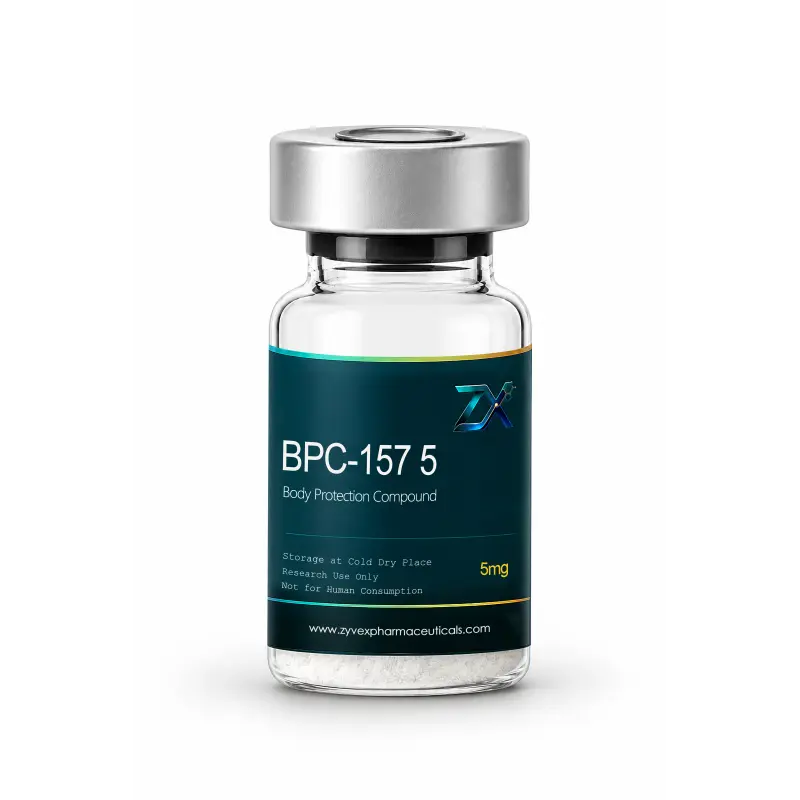
Zyvex Pharmaceuticals supplies BPC 157 through Best Anabolic Steroids as a lyophilised powder for reconstitution, an injectable research peptide rather than a finished medicine. The full chemical name is Body Protective Compound 157, the weight is 1419.556 g/mol and the sequence is fifteen amino acids long, modelled on a fragment of a protein that occurs naturally in gastric juice. That origin explains the older name and also the curiosity that drove the research: a peptide from the digestive tract that survives there intact for more than 24 hours was an interesting thing to study.
What the sources describe is not a drug with an indication. Animal work links the peptide to faster tissue repair, a lower load of pro-inflammatory cytokines, a neuroprotective profile in models and increased expression of the growth hormone receptor. Every one of those findings comes from laboratory animals. A systematic review of the field counted 36 studies, of which 35 were preclinical and exactly one was clinical, and that ratio is the honest summary of where the evidence sits. No regulator has approved this peptide for human use anywhere, and nothing in this listing changes that status.
The material is bought by people running their own repair protocols, usually at small subcutaneous amounts over two to four weeks. It is not a growth compound and it is not a steroid, so the classic pairing questions about estrogen or recovery drugs do not apply. The compounds it sits beside in a catalogue are the other repair peptides, TB-500 for a systemic approach and GHK-CU 50 for the skin and collagen side of the same idea. Anyone subject to doping control should stop at the first paragraph of the WADA note further down this page.
How the Peptide Behaves
The measured elimination half-life in rats runs between 7.9 and 30 minutes after intravenous or intramuscular dosing, and the same animal work puts intramuscular bioavailability at roughly 14 to 19 percent in rats, rising to 45 to 51 percent in dogs. No human half-life has ever been established. Those minutes are the reason the research describes a local effect at the tissue that was treated rather than a build-up of circulating levels, and they are also the reason divided daily administration appears in protocols rather than a single weekly shot.
Stability is the peptide's signature. In laboratory work the material stays intact in human gastric juice for over 24 hours and remains stable in urine for 4 days, both unusual for a peptide of this length. That stability belongs to the molecule and not to the vial in your hand, however: a lyophilised powder and a reconstituted solution are two different storage problems, and the section near the bottom of this page separates them.
Because the substance is not androgenic, it does not interfere with natural testosterone production, which means a plan containing it does not need a recovery protocol attached. It is also not a substitute for load management or rehabilitation work. The compounds that appear beside it in planned stacks are the repair peptides and, less often, the training layer, where a SARM such as Ostarine MK 2866 or Ligandrol LGD 4033 carries the performance side while the peptide carries the recovery side.
Dosage Protocol
The amounts below are research reference figures taken from vendor material and laboratory protocols. They are not an approved dose, and no approved dose exists for this peptide.
| Level | Amount | Length | Notes |
|---|---|---|---|
| Beginner | 250 mcg daily | 1-2 weeks | Subcutaneous, at the lowest figure in the sources |
| Intermediate | 250-500 mcg daily | 2-4 weeks | Often split into two shots a day, because clearance is measured in minutes |
| Advanced | 500 mcg daily and above | in courses | Beyond this point the material sits in research territory with no human data |
| Female | Not described | - | No female-only schedule appears anywhere in the sources |
| Administration | Subcutaneous, also oral in studies | divided | The short half-life drives the split; move the needle site each time and keep the technique sterile |
A word on arithmetic before the reconstitution section. Doses are counted in micrograms and units, never in millilitres, and the conversion depends entirely on how much solvent went into the vial. Reading a unit figure without knowing the concentration of the solution is the most common error around this material.
Suggested Protocols
Every arrangement here is a catalogue pattern rather than a tested combination, and none of the pairs has been studied together in humans.
What to Expect
- Preclinical only. Tissue repair, cytokine reduction, angiogenesis and the neuroprotective profile all come from animal models. Treat each of them as a study result, not as a promise.
- The one clinical study. Out of 36 papers reviewed, 35 were preclinical and one was clinical. Human efficacy data are therefore almost absent, and nobody can state a realistic timeline from published evidence.
- Minutes, not days. With a rat half-life of 7.9 to 30 minutes, the working assumption is that activity is local to the tissue treated, which is why injections go near the area of interest rather than anywhere convenient.
- No hormonal markers. Estrogen, testosterone and gonadotropins are not affected, so a blood panel will not show whether the peptide is doing anything at all.
- The limit. This is an unapproved research substance. Dosing, sterility and technique sit entirely with the user, and a soft-tissue problem that does not settle needs a clinician rather than a second vial.
- Tested athletes. The peptide is named in WADA class S0, prohibited at all times, with no in-competition distinction to exploit.
Side Effects and Management
Reconstitution and Storage
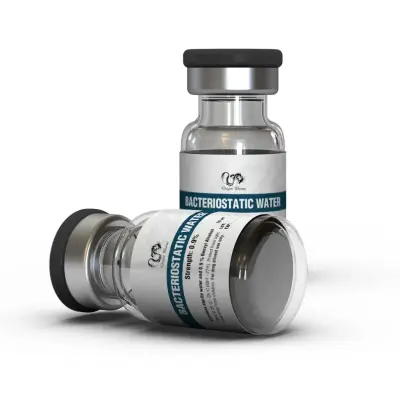
The powder is dissolved with bacteriostatic water, and the concentration that results depends on the volume added to the nominal fill of the vial. The table below restates the arithmetic described in the sources for the vial masses they cover.
| Fill | Concentration once mixed | How it is reached | Reading on a U-100 syringe |
|---|---|---|---|
| 5 mg | 2.5 mg per ml | 2 ml of bacteriostatic water | 10 units, which is 250 mcg |
| 10 mg | 5 mg per ml | 2 ml of bacteriostatic water | 10 units, which is 500 mcg |
| 30 mg | 10 mg per ml | 3 ml of bacteriostatic water | Each mark is 0.01 ml, so ten marks hold 1 mg |
Two storage rules follow different timelines. The dry powder stores cold between 2 and 8 C, or for shorter spells at ordinary room temperature, 15 to 25 C, out of the light, and freezing ruins it. Once mixed, the solution belongs in the refrigerator at 2 to 8 C and is described as usable for around 30 days, with repeated freeze-thaw cycles excluded because they damage the peptide rather than preserve it. Take each dose with a fresh needle and never push leftover fluid back into the vial.
Buying BPC 157 by Zyvex Pharmaceuticals
The vial sits in the Zyvex Pharmaceuticals catalogue as a sealed lyophilised fill, and the card records what arrives: one vial, a stated peptide mass, and the mixing arithmetic above. Anyone ordering a repair peptide usually adds a second one, and both TB-500 and GHK-CU 50 come off the same shelf, while Ostarine MK 2866 covers the training side of a recovery block. Checkout lists the payment routes and the shipping regions, parcels leave in plain outer packaging, and any question about the fill or the solvent can be settled before the order is dispatched.