Best Anabolic Steroids

Press Enter to search the full catalog.

US Domestic discreet shipping
Third-party batch tested
HPLC & MS verified purity
Trusted Anabolic Manufacturers Only
US Domestic discreet shipping
Third-party batch tested
HPLC & MS verified purity
Trusted Anabolic Manufacturers Only
Back to all products
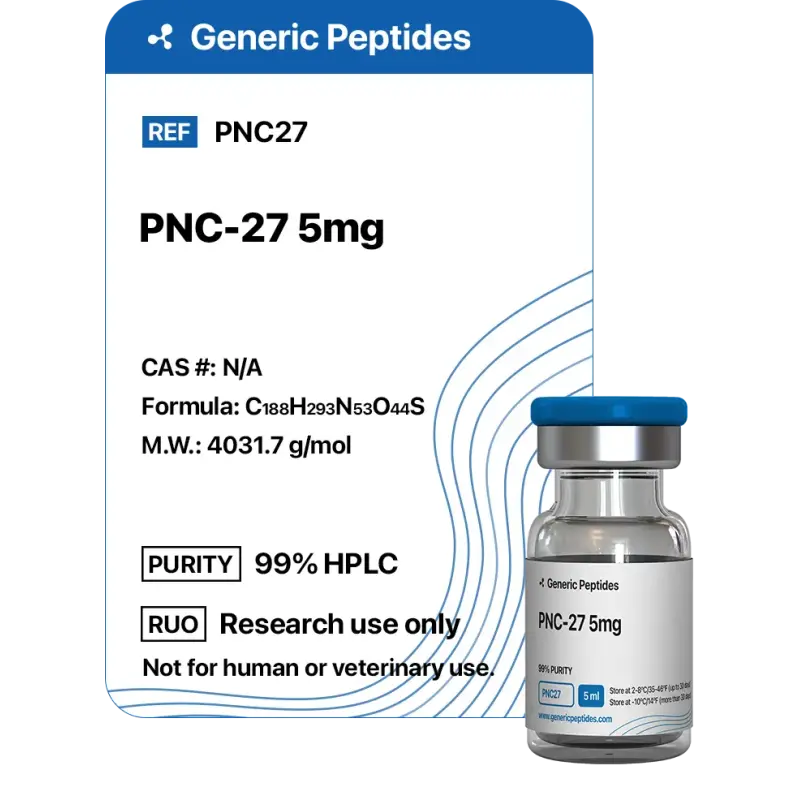
PNC-27 5 mg Vial - Generic Peptides

Generic Peptides

PNC-27 5 mg Vial - Generic Peptides

Injection · 5 mg · vial

In stock · ships within 24h Out of stock Ships from International
CompoundPNC-27
ClassSynthetic chimeric peptide
Half-lifeNot established
DetectionResearch only, n/a
Liver toxicityNot established
Water retentionNone described
A 5 mg freeze-dried vial of a laboratory peptide, not a product with a schedule behind it. PNC-27 is a chimeric molecule of 32 residues that pairs a p53-derived stretch with a membrane-crossing sequence, and every result attached to it comes from cultured cells or animal models. There is no phase I trial, no established human dose and no safety profile in people. A regulator has publicly warned against products sold on this name, which is why the shelf position and the sourcing standards matter as much as the purity.
Shipping

Not available in this combination

PNC-27 5 mg Vial - Generic Peptides
Order Now, Ships Today
$69.00
2
Quality First

All products are manufactured under strict quality standards and independently tested before release. By purchasing, the buyer agrees to use these products in compliance with all applicable laws.

Product Overview

Generic Peptides offers PNC-27 as a 5 mg lyophilised vial. It is a research material in the strict sense of the phrase, because everything known about the molecule comes from work in cultured cells and animal models. There is no approved pharmaceutical form, no clinical programme and no schedule that a supplier could quote from a label. Buyers should approach the page with that framing in mind.

The peptide is chimeric, built from two joined parts. One is a stretch of the p53 protein covering residues 12 to 26, the domain that recognises HDM-2, also written MDM2. The other is a membrane-penetrating sequence that lets the molecule cross a lipid bilayer. Joined together, the 32 residue construct is designed to recognise HDM-2 in places a plain p53 fragment would not reach, including the outer surface of tumour cells in culture.

PNC-27 is not a steroid, not a hormone and not a growth peptide. It shares nothing with the recovery compounds in this catalogue except the vial format. Products that sit on the same research shelf in the immune and repair section are Thymosin Alpha-1, BPC-157 and Thymalin, all of which have their own evidence bases and their own limits. Nothing on this page describes a treatment, and nothing here should be read as one.

Preclinical Status and Dilution

Because no human dose exists, this table carries laboratory status and reconstitution arithmetic only. The numbers describe how a 5 mg vial is divided, not how much anyone should take.

Item Figure Comment
Human dose None exists No phase I, II or III work and no recommended amount in any source
Half-life Not established No human pharmacokinetic study was located, so no figure can be quoted honestly
5 mg plus 1 ml 5 mg per ml 1 mg is 0.2 ml, or 20 units on a U-100 barrel; 500 mcg is 0.1 ml, or 10 units
5 mg plus 2 ml 2.5 mg per ml 1 mg is 0.4 ml, or 40 units; microgram steps need a low-volume barrel
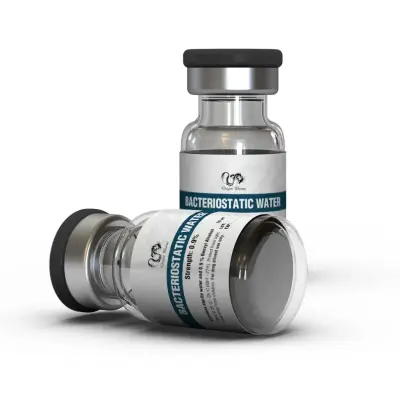
Solvent Bacteriostatic water Added down the wall of the vial and swirled, never shaken
Storage 2-8 C, dark The dry cake keeps far longer in a freezer; a mixed vial holds about 28 days chilled
Regulatory standard None No pharmacopoeia monograph covers this peptide, so purity claims rest on the supplier

Two points deserve emphasis. First, a concentration table is not a dosing table: it tells a laboratory how to deliver a defined quantity of material into a dish, and it says nothing about what quantity is acceptable in a living person. Second, with no monograph and no regulator, the practical variable a buyer can control is the source, which is why batch documentation matters more here than on any steroid page in the catalogue.

Laboratory Study Layouts

There is no protocol to reproduce, because the studies that exist are bench experiments. What follows is a reading of the current work rather than a set of routines.

Cell culture characterisation
PNC-27 - test article + Normal cell control line
The standard experiment: apply the peptide to cancer lines and to healthy cells, then compare membrane damage. Selective lysis in a dish, reported in culture and not in animals
Related construct comparison
PNC-27 - p53 domain 12-26 + PNC-28 - a different crossing sequence
Two versions of the same idea, differing in the sequence that carries the peptide across the membrane; published as a conference abstract rather than a head-to-head clinical study
Adjacent immune shelf
Listed so the shelf is clear: these are separate research areas with separate literatures, and no work links them to the PNC construct

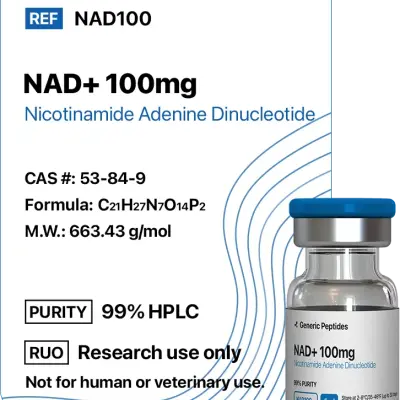
Where a laboratory is assembling a general research shelf, NAD+ covers cellular energy metabolism and Selank and Semax cover the neuropeptide side. None of those is a partner for this peptide in any published work, and the pairing of compounds on a shelf is not evidence of anything.

What to Expect in Preclinical Work

  • A mechanism, not a result. The peptide folds into a shape that binds HDM-2, which in culture is found on the surface of cancer cells as well as inside them.
  • Membrane pores and cell death. Binding is followed by the formation of pores across the membrane and necrosis of the cell in culture.
  • Selectivity reported in a dish. In cell culture the construct lysed cancer cells while leaving healthy cells intact, a difference attributed to those membrane HDM-2 complexes.
  • No human data of any kind. No controlled study in people, no dose finding, no safety record. That is the whole of the human evidence base.
  • No approval anywhere in the world. This is a laboratory reagent, and it has never been licensed for any use in medicine.
  • A regulator has issued a warning. Authorities cautioned consumers against products marketed under this name as a cancer treatment, and a contaminating bacterium was found in a sample of an inhaled solution.
  • Contamination is a real risk on this shelf. Products offered without documented sterility testing are the practical hazard that a buyer can actually do something about.

Side Effects and Management

There is no human safety database for this compound, so the honest position is that unknown effects cannot be listed as rare, common or absent. What follows is a statement of the gaps and the laboratory-level precautions.

Human safety recordNone exists. Observations come from cell cultures and animal models, which cannot predict how a person responds.
Injection site reactionsIf handled outside a laboratory, rotate sites and keep the technique clean. A generic consequence of any subcutaneous work.
Contamination of the productRequire documented sterility. A bacterium was identified in a marketed sample of an inhaled preparation of this name.
Immune response to the peptideImmunogenicity is uncharacterised because repeated human exposure has never been studied.
Interaction with cancer therapyUnknown, and combining anything unapproved with active treatment is a decision for an oncologist rather than a supplier.
Long-term effectsNot studied at all. There is no follow-up literature, controlled or otherwise, to draw on.

Regulatory Position and What Replaces a PCT

This peptide has no relationship to the hormonal axis. It does not suppress testosterone production, so a restart protocol is irrelevant here, and no dose of tamoxifen or clomiphene would do anything about the risks that do exist.

ApprovalNever licensed anywhere; the only published work is preclinical
Regulator warningConsumers were cautioned against products claiming this name as a cancer cure, and a bacterial contaminant was found in one sample
Structure32 residues: a p53 segment covering positions 12 to 26 joined to a membrane-crossing sequence
Position in the catalogueA research reagent beside the immune and repair peptides; it is not a therapy and cannot be presented as one
PCTNot applicable, because nothing on this page touches the gonadal axis

Anyone reading this card looking for a cancer treatment has arrived at the wrong page, and the sources are unanimous on that point. The material is sold for laboratory investigation, the mechanism is still being characterised in culture, and the responsible position for a supplier is to state the gaps rather than paper over them with a number that does not exist.
This material is published for educational and research reference purposes only. The compounds described are research-grade materials supplied for laboratory work and are not presented here as medicines or as a treatment for any condition. Dosing information reflects published clinical and reference data for the active substances, not a recommendation or a prescription. Nothing on this page should be read as medical advice. Keep all products out of reach of children and follow the regulations that apply in your country.
How is the PNC-27 molecule put together?
It is a chimeric peptide of 32 residues made from two joined parts: a p53 segment covering amino acids 12 to 26, which is the region that recognises HDM-2, and a membrane-penetrating sequence. The second part is what allows the molecule to cross a lipid membrane and reach HDM-2 complexes on a cell surface.
Is PNC-27 simply the p53 peptide?
No. It borrows one binding stretch of p53 but carries a second element that p53 itself does not have, which is the sequence that crosses the membrane. That addition changes where the peptide can go and therefore what it can reach in culture, and it is the reason the construct is described as chimeric rather than as a p53 fragment.
What does the peptide do to cells in the laboratory?
It adopts a conformation that binds HDM-2 on the membrane of cancer cells, and binding is followed by the formation of transmembrane pores and necrosis of the cell. That sequence has been described in cultured cell lines, not in a living organism, and necrosis in a dish says nothing about how the same molecule behaves in a body.
Which cells has the peptide been tested against, and does it spare healthy ones?
Published work covers several cancer cell lines in culture, including cervical models, with the consistent finding that the construct lysed cancer cells while leaving normal cells intact. Researchers attribute the difference to HDM-2-containing complexes that sit on the outside of tumour cells. All of this is bench data, and selectivity in a dish is not the same as safety in a patient.
Has PNC-27 ever been given to people?
There is no controlled human study, no phase I trial, no established dose and no safety record. Everything in the literature comes from cell cultures and animal models, and the half-life in people has never been measured, so the card states that no value exists rather than borrowing a figure from another peptide.
Is PNC-27 an approved cancer treatment?
No. It has never been licensed for any medical use in any country, and no regulator has accepted it as a therapy. This card sells a laboratory reagent: it is offered for research, and it cannot be presented as a treatment for cancer or for anything else, which is exactly the claim that draws regulatory attention.
Why did a regulator warn about PNC-27 products?
The warning concerned products marketed as a cancer cure without approval. As part of that action, laboratory analysis of one inhaled solution sold under the name identified a bacterium, Variovorax paradoxus, in the sample. For a buyer the practical lesson is to require documented sterility testing and to walk away from any supplier claiming a therapeutic use.
How is a 5 mg PNC-27 vial mixed, and what happens to it afterwards?
Add bacteriostatic water down the wall of the vial and swirl rather than shake. One millilitre into 5 mg gives 5 mg per millilitre, so 1 mg sits in 0.2 ml, or 20 units on a U-100 barrel, and 500 mcg is 0.1 ml. Two millilitres gives 2.5 mg per millilitre instead. Keep the powder dark and cold at 2-8 C, use a mixed vial inside roughly 28 days and do not freeze a dissolved solution.

No reviews yet

Be the first to share your experience with PNC-27 5 mg Vial - Generic Peptides

Log in to write a review
PNC-27 5 mg Vial - Generic Peptides
International

Complete the protocol

Stack it with

View all →
Added to cart