Best Anabolic Steroids

Press Enter to search the full catalog.

US Domestic discreet shipping
Third-party batch tested
HPLC & MS verified purity
Trusted Anabolic Manufacturers Only
US Domestic discreet shipping
Third-party batch tested
HPLC & MS verified purity
Trusted Anabolic Manufacturers Only
Back to all products
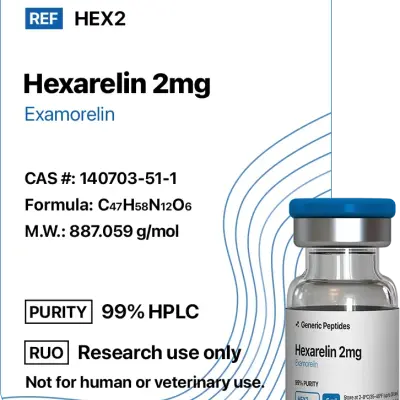
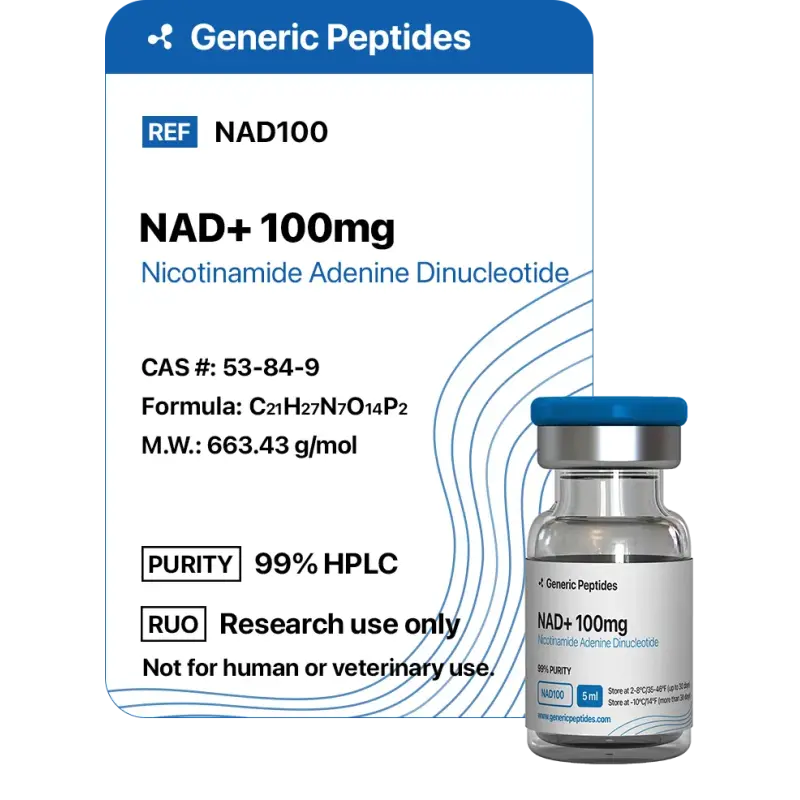
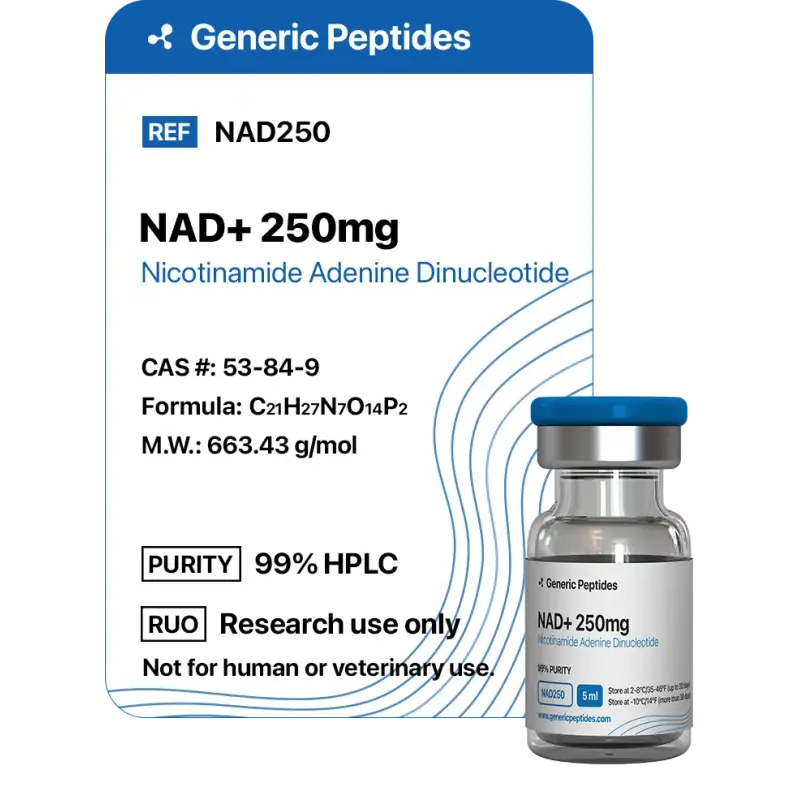
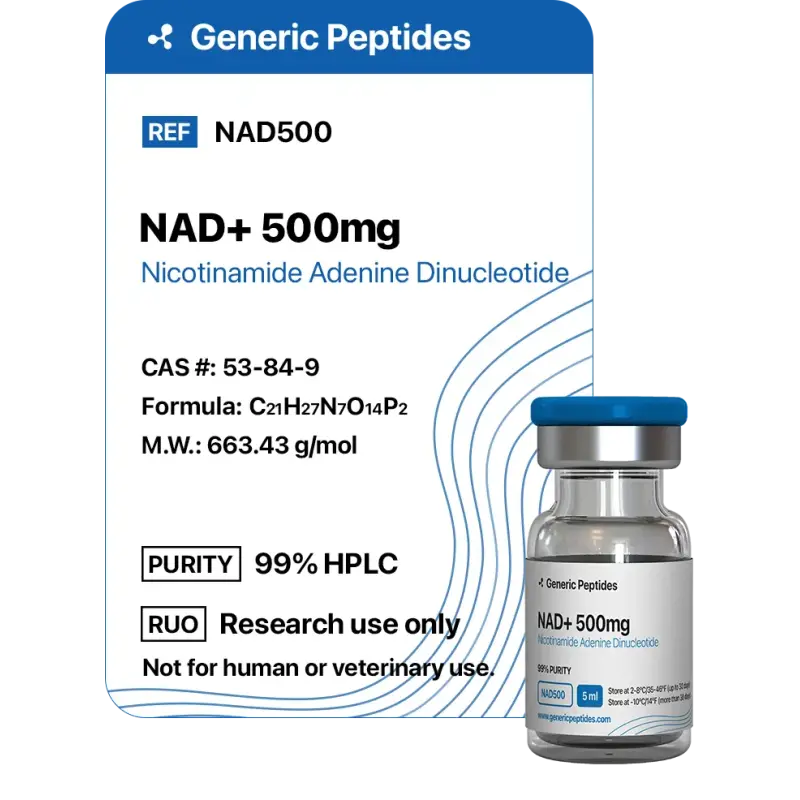
NAD+ 100-750 mg Vials - Generic Peptides NAD+ 100-750 mg Vials - Generic Peptides NAD+ 100-750 mg Vials - Generic Peptides NAD+ 100-750 mg Vials - Generic Peptides

Generic Peptides

NAD+ 100-750 mg Vials - Generic Peptides

Injection · 100 mg · vial

In stock · ships within 24h Out of stock Ships from International
CompoundNAD+ coenzyme
ClassRedox coenzyme, support
Half-lifeNot established
DetectionNot applicable
Liver toxicityLow, not confirmed
Water retentionNot described
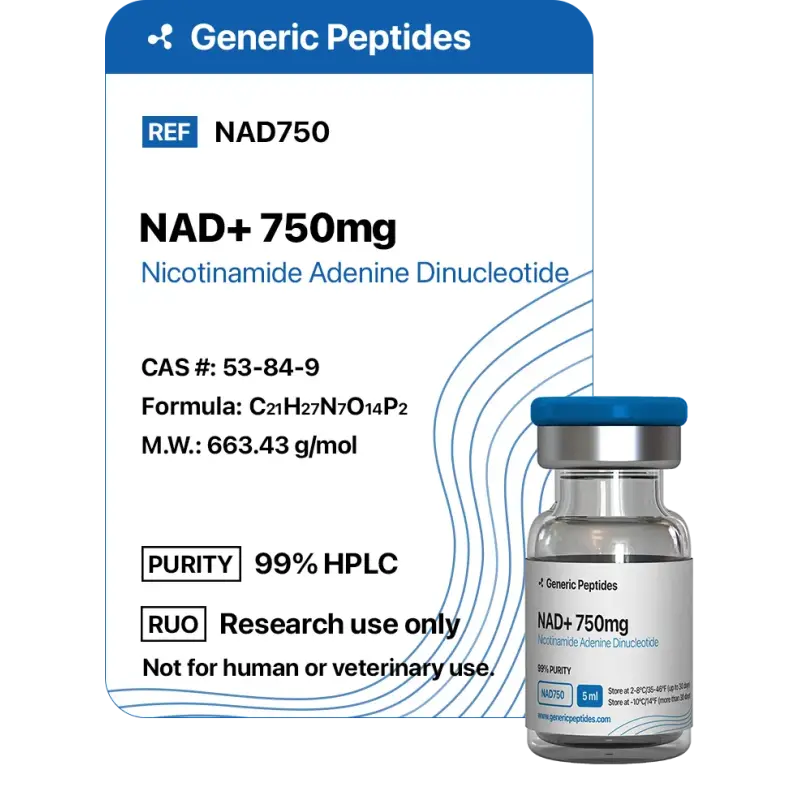
Four freeze-dried vial sizes of the dinucleotide coenzyme that carries electrons through redox reactions and feeds sirtuins and PARP. It is a support compound, not a peptide, not a hormone and not an anabolic, and it does not act on the gonadal axis. Sources give no single plasma half-life for NAD+ after an infusion, and the tolerance data come from slow intravenous work where the rate of delivery, not the total milligram figure, decides how the user feels. Sold as a research material with no approved medicinal indication; unapproved substances sit in WADA class S0.
Strength

Not available in this combination

Shipping

Not available in this combination

NAD+ 100-750 mg Vials - Generic Peptides
Order Now, Ships Today
$45.00
1
Quality First

All products are manufactured under strict quality standards and independently tested before release. By purchasing, the buyer agrees to use these products in compliance with all applicable laws.

Product Overview

NAD+ is the dinucleotide coenzyme that shuttles electrons in oxidation and reduction reactions and serves as the substrate for sirtuins and PARP. Generic Peptides supplies it freeze dried in four vials: 100 mg, 250 mg, 500 mg and 750 mg. There is no trade name on the label beyond the abbreviation, and no solvent inside the box.

This is a support product, not a hormone and not an anabolic. Insulin-like growth factor, testosterone and the pituitary have nothing to do with it; the mechanism sits in cellular energy handling and DNA repair. Tissue concentrations of the coenzyme decline over a lifetime, and that single observation is what turned a laboratory reagent into a longevity shelf item. What the sources do not offer is a validated human schedule, so the arithmetic below is dilution maths rather than a treatment plan.

Two practical points follow. First, nothing about this vial is injectable by a fixed recipe: how much solvent goes in decides the concentration, and the vial strength only sets the ceiling. Second, the tolerability records that exist come from slow intravenous infusions in clinical settings, not from subcutaneous use of a research vial, which is a gap worth stating plainly rather than papering over. Buyers comparing support-line items usually start from where the compound acts: Glutathione covers oxidative stress, and Epitalon covers the pineal-side research tradition.

Dilution Arithmetic

Because no dose in the sources maps onto this vial, the only reproducible numbers are concentrations after mixing. The table works them out per vial size on a U-100 scale, where 0.1 ml equals ten units.

Vial Solvent Result Ten units on U-100
100 mg 2 ml 50 mg/ml 5 mg
250 mg 5 ml 50 mg/ml 5 mg
500 mg 5 ml 100 mg/ml 10 mg
750 mg 5 ml 150 mg/ml 15 mg
Rate of delivery Slow Slower is better tolerated Rapid delivery is the trigger for most complaints
Female - No separate female schedule The sources contain no verified female protocol (not confirmed)

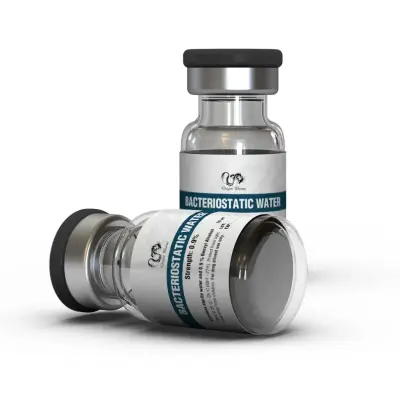
Reconstitute with bacteriostatic or sterile water run down the inside wall of the vial, then swirl. Shaking a dinucleotide solution is a way of buying foam, not speed. Storage follows the usual protein-style rule: the powder wants 2-8 C away from light, with a freezer for long-term holding, and the mixed solution belongs in the fridge.

Suggested Protocols

NAD+ is described alongside other longevity and recovery compounds, so the pairings below are shelf logic rather than tested combinations. No published work has run any of them together.

Support line, repair angle
NAD+ - slow delivery + Epitalon - pineal research peptide
Both sit in the longevity corner of the catalogue; the overlap has not been measured in any study
Redox pairing
Three different handles on the same broad idea of cellular upkeep; study them one at a time rather than as a stack
Metabolic comparison
Two very different paths to metabolic change; the incretin peptide has trial data, NAD+ does not

Sleep-and-recovery shelves sit next to this one as well: DSIP belongs to the sleep research tradition and Thymalin to immune-line work. Where the question is fat mass rather than cellular energy, Adipotide and Somatropin are the better comparisons in this catalogue, because both have human data of one kind or another behind them.

What to Expect

  • Flushing during delivery. A warm or red face is the leading observation in infusion records and it fades when the rate comes down.
  • Chest tightness or heaviness. Reported as a pressure-like feeling that resolves on slowing the delivery; if it persists, the infusion is stopped.
  • Nausea. Tied to pushing the material in quickly and to a rapid bolus in particular, so the pace is the variable to change.
  • Headache and fatigue. Both are frequent enough in clinical accounts to be treated as expected, not as a red flag on their own.
  • Soreness where the needle went in. Local and mechanical, managed by rotating sites and using clean technique.
  • Nothing dramatic, ever. The proposed mechanism is energy metabolism and DNA repair; no source promises a fast visible change.
  • Rate beats quantity. In a 2026 pilot, pronounced symptoms stretched a delivery to 97 minutes on average against 37 minutes for nicotinamide riboside, which is the practical price of tolerability.

Side Effects and Management

The complaint list is short and mostly procedural, because the dose-limiting factor here is speed of delivery rather than total amount.

Flushing and rednessSlow the delivery down. Tracked to rate rather than to the total milligram figure in the vial.
Chest pressureReduce speed and keep watching; stop altogether if it does not settle. Rate-linked in the clinical accounts.
NauseaAvoid a fast bolus and spread the amount over a longer period. Rate and volume dependent.
Headache, tirednessSlow delivery plus rest afterwards. Common enough in infusion work to be treated as routine.
Injection site sorenessRotate sites, keep technique clean, use bacteriostatic water. Purely local.
Unknown long term pictureNo data on prolonged use or on clinical outcomes exists, so duration is a judgement call rather than a schedule.

No Post-Cycle Therapy and What to Watch Instead

There is no recovery protocol to run, in the strict sense, because NAD+ has no hormonal action to recover from. A SERM belongs to cycles that suppress natural testosterone production, and this compound suppresses nothing.

OnsetObservations appear while material is going in and track the rate of delivery
PCTNot applicable; the compound is not hormonal and the gonadal axis is not involved
Off-periodNo low-dose or tapering scheme for NAD+ appears anywhere in the sources
Follow-upHow the person feels during delivery, plus blood pressure and pulse
MarkersThe sources describe no specific laboratory marker to track for this compound
SportNot named on the WADA list, but class S0 covers unapproved substances, so absence from the list is not permission

The framing worth keeping is the least exciting one: NAD+ is not an approved medicine, and a clinic selling it is selling a service under no indication that a regulator has ever reviewed. Handled as a research material with careful dilution and slow delivery, the risk profile in the available records looks mild; handled as a shortcut, the records say nothing at all.
This material is published for educational and research reference purposes only. The compounds described are research-grade materials supplied for laboratory work and are not presented here as medicines or as a treatment for any condition. Dosing information reflects published clinical and reference data for the active substances, not a recommendation or a prescription. Nothing on this page should be read as medical advice. Keep all products out of reach of children and follow the regulations that apply in your country.
What is NAD+ and where does it act in the body?
It is a dinucleotide coenzyme that moves electrons in redox chemistry and acts as a substrate for sirtuins and PARP. In the catalogue it is classed as a support compound, not as a peptide or a hormone, and it has no anabolic or androgenic activity at all.
How do you mix the 100 mg and the 750 mg vials?
Put 2 ml into the 100 mg vial and the result is 50 mg per ml, so ten units on a U-100 barrel holds 5 mg. The 750 mg vial with 5 ml gives 150 mg per ml, where ten units carries 15 mg. The 250 mg and 500 mg vials land at 50 and 100 mg per ml on 5 ml.
Why is slow delivery such a big deal with NAD+?
Every complaint in the records, flushing, chest heaviness and nausea included, is tied to how fast the material goes in rather than to the total amount. In a 2026 pilot, pronounced symptoms lengthened an infusion to 97 minutes on average, a clear signal of what slowing down buys.
What half-life does NAD+ have?
No settled figure exists for plasma NAD+ after an infusion. Estimates in the order of a few days appear in work on the intracellular pool, and those cannot be carried over to a plasma curve. Treat any precise half-life claim for this compound as unsupported.
Does NAD+ need a PCT or an off-period?
Neither is described. There is no hormonal suppression to recover from, so tamoxifen or clomiphene plays no role, and the sources contain no low-dose or tapering scheme. What they do suggest is watching blood pressure and pulse during delivery.
Is NAD+ a legal supplement or a research material?
As supplied here it is a lyophilised research material with no approved medicinal indication. A clinic offering NAD+ is selling a service under no indication a regulator has reviewed, and in sport unapproved substances fall under WADA class S0.
How should the powder and the mixed solution be stored?
Keep the lyophilisate at 2-8 C protected from light, and use a freezer for long-term holding. After mixing, refrigerate the solution. Add water down the wall of the vial and swirl rather than shake, since foaming does nothing useful for a dinucleotide.
Which items from the same line are usually studied alongside it?
Glutathione, Epitalon and 5-Amino-1MQ sit on the same support shelf, and Thymalin or DSIP are the neighbouring immune and sleep items. None of those pairings has been run through a published study, so they are catalogue neighbours rather than measured combinations.

No reviews yet

Be the first to share your experience with NAD+ 100-750 mg Vials - Generic Peptides

Log in to write a review
NAD+ 100-750 mg Vials - Generic Peptides
100 mg · International

Complete the protocol

Stack it with

View all →
Added to cart