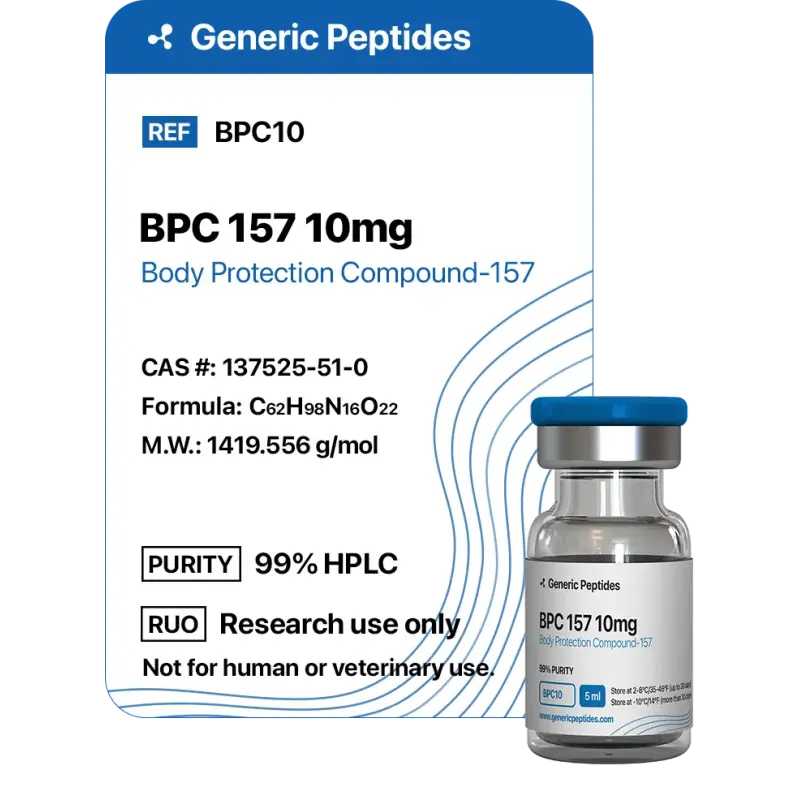
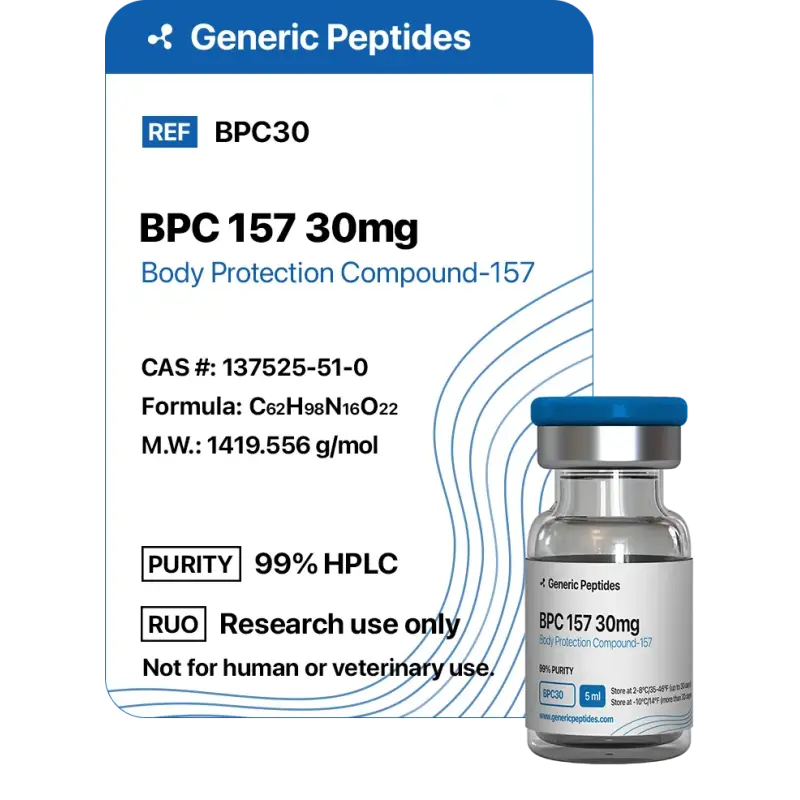
Product Overview
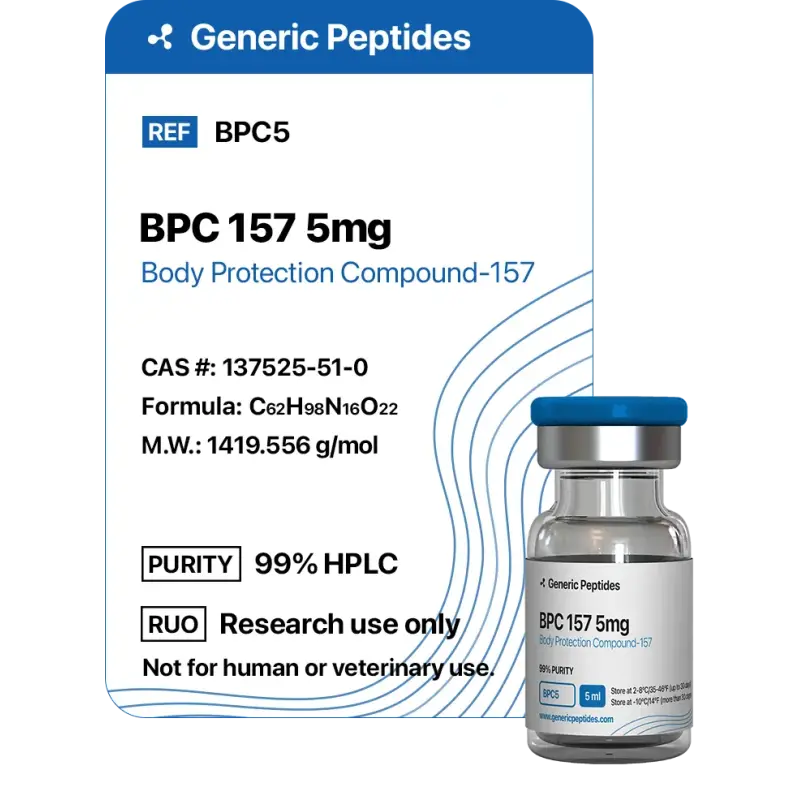
BPC-157 is a synthetic pentadecapeptide of fifteen amino acids, derived from a fragment of a human gastric protein and studied since the 1990s for tissue repair and gut protection. Generic Peptides lists three freeze-dried vial sizes: 5 mg, 10 mg and 30 mg. The 30 mg presentation is the one that suits repeat local work, since a small daily amount drawn from a large vial avoids constant mixing.
Almost all of the research sits in animal models. The peptide has been examined for tendon and ligament healing, gastric and intestinal lesions and soft tissue repair in rats, and the pharmacokinetic figures that circulate, a half-life of 7.9 to 30 minutes after intravenous or intramuscular dosing, were measured in rats as well. There are no published human kinetics, which means the timing claims made in forums rest on data from another species.
Two consequences matter. First, a short-lived peptide is normally injected at the site of interest rather than far away, which is why the community splits into local and systemic camps. Second, the compound is a research material without an approved medicinal form, and it has been in WADA class S0, the catch-all for unapproved substances, since 2022. Anyone studying the repair side of the catalogue can compare notes with TB-500, which acts on cell migration rather than on local tissue signalling.
Dosage Protocol
The amounts below are vendor and community conventions. They are listed because they appear in published descriptions, not because a human trial validated them.
| Item | Figure | Note |
| Research amount | 250-500 mcg daily | Vendor description; no confirmed human dose exists |
| Mixing example | 5 mg vial plus 2 ml | 250 micrograms then sits under the ten-unit mark of a U-100 syringe |
| Course length | Short blocks | Community convention; no validated duration |
| Injection site | Local or systemic | Short half-life favours local placement in animal work |
| Female | - | The sources contain no verified female schedule (not confirmed) |
| Storage | Cold, dark | Lyophilisate in the fridge; mixed solution refrigerated, exact shelf life for this vial not confirmed |
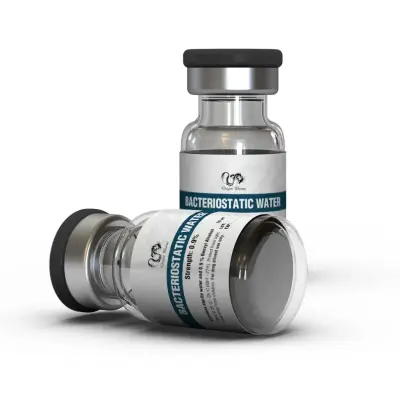
Dilution arithmetic is the same in every vial size: the concentration depends only on how much solvent goes in. Running 5 ml of bacteriostatic water into a 10 mg vial produces 2 mg per ml, so ten units on the barrel carries 200 micrograms, while the same 10 mg with just 2 ml produces 5 mg per ml and 500 micrograms under the identical mark. Work out the number before the needle is anywhere near the rubber.
Suggested Protocols
Research writing places this peptide either alone in a local repair arm or beside compounds that handle repair from a different angle. Nothing below has been tested as a combination in a controlled study.
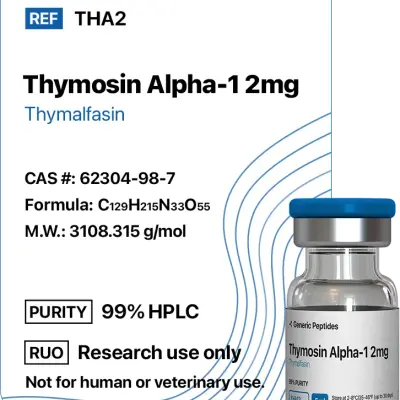
Support items on the same shelf include Thymosin Alpha-1 for the immune side of recovery and Glutathione for oxidative stress, while DSIP and Thymalin sit in the sleep and immune corners of the line. Treat all of them as catalogue neighbours, not as measured combinations.
What to Expect
- No human timeline exists. Expectations have to be built from animal models and vendor descriptions, because no clinical course has been published.
- Users describe early joint relief. Reduced discomfort around tendons and joints in the first week or two is the most repeated community report.
- Short residence in the body. The 7.9 to 30 minute figure comes from rats, and even taken at face value it rules out long-acting effects from one injection.
- Local placement is the norm. A peptide with such brief kinetics is usually studied close to the tissue of interest.
- Few serious effects reported. The literature notes little in the way of serious adverse events, while also offering no systematic human safety data.
- Sterility is on the user. As a research product, it arrives without pharmaceutical quality assurance, and drawing technique decides most of the risk.
- Testing reality. The peptide is detectable in urine and stable there for around four days; the class has been on the prohibited list since 2022.
Side Effects and Management
The complaint list is short and local. Frequencies are not published, so the entries below say what the sources describe rather than how often it happens.
Post-Cycle Therapy (None Applies) and Monitoring
No recovery protocol is needed after this peptide. It does not touch the hypothalamic-pituitary-gonadal axis, so testosterone production is unaffected and a SERM would have nothing to restart.
What actually decides the outcome of a block is technique and storage rather than any recovery step. Sites get rotated, water goes in gently against the glass wall, the mixed solution stays cold, and a vial that arrived warm from a courier is treated as a lost vial. That is the whole management plan.