Product Overview
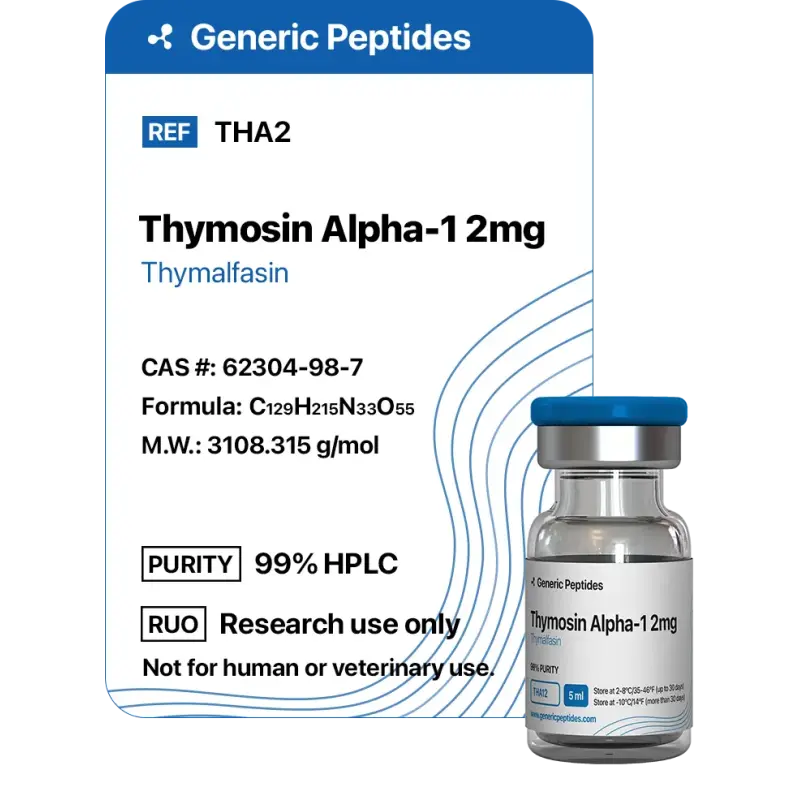
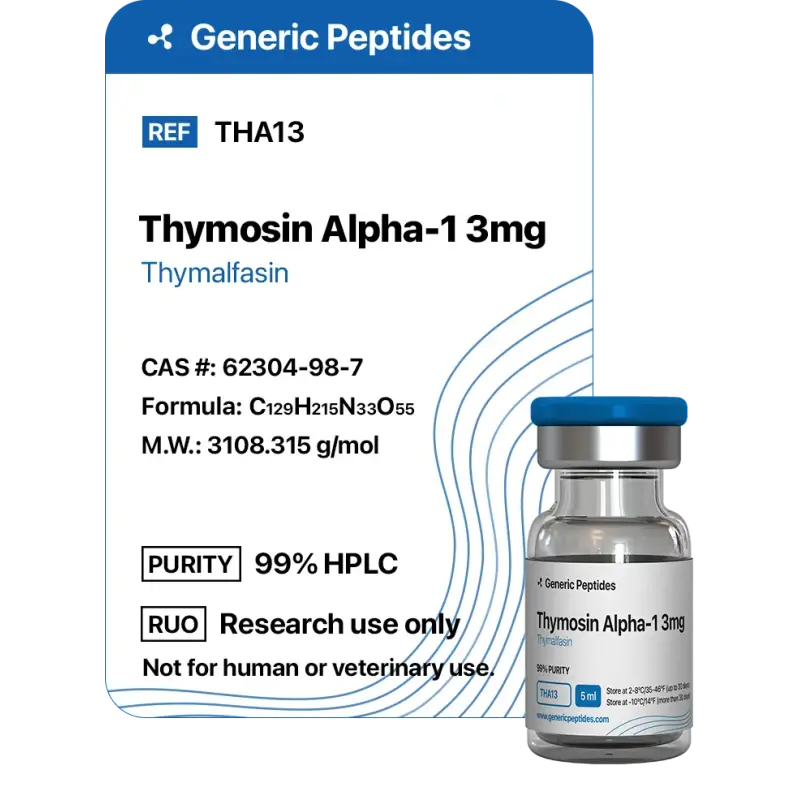
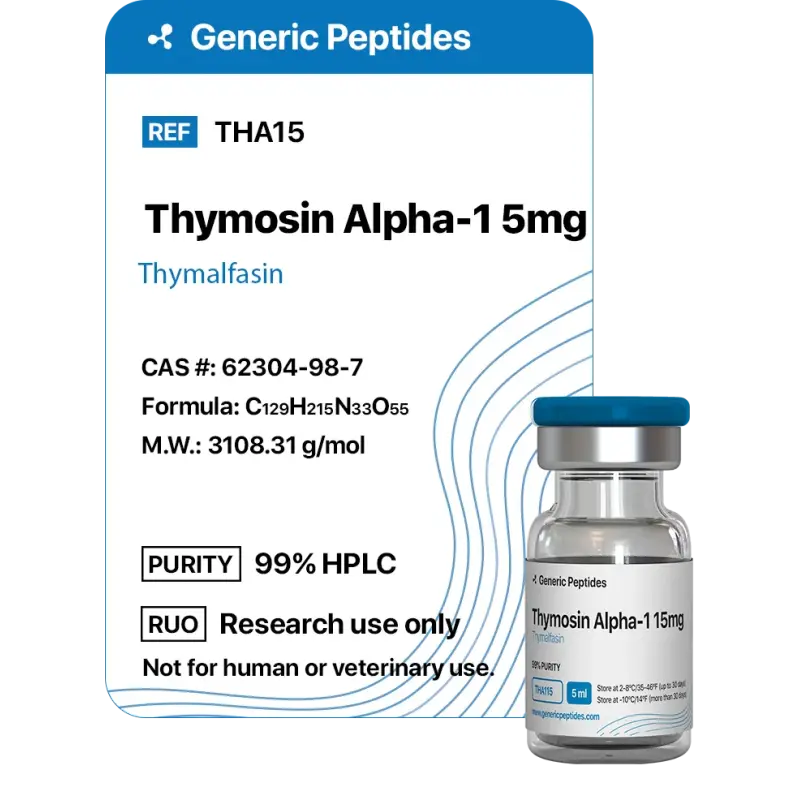
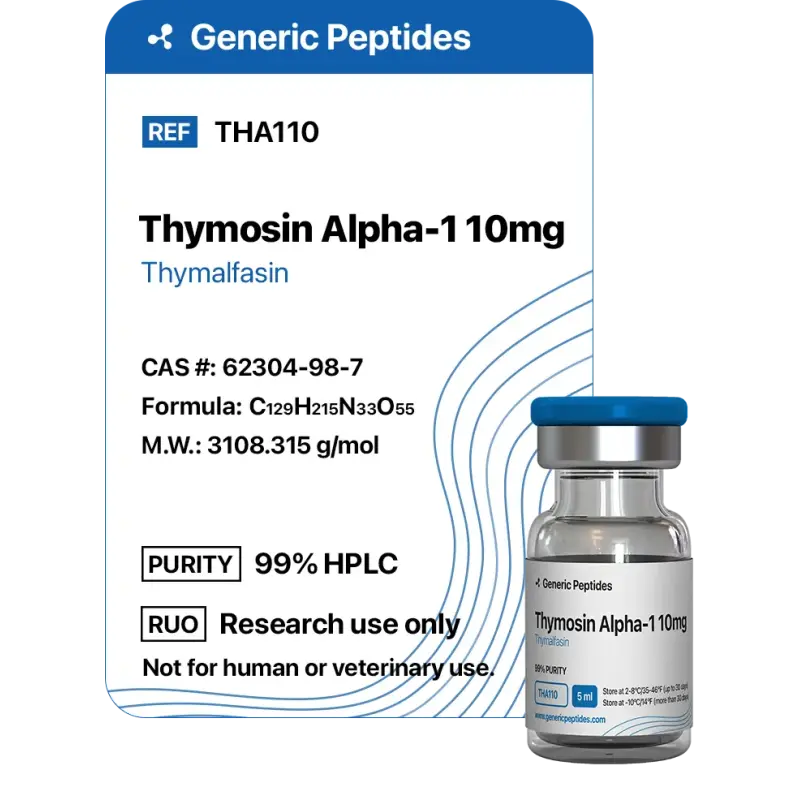
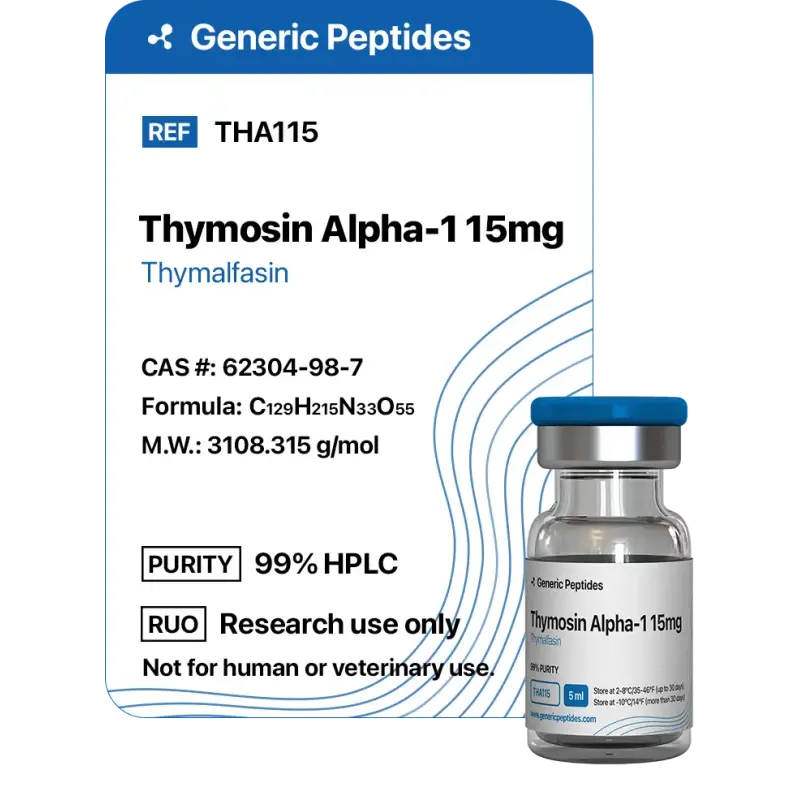
Thymosin alpha-1 is a 28 amino acid peptide that the thymus produces and that acts as a biological response modifier. Generic Peptides stocks it as five freeze-dried vials: 2 mg, 3 mg, 5 mg, 10 mg and 15 mg, all of them requiring a solvent before use. The synthetic version carries the international name thymalfasin, and a medicinal product built on it is sold in some countries as Zadaxin, which is a useful reference point when reading clinical papers.
The activity described in the sources is cellular rather than hormonal. The peptide supports T-cell mediated immunity and influences the maturation and function of immune cells, and early work on thymus-free animals pointed to a restoration of immune response, which is where the whole immunomodulatory tradition began. Studies have looked at chronic viral infections including hepatitis B and C, at sepsis, at severe respiratory infections and at immune support in oncology settings.
One trial result deserves to be stated before any dosage discussion. A 2023 review of patients admitted with COVID-19 came back empty on survival and on time spent in hospital, which makes the strongest recent evidence for the compound a negative one. There is also no United States registration, which means the vial on this page is a research material rather than a prescription product. Users who compare it with TB-500 should note that the two share the thymosin name only; the sequences and the targets differ.
Dosage Protocol
Clinical reference figures are collected below for orientation while reading the literature. They describe existing trials, not a schedule for a research vial, and no verified female protocol appears in the sources.
| Reference | Amount | Frequency | Comment |
| Hepatitis B regimen | 1.6 mg | Twice weekly | Courses of roughly 12 weeks in the published work |
| Range seen in trials | 0.8-6.4 mg | Twice weekly | A spread of tested amounts, not a recommendation |
| Below-reference study | Under 1.6 mg | Twice weekly | Lower amounts appear in trials but no standard low-dose scheme exists |
| Vial capacity | 10 mg vial | Six shots at 1.6 mg | About three weeks of a twice-weekly reference course |
| Female | - | - | No separately validated female schedule found in the sources |
The dilution step is plain arithmetic. Adding 5 ml to the 15 mg vial leaves 3 mg of peptide in every millilitre, which puts 300 micrograms into a 0.1 ml draw, and the smaller vials are normally brought to 2 mg per ml where that same volume holds 200 micrograms. Mix by letting the water run down the glass and swirl; do not shake a peptide into foam.
Suggested Protocols
Thymosin alpha-1 is written about as background immune support rather than as a short sharp intervention, which is why the reference courses run about twelve weeks at low frequency. The pairings below are catalogue arrangements, since no combination work has been published.
Sleep and stress items round out the same shelf: DSIP for sleep research and Selank where the anxiolytic line is of interest. None of these pairings changes the honest summary, which is that a single immune peptide carries a modest evidence base and a wide research gap.
What to Expect
- Predictable kinetics. A 900 microgram subcutaneous dose peaks at 1-2 hours and clears with a 2-3 hour half-life, so this is not a compound that builds a level.
- Twice-weekly rhythm. Clinical work uses two doses a week, which frames the effect as background support instead of a single event.
- T-cell direction. The measurable thread in the literature is cell-mediated immunity, not muscle, fat or libido.
- Animal history. Early work on animals lacking a thymus pointed to a return of immune response, and that finding launched the immunomodulatory use.
- A negative recent trial. The 2023 review of admitted COVID-19 patients showed no survival advantage and no shorter admission, and that belongs in any honest expectation.
- No approved medicinal form. There is no United States registration; this is a research vial, not a prescription.
- Not on the banned list by name. Thymosin alpha-1 is not named on the WADA list, though absence from a list is not the same as clearance.
Side Effects and Management
The reported profile is dominated by local reactions. Nothing in the sources points to organ toxicity, and where frequency figures are missing the note says so.
Post-Cycle Therapy (Not Required) and Follow-Up
Nothing here suppresses testosterone, so a recovery protocol has no target. What a course of thymosin alpha-1 needs instead is a sensible observation frame and honest storage.
Where a course ends, nothing has to be restarted and nothing has to be tapered. The one thing worth planning in advance is the cold chain: a 10 mg vial reconstituted at 2 mg per ml gives about three weeks of a twice-weekly reference course, which is exactly the window in which a mixed solution has to be used or discarded.