Best Anabolic Steroids

Press Enter to search the full catalog.

US Domestic discreet shipping
Third-party batch tested
HPLC & MS verified purity
Trusted Anabolic Manufacturers Only
US Domestic discreet shipping
Third-party batch tested
HPLC & MS verified purity
Trusted Anabolic Manufacturers Only
Back to all products
Glutathione 200-500 mg Vials - Generic Peptides Glutathione 200-500 mg Vials - Generic Peptides

Generic Peptides

Glutathione 200-500 mg Vials - Generic Peptides

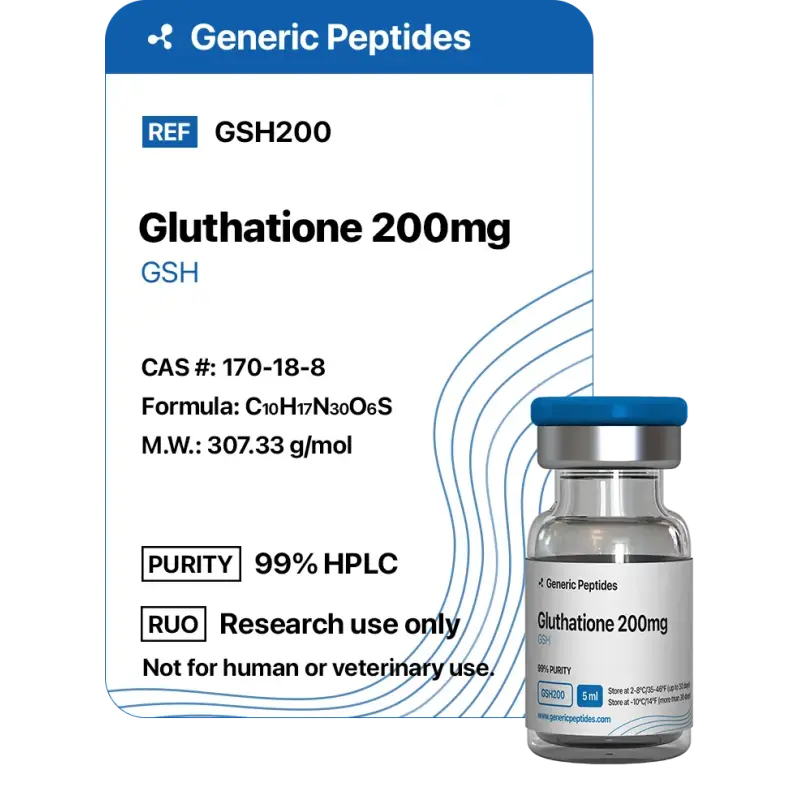
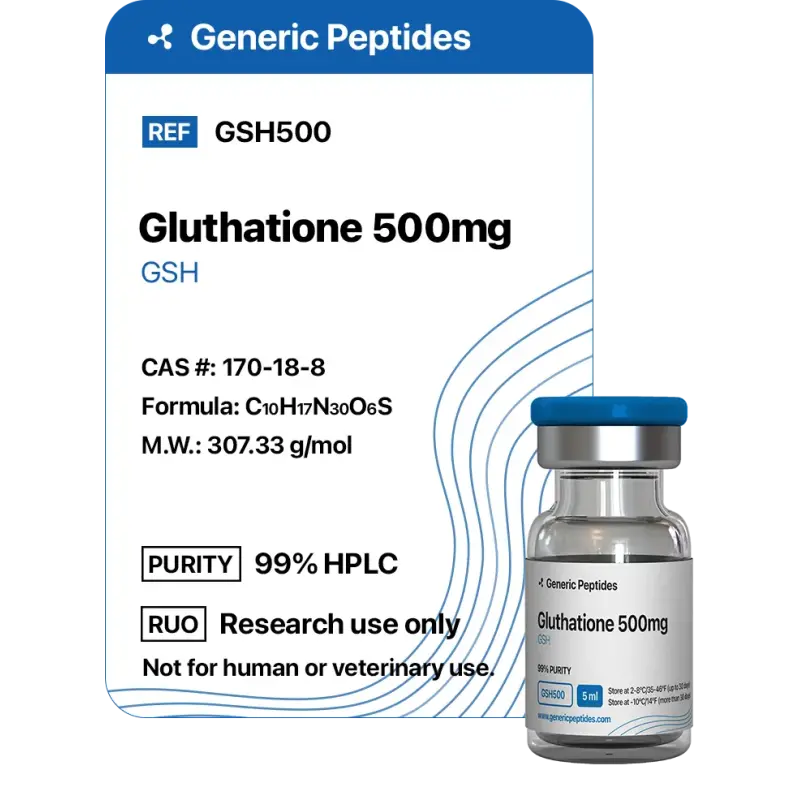
Injection · 200 mg · vial

In stock · ships within 24h Out of stock Ships from International
CompoundGlutathione (GSH)
ClassAntioxidant tripeptide
Half-lifeAbout 10 minutes
Detectionn/a, support product
Liver toxicityLow, no own toxicity
Water retentionNone described
The three amino acid chain gamma-Glu-Cys-Gly, sold as 200 mg and 500 mg freeze-dried vials. It is the body's main intracellular antioxidant and a cofactor for the enzymes that neutralise peroxides and attach waste products for excretion, which is why the liver line of research exists. Exogenous glutathione is cleared from plasma in about ten minutes, so infusions produce a short spike rather than sustained levels. Injectable forms are used in some countries as supportive antioxidant therapy, but no regulator has approved them as a cosmetic skin treatment. In sport the substance itself is not banned; instead the intravenous infusion rules set a strict volume limit.
Strength

Not available in this combination

Shipping

Not available in this combination

Glutathione 200-500 mg Vials - Generic Peptides
Order Now, Ships Today
$40.00
1
Quality First

All products are manufactured under strict quality standards and independently tested before release. By purchasing, the buyer agrees to use these products in compliance with all applicable laws.

Product Overview

Glutathione is a tripeptide built from glutamic acid, cysteine and glycine, and it is the most abundant antioxidant inside human cells. Generic Peptides offers it as freeze-dried powder in 200 mg and 500 mg vials. It differs from almost everything else on this shelf in one respect: it is not a foreign molecule at all but a substance the body already makes on its own, in large quantities.

Its work inside the cell is enzymatic. Glutathione is the cofactor that glutathione peroxidase uses to neutralise hydrogen peroxide and lipid peroxides, and the substrate that glutathione-S-transferase uses to conjugate drugs, toxins and metabolic waste so they can be excreted. That second role is why the liver keeps appearing in any honest discussion of this vial: conjugation is one of the main ways the body disposes of xenobiotics.

The medical picture is uneven. Intravenous glutathione is used in a number of countries as part of supportive antioxidant therapy, and the fills here, 200 mg and 500 mg, sit in the same range as clinical presentation vials of 200-600 mg. What it does not have is a cosmetic approval, and the regulator in the Philippines has stated publicly that no clinical studies support injectable glutathione for skin lightening.

Dosage Protocol

Nothing sold here comes with an approved dose for buyers, and the clinical material describes intravenous infusion rather than the subcutaneous route most research peptides use. The table gives the dilution arithmetic and the reference points from medical practice.

Clinical reference Vials of 200-600 mg given by intravenous infusion, with the amount varying between protocols
Route in medicine Intravenous infusion; oral forms are studied separately and behave very differently
200 mg plus 2 ml Reaches 100 mg/ml, where a 10 unit pull holds 10 mg
500 mg plus 5 ml Also 100 mg/ml and the same 10 mg pull, so the two fills can be prepared identically
500 mg plus 10 ml Halves the strength to 50 mg/ml, where 10 units carries 5 mg
200 mg plus 4 ml Also 50 mg/ml, matching the diluted 500 mg vial
Female No separate protocol appears in the sources checked; a female schedule is not described

The powder is dissolved with water for injection or bacteriostatic water, stored cold and away from light, and never frozen; the dry cake holds far longer than the liquid. One structural point belongs here rather than at the end. Because the body clears exogenous glutathione within minutes, an infusion is a short sharp exposure, and any protocol built on it has to be understood in those terms.

Suggested Protocols

No controlled study has combined this vial with anything else on the shelf, so the groupings below are shelf maps for a reader comparing options. They separate the redox pairing, the repair line and the immune peptides that are bought alongside it.

Redox pairing
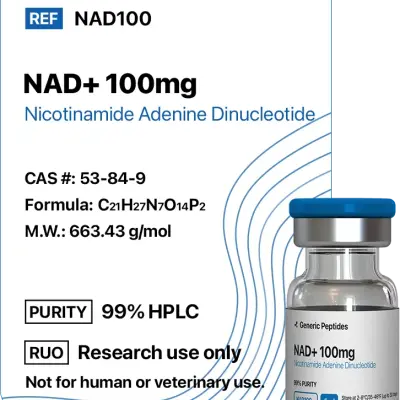
Glutathione vial - reduced GSH + NAD+ vial
Two coenzymes from opposite sides of the same redox equation, listed together because the research notes on cellular energy and antioxidant capacity overlap, not because a trial exists
Repair line
Glutathione vial + BPC-157 vial + TB 500 vial
The tissue repair peptides, grouped here because buyers asking about recovery after injury usually ask about all three in one conversation
Immune and longevity shelf
Four compounds borrowed from different research traditions and placed on one shelf by catalogue structure rather than by evidence; none of them has been studied in combination with glutathione here

What to Expect

  • A very short exposure. Exogenous glutathione leaves plasma in roughly ten minutes, and infusion studies give a mean of about fourteen with a wide spread, so effects are brief by design.
  • Urinary output changes first. After an infusion the amount excreted in urine rises several fold during the first ninety minutes, which is the clearest measurable event.
  • Enzymatic support, not a drug effect. The substance works as cofactor for glutathione peroxidase and glutathione-S-transferase, which is a supporting role rather than a direct action.
  • A liver angle with a caveat. Conjugation of xenobiotics is real, but the standard antidote in paracetamol poisoning is N-acetylcysteine, not glutathione itself.
  • Oral and injected are different products. Oral bioavailability is poor because the peptide is hydrolysed in the gut, which is why oral and liposomal forms are studied as separate questions.
  • No skin-lightening trial file. Published clinical trials of injectable glutathione for cosmetic lightening do not exist, and regulators have said so directly.

Side Effects and Management

This is a substance the body already handles, so the risks are mostly those of the route and the procedure rather than of the molecule. The rows below come from clinical notes and from reports around cosmetic infusion clinics.

Injection site reactionRotate the site and work cleanly; local irritation is the ordinary event with any injected solution.
Reactions to whitening infusionsCutaneous and systemic events have been reported around cosmetic drips, so stop the procedure and observe if any appear.
Bronchospasm, inhaled routeThe inhaled form has been linked to airway spasm, which is one more reason to leave unapproved routes alone.
Infusion volume rulesAthletes should know that the drip method itself falls under anti-doping limits regardless of the substance.
Frequent infusions unstudiedNothing is published on the long-term consequences of repeated drips, so frequency should stay low.

Post-Cycle Therapy

There is nothing hormonal to recover from, so a post-cycle protocol does not apply to this line. Glutathione is not an androgen, does not aromatise and has no effect on luteinising hormone, sperm production or natural testosterone output.

OnsetNo suppression occurs, so no recovery window exists to time
Option ASERM drugs have no role after an antioxidant that never touched the endocrine system
Option BGonadotropin injections are equally irrelevant here for the same reason
Course shapeInfusions are given as separate sessions rather than as a continuous course, and no standard cycle length is published
Follow-upNo outcome marker is defined for antioxidant support, so there is nothing meaningful to retest afterwards

The one regulatory detail that does belong beside a recovery discussion concerns athletes. Glutathione itself is absent from the prohibited list, but the infusion route is restricted: intravenous infusions and injections above 100 ml within twelve hours are prohibited under class M2, so the method, not the molecule, is what gets an athlete into trouble.
This page is educational and laboratory reference material. The item described is a research presentation of a substance that occurs naturally in the body and not a cosmetic treatment or an approved medicine for any condition. The figures shown come from clinical infusion protocols, published studies and vendor reference notes and are reproduced for reference only; they are not a protocol, a recommendation or a prescription, and this is not medical advice. Keep vials out of the reach of children and follow the law where you live.
What is Glutathione and what does it do?
It is a tripeptide of glutamic acid, cysteine and glycine, and it is the body's main intracellular antioxidant. It works as the cofactor for enzymes that neutralise peroxides and as the molecule that tags drugs and toxins for excretion. Nothing about that is exotic; the vial simply supplies more of something the body already produces.
Why is glutathione used in bodybuilding circles?
It is bought as general antioxidant support, on the reasoning that hard training raises oxidative stress. That reasoning is plausible but has not been converted into outcome data, and no study shows that infusing it improves recovery, performance or liver markers in athletes beyond the ordinary.
Does injectable glutathione lighten skin?
The cosmetic claim is not supported by clinical trials. The regulator in the Philippines has stated explicitly that there are no clinical studies behind injectable glutathione for whitening and that such injections are not approved as a cosmetic procedure. Reports of adverse events around whitening clinics are the other half of that story.
How long does glutathione stay active?
Minutes, not hours. The half-life of exogenous glutathione is around ten minutes, and after an intravenous infusion the measured figure is about fourteen minutes with considerable variation between people. Urinary excretion climbs several fold in the first ninety minutes, which is the practical consequence of that speed.
How do you prepare a 200 mg or 500 mg vial?
Water for injection or bacteriostatic water is added against the vial wall and the powder is left to dissolve. Two millilitres in the 200 mg fill and five millilitres in the 500 mg fill both give 100 mg/ml, so a 10 unit pull holds 10 mg. Using ten millilitres in the 500 mg fill instead halves the strength to 50 mg/ml and 5 mg per pull. Solution is stored cold and never frozen.
Oral versus injectable glutathione: which is which?
They are separate questions. Taken by mouth, glutathione is largely hydrolysed in the intestine, so bioavailability is poor; liposomal and precursor forms are studied precisely to get around that. Injected, the substance reaches circulation intact but is cleared within minutes, so the two routes produce completely different exposure profiles.
Is glutathione allowed in sport?
The substance is not on the prohibited list, but the delivery is regulated. Class M2 bans intravenous infusions and injections of more than 100 ml in any twelve hour period, which is exactly the format used in drip clinics. An athlete therefore has to think about the volume and the route, not only about the molecule.
Does an antioxidant course need any recovery protocol?
No. The compound does not suppress the hormonal axis, does not affect testosterone or oestrogen and has no impact on fertility, so a SERM, an aromatase inhibitor or a gonadotropin has nothing to act on. There is also no validated biomarker for antioxidant support, which means a course cannot be scored afterwards.

No reviews yet

Be the first to share your experience with Glutathione 200-500 mg Vials - Generic Peptides

Log in to write a review
Glutathione 200-500 mg Vials - Generic Peptides
200 mg · International

Complete the protocol

Stack it with

View all →
Added to cart