Best Anabolic Steroids

Press Enter to search the full catalog.

US Domestic discreet shipping
Third-party batch tested
HPLC & MS verified purity
Trusted Anabolic Manufacturers Only
US Domestic discreet shipping
Third-party batch tested
HPLC & MS verified purity
Trusted Anabolic Manufacturers Only
Back to all products
Semax 2-5 mg Vials - Generic Peptides Semax 2-5 mg Vials - Generic Peptides

Generic Peptides

Semax 2-5 mg Vials - Generic Peptides

Injection · 2 mg · vial

In stock · ships within 24h Out of stock Ships from International · U.S Domestic
CompoundSemax
ClassHeptapeptide, ACTH analogue
Half-lifeNot established in humans
DetectionNo published window
Liver toxicityNo human data
Water retentionNone reported
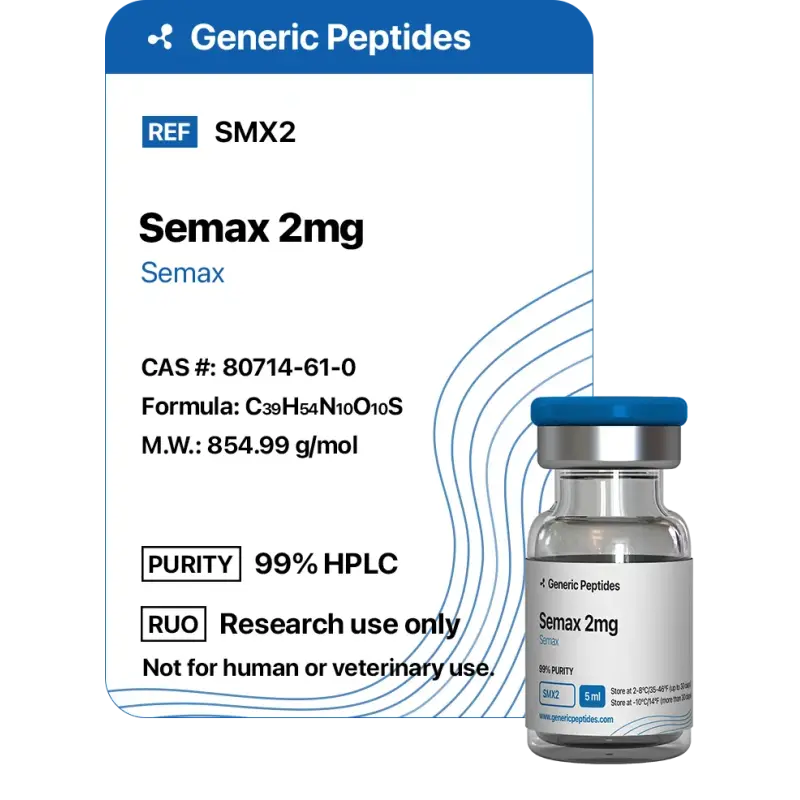
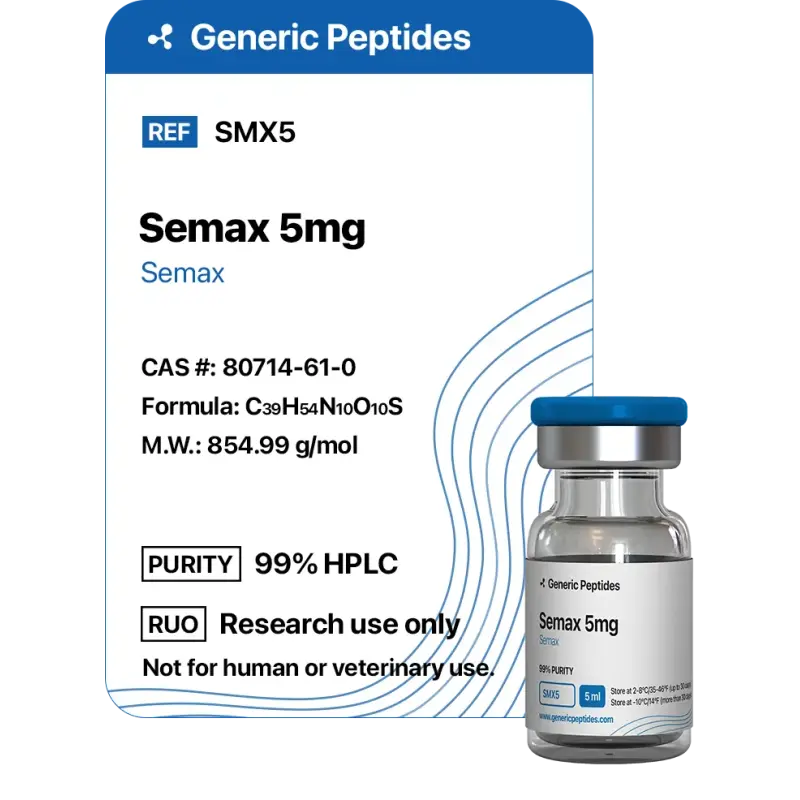
A seven residue fragment modelled on ACTH(4-10), sold as lyophilised powder in 2 mg and 5 mg vials. In Russia it is a registered medicine used in neurology and after stroke; anywhere else it is only a research reagent, and that difference in status matters more than any single study result. Cognition, BDNF signalling and stroke recovery are the three lines of work behind it, and the animal data are far deeper than the human data. Nothing about the compound touches testosterone, oestrogen or fertility, and no human elimination figure has ever been published.
Strength

Not available in this combination

Shipping

Not available in this combination

Semax 2-5 mg Vials - Generic Peptides
Order Now, Ships Today
$35.00
3
Quality First

All products are manufactured under strict quality standards and independently tested before release. By purchasing, the buyer agrees to use these products in compliance with all applicable laws.

Product Overview

Semax is a synthetic chain of seven amino acids, Met-Glu-His-Phe-Pro-Gly-Pro, drawn from the ACTH(4-10) fragment of the stress hormone family but stripped of any hormonal action. Generic Peptides stocks it as freeze-dried powder in 2 mg and 5 mg fills. The important fact about this molecule is not its sequence but its paperwork: it is a licensed medicine in Russia, where it is used in neurology and in recovery after stroke, while in the United States, the European Union and most other markets it exists only as a research chemical with no approval file at all.

The research behind it splits into three lines. The first is cognition, where Russian studies describe improved attention and memory and the proposed route is a rise in BDNF together with its receptor TrkB in the hippocampus. The second is mood, where animal models show antidepressant-like and anxiolytic-like behaviour. The third is recovery of function after ischaemic stroke, where a Russian clinical study reported better motor and functional outcomes in treated patients.

What has never been produced is a modern Western trial, a published human pharmacokinetic profile or a settled mechanism. Even review papers describe the mode of action as incompletely understood, so a buyer should treat the entire product as a research item rather than a proven nootropic.

Dosage Protocol

No approved amount exists outside the Russian registration, and the figures below are vendor research conventions and the amounts used in Russian clinical schemes. They are arithmetic for a laboratory, not instructions for a person.

Entry level 250 mcg per dose for one to two weeks, chosen as the smallest amount in the vendor material
Research range 250-1000 mcg per dose, one to three times a day, for about 14 days
Daily total 500-3000 mcg across a day in the vendor figures, above which nothing has been published
Route Intranasal in the clinical papers, subcutaneous injection in the laboratory variant
2 mg in 2 ml 1 mg/ml, so a 10 unit pull on a U-100 syringe carries 100 mcg
5 mg in 5 ml 1 mg/ml, the same concentration and the same 100 mcg pull
5 mg in 2 ml 2.5 mg/ml, so 10 units carries 250 mcg
Female No separate protocol is described anywhere in the sources checked

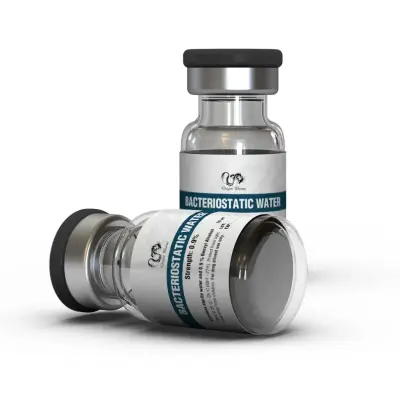
Mixing follows the standard pattern for a freeze-dried peptide: bacteriostatic water run down the inner wall, then a slow roll until the cake is fully dissolved. Dry powder is stored cold at 2-8 C, the made-up solution also at 2-8 C and used within roughly four weeks, with freezing avoided. Since no elimination curve exists for people, the rhythm of dosing comes from the clinical papers rather than from pharmacology, and the papers themselves run a little over two weeks per course.

Suggested Protocols

There is no published work combining Semax with anything else sold on this site, so what follows is a reading map of the catalogue rather than a stack. The groupings separate the peptides studied in the same Russian neuro line from those bought for recovery and from the compounds that serve the same purpose by another mechanism.

Moscow neuropeptide line
Semax vial - 250-1000 mcg per dose + Selank vial + DSIP vial
The two Russian peptides and the sleep peptide, catalogued together and studied apart; the alerting profile of one and the bedtime timing of another do not sit naturally in one schedule
Recovery shelf
Semax vial - post-stroke research context + Epitalon vial + Thymalin vial + Glutathione vial
A longevity and repair grouping taken from the same catalogue section, put side by side because buyers compare them rather than because any study joined them
Cognitive case, other routes
Cellular energy, an endogenous opioid pentapeptide and an immune peptide: three separate explanations for the same complaint of mental fatigue, none of them tested with Semax

What to Expect

  • An activating rather than calming profile. Reports and papers describe a stimulating nootropic effect, which is the opposite of the sedative-like peptides in this section.
  • Cognitive change assessed in days. The Russian schemes judge the response during the first days of a course, long before any structural explanation could apply.
  • BDNF and TrkB in animals. The growth factor rise in the hippocampus has been measured in rodents, and the human evidence for the same mechanism is indirect.
  • Stroke recovery data are Russian only. Improved functional and motor outcomes were reported in a Russian study, without an independent Western replication.
  • Mood findings are preclinical. Antidepressant-like and anxiolytic-like behaviour is well documented in animal models and much less so in people.
  • The mechanism is still not settled. Reviews themselves note that the mode of action is not fully established, and outside Russia the material is a research item by default.

Side Effects and Management

Because the compound was never run through a large Western safety programme, the list below is assembled from the Russian clinical material and from the ordinary behaviour of injected peptides. Nothing in it has been quantified in a modern trial.

Nose and sinus irritationLower the concentration or pause a day if the intranasal route is used; the complaint belongs to the route.
HeadacheCut the amount and observe, since individual reports go both ways on this point.
Agitation or poor sleepShift dosing into the earlier part of the day, which suits an activating peptide far better than an evening slot.
Reaction at the injection siteAlternate sides and keep the technique clean when the subcutaneous route is chosen.
Unknown long-term profileKeep courses short and stop on anything unexplained; there is no published data on extended human use.

Post-Cycle Therapy

A recovery protocol after Semax would be fiction, because the peptide has no connection to the hormonal system that cycle recovery is designed to repair. It does not suppress luteinising hormone, does not change testosterone or oestrogen, and does not reduce sperm production.

OnsetThere is no suppression, so no recovery onset date exists for this vial
Option ATamoxifen or clomiphene would have nothing to restart after a peptide that never interfered with the axis
Option BChorionic gonadotropin belongs to a hormonal course, and this is not one
Course shapeThe Russian schemes run around two weeks; no source sets a mandatory break, and none describes withdrawal effects
Follow-upNo blood test tracks this peptide, so a daily log of attention, sleep and mood is the only workable record

For an athlete, the practical point is different. Semax is not listed by name, which signals absent data rather than permission, and a course combined with something like MET5 would still have to be declared under the general clauses of the code.
This page is educational and laboratory reference material. The item described is a research peptide in lyophilised form and not a medicine in most countries; nothing here treats stroke, memory loss, low mood or any other condition. The numbers shown come from Russian clinical work, animal experiments and vendor reference notes and are reproduced so a reader can judge how thin the human evidence is; they are not a protocol, a recommendation or a prescription, and this is not medical advice. Keep vials out of the reach of children and follow the law where you live.
What is Semax and what is it derived from?
Semax is a heptapeptide modelled on the ACTH(4-10) fragment, with the sequence Met-Glu-His-Phe-Pro-Gly-Pro. It keeps the peptide backbone but none of the hormonal activity of the parent molecule. Generic Peptides supplies it in 2 mg and 5 mg lyophilised vials.
Is Semax approved anywhere?
Yes, in Russia, where it is registered as a medicine used in neurology and in stroke rehabilitation. Outside Russia and a few neighbouring markets there is no approval, and the vial sold here is a research product with a research label rather than a pharmaceutical presentation.
What does Semax actually do in the research?
Three things are claimed: better attention and memory in Russian cognitive studies, a rise in BDNF and its TrkB receptor in the hippocampus in animals, and improved functional recovery after ischaemic stroke in a Russian clinical study. Antidepressant-like behaviour has also been shown in rodent models. None of it has been confirmed in a large independent Western trial.
How is a 2 mg or 5 mg Semax vial reconstituted?
Two millilitres of bacteriostatic water in the 2 mg vial gives 1 mg/ml, where 10 units on a U-100 syringe holds 100 mcg. Five millilitres in the 5 mg vial gives the same 1 mg/ml, so the pull stays at 100 mcg, while two millilitres in the 5 mg vial doubles the concentration to 2.5 mg/ml and makes 10 units equal to 250 mcg. The mixed solution is kept cold and used within about four weeks.
What amounts does the Semax research use?
Vendor material puts a single dose between 250 and 1000 mcg, taken up to three times a day for roughly two weeks, giving a daily total of 500-3000 mcg at the top of the range. Those are research conventions copied from Russian schemes, not an approved dose, and amounts beyond the top of that range are simply unpublished.
Does Semax have a human half-life figure?
No. A human pharmacokinetic profile has never been published, so there is no elimination figure to build an injection interval from. The twice or three times daily pattern in the papers is a clinical habit rather than a calculation, and this is one of the clearest gaps in the whole data set.
Is Semax on the anti-doping list?
It is not named by name, and the absence of a line should not be read as authorisation. Where a substance is unlisted because it has barely been studied, anti-doping authorities can still act through the general categories covering unapproved substances, so an athlete is in an undecided position rather than a cleared one.
Do I need any recovery plan after Semax?
No. The peptide leaves the hormonal axis alone, so it does not suppress testosterone, does not raise oestrogen and does not affect fertility, which means a SERM, an aromatase inhibitor or a gonadotropin injection has no purpose afterwards. The only tracking that makes sense is a short daily note on attention, mood and sleep.

No reviews yet

Be the first to share your experience with Semax 2-5 mg Vials - Generic Peptides

Log in to write a review
Semax 2-5 mg Vials - Generic Peptides
2 mg · International

Complete the protocol

Stack it with

View all →
Added to cart