Best Anabolic Steroids

Press Enter to search the full catalog.

US Domestic discreet shipping
Third-party batch tested
HPLC & MS verified purity
Trusted Anabolic Manufacturers Only
US Domestic discreet shipping
Third-party batch tested
HPLC & MS verified purity
Trusted Anabolic Manufacturers Only
Back to all products
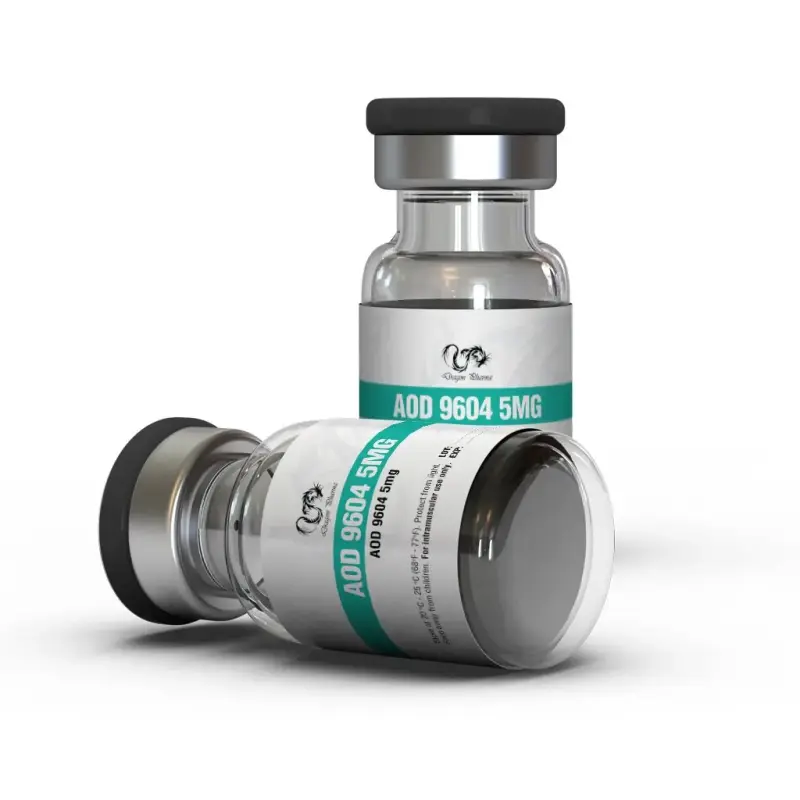
AOD 9604 5mg - Dragon Pharma

Dragon Pharma

AOD 9604 5mg - Dragon Pharma

Injection · 5 mg · vial

In stock · ships within 24h Out of stock Ships from International · U.S Domestic
CompoundAOD 9604
ClassResearch peptide
Half-lifeNot established
DetectionWADA S2, urine LC-MS
Liver toxicityNot established
Water retentionNone
A 5 mg lyophilised vial of the growth hormone fragment 176-191, sixteen amino acids long, also written as AOD 9604 or Tyr-hGH177-191. The point of the fragment is what it leaves out: early work found lipolytic activity without the rise in IGF-1 that full growth hormone produces, which is why the follow-up panel for this vial is different from a GH product. Urine screening uses LC-MS/MS at a 50 pg/ml detection limit and an exact window is not confirmed, but WADA class S2.2.3 covers growth hormone fragments, so the peptide is prohibited. Development ended in 2007 on efficacy grounds, not on a safety signal.
Shipping

Not available in this combination

AOD 9604 5mg - Dragon Pharma
Order Now, Ships Today
$70.00
1
Quality First

All products are manufactured under strict quality standards and independently tested before release. By purchasing, the buyer agrees to use these products in compliance with all applicable laws.

Product Overview

Inside the vial sits a 5 mg cake of lyophilised growth hormone fragment 176-191, a peptide of sixteen amino acids also catalogued as AOD-9604 or Tyr-hGH177-191. It was designed to keep the fat-mobilising part of growth hormone while leaving the IGF-1 signal out, which is the reason it is studied rather than the full hormone. This page covers what the fragment is, how it acts, the subcutaneous amounts and reconstitution maths for a 5 mg vial, the peptides it is paired with, the human trial record, and the storage rules.

AOD 9604 is the C-terminal fragment of human growth hormone, residues 176 to 191, and it is a research peptide rather than an approved medicine. The parent hormone is a large protein with many actions; the fragment keeps a much smaller set of them, and early laboratory work attributed the lipolytic signal to this part of the molecule.

What arrives is a 5 mg vial of sterile lyophilised powder, sealed for reconstitution with bacteriostatic water. Five milligrams is a large nominal amount for a peptide dosed in micrograms: at 250 mcg a day the vial covers around twenty days of research use once mixed, which is why the arithmetic in the middle of this page matters as much as the biology.

Two status facts belong here. Growth hormone fragments are prohibited in sport under WADA class S2.2.3, and urine screening uses LC-MS/MS with a 50 pg per ml detection limit, although no exact detection window for this peptide is confirmed in the sources checked. The clinical development of AOD 9604 was stopped in 2007 for insufficient efficacy, not for a safety signal, and that record is part of what you are buying into.

The proposed mechanism is beta-3 adrenergic. Raising the expression of those receptors in fat tissue is how the fragment is described as stimulating lipolysis in animal work, and that is the effect the clinical programme tried to translate into human weight loss. Human pharmacokinetics were never confirmed, and the sources checked record no half-life value at all, so the timing of a dose is set by convention rather than by a measured curve.

The second half of the mechanism is a negative one, and it is the reason this peptide exists. Full growth hormone drives IGF-1 production in the liver, and early research found that the 176-191 fragment did not produce that rise. A fragment that mobilises fat without the growth and glucose effects of IGF-1 was the commercial idea, and IGF-1 staying in the normal range is described as an expected laboratory finding rather than an outcome to chase.

Nothing in that mechanism is established in humans at a level that justifies a claim of results. The honest summary is that the pathway is plausible, the animal data are real, and the clinical endpoint was not reached.

Dosage Protocol

No approved dose exists. The bands below are the vendor research figures recorded for this peptide, and they start at the lowest sensible step because no human pharmacokinetic curve is available to reason from.

Entry level250 mcg a day, subcutaneous, for 4 weeks
Middle of the range250-500 mcg a day for 4-12 weeks, taken before fasted cardio in the published routine
Higher end500 mcg a day for up to 12 weeks, the top of the vendor band
FemaleNo separate female protocol is recorded in the sources; the same research bands are all that exist
AdministrationSubcutaneous injection in research use; some studies delivered the peptide orally

Reconstitution sets the number on the syringe. Mix 2 ml of preserved water into the 5 mg cake and every 10 units on a U-100 barrel carries a quarter of a milligram; cut the water to 1 ml instead and that same draw holds twice as much, 500 mcg. Pick the concentration that matches the daily step you intend to use, write the date on the vial, and keep the same volume per draw so the arithmetic never has to be redone from memory.

Research Combinations

The fragment is usually one part of a research stack rather than a standalone product, and every partner below comes from the same brand. The combinations differ in what they target, not in how many compounds they contain.

Fat loss focus
AOD 9604 - 250 mcg a day + Cardarine 20 mg - 20 mg a day
8 weeks; the fragment is paired with a training-capacity compound rather than another hormone
Metabolic research
4-8 weeks; three different metabolic pathways studied side by side rather than stacked for effect
Reconstitution pair
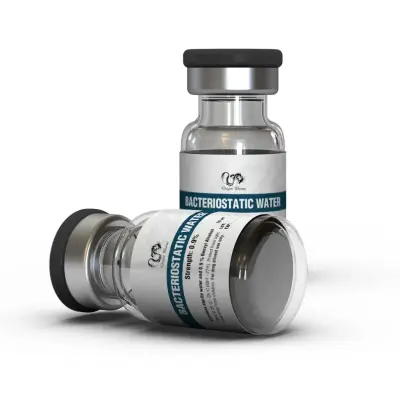
The diluent is not optional: without it the powder cannot be measured on any syringe scale

Related peptides from the same line include IGF-1 LR3 and SLU-PP-332, both of which act on different parts of the same metabolic picture, and Tesamorelin 5 mg or Dragontropin for readers who want the growth hormone axis itself.

What to Expect

  • Speed. Nothing appears in days. Both the mechanism and the trial data describe effects measured across weeks of consistent use, not per injection.
  • The trial figure. In one twelve-week controlled study, participants on the peptide lost an average of 1.8 kg more than the placebo group.
  • The later figure. A longer twenty-four week study did not show a sufficient lipolytic effect, which is the result that ended development.
  • IGF-1. Levels are expected to stay within normal limits because of the fragment design, so an IGF-1 rise is neither expected nor a goal.
  • Injection site. Subcutaneous use with a small volume, rotating sites; local reactions are the most frequently reported complaint.
  • Context. Every published result sits inside a calorie deficit. The peptide is not described as working in a surplus.
  • The limit. The record above is the whole of it. Anyone promising more than a marginal effect is going beyond the published data.

Side Effects and Research Limits

The peptide has a small side effect list, and the smallness of the list is a consequence of how little human exposure exists rather than proof of safety.

Injection site reactionsFrequent and local; rotate sites and keep the technique clean rather than changing the dose.
HeadacheReported individually; a reduced amount is the usual response in research use.
NauseaIndividual and usually mild; keeping to the scheduled routine rather than doubling up helps.
Long-term safety unknownLittle human data beyond short trials; short blocks and honest self-monitoring are the only defensible approach.
No systemic effects describedTrials recorded no pronounced systemic reaction, which is not the same as proving that none exists.
Doping controlProhibited in sport under class S2.2.3 and screened for in urine, despite the modest clinical effect.

Monitoring and Research Limits

AOD 9604 is a peptide, not a steroid, so post-cycle therapy does not apply to it. It does not suppress the hypothalamic-pituitary axis and it does not aromatise, which is why no SERM or aromatase inhibitor belongs at the end of a block. What does belong is a laboratory panel if you are following the research model.

No PCTNo axis shutdown and no estrogenic pathway, so a SERM block has no role with this peptide
IGF-1Expected to remain normal by the mechanism of the fragment, which is why it is measured rather than manipulated
Metabolic panelFasting glucose and a standard lipid screen, recorded before the block and repeated at the end
StoppingThe block is simply ended; nothing needs tapering because no endogenous production is being replaced
Solution lifeA mixed vial is used within about 28 days when kept at 2-8 degrees Celsius, which sets the realistic length of a block per vial

The 5 mg vial at 250 mcg a day runs close to twenty days, so a twelve-week block means several vials and careful dating of each one rather than a single mixed vial kept too long.

Reconstitution and Storage

Keep the sealed vial in the refrigerator at 2-8 degrees Celsius, in its box, until the day you mix it. Let it come to room temperature before reconstitution, wipe the stopper with an alcohol swab, and inject the water down the inside wall of the vial rather than onto the powder. Swirl it gently until the solution is clear; never shake a peptide.

Once mixed, the solution goes back into the refrigerator and is used within around 28 days. Do not freeze it, and do not leave it in sunlight or in a warm car. Write the mixing date on the label so the end of its usable life is visible, draw with a fresh needle every time, and discard the vial if the liquid turns cloudy or holds particles. Keep everything out of reach of children and dispose of needles in a sharps container.
This material is published for educational and research reference purposes only. The compounds described are research-grade materials supplied for laboratory work and are not presented here as medicines or as a treatment for any condition. Dosing information reflects published clinical and reference data for the active substances, not a recommendation or a prescription. Nothing on this page should be read as medical advice. Keep all products out of reach of children and follow the regulations that apply in your country.
What is AOD 9604?
It is a sixteen amino acid peptide corresponding to residues 176-191 of human growth hormone, also written as hGH fragment 176-191. Dragon Pharma supplies it as a 5 mg lyophilised vial that must be dissolved before use. The fragment was designed to keep the fat-mobilising part of growth hormone while leaving out the IGF-1 response.
How does AOD 9604 work?
The proposed mechanism is an increase in beta-3 adrenergic receptor expression in fat tissue, which points toward greater fatty acid mobilisation. That finding comes from mouse work. The important second half of the mechanism is what does not happen: early research found no rise in IGF-1, which is the difference between this fragment and full growth hormone.
What is the right AOD 9604 amount per day?
Vendor research figures run from 250 mcg once daily at the low end to 500 mcg once daily at the top, over blocks of 4 to 12 weeks, injected subcutaneously. The early clinical studies used the oral route, so these injection values come from research supply practice and not from a trial protocol. There is no approved human dose.
How do you reconstitute an AOD 9604 vial?
Add solvent to the 5 mg powder and note the volume, because concentration follows from it. With 2 ml you get 2.5 mg per ml and 10 units on a U-100 syringe equals 250 mcg; with 1 ml you get 5 mg per ml and the same 10 units equals 500 mcg. Keep the dissolved vial at 2-8 C for about 28 days and do not freeze it.
Does AOD 9604 actually work for fat loss?
Partly, and less than the marketing implies. A 12 week randomised trial produced about 1.8 kg more weight loss than placebo, which is modest, while a later 24 week study failed to show a sufficient lipolytic effect. Development was discontinued in 2007 for insufficient efficacy, and that outcome is the single most informative fact about the peptide.
Does AOD 9604 raise IGF-1 or growth hormone?
No. Avoiding that rise is the whole design goal of the fragment, and early research confirmed that IGF-1 stayed normal. That is why the monitoring step for this vial is different from a growth hormone cycle: IGF-1 acts as a check that nothing unexpected is happening, rather than as a level to push upward.
Is AOD 9604 approved or banned in sport?
It is not approved for human use anywhere, so the material is supplied for research work rather than as a medicine. In sport it is prohibited: growth hormone fragments fall under WADA class S2.2.3, and the peptide is screened for in urine by LC-MS/MS at a 50 pg per ml detection limit, with the exact window described as unconfirmed in the sources.
Has anyone used Dragon Pharma AOD 9604 - any reviews?
Reports about this vial concentrate on authenticity rather than on results, because the effect is subtle by the trial record. What matters is a sealed vial with a legible batch and expiry, a cake of powder that is intact rather than cracked or damp, and a label stating 5 mg. A vial that arrives warm, cloudy or already dissolved should not be used at all.

No reviews yet

Be the first to share your experience with AOD 9604 5mg - Dragon Pharma

Log in to write a review
AOD 9604 5mg - Dragon Pharma
International

Complete the protocol

Stack it with

View all →
Added to cart