Product Overview
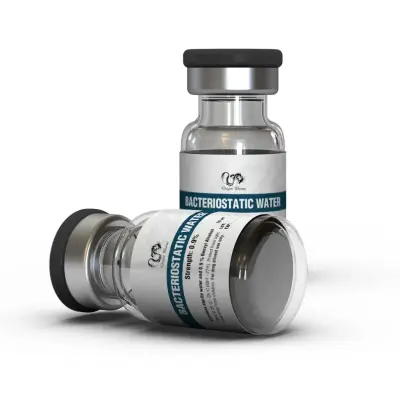
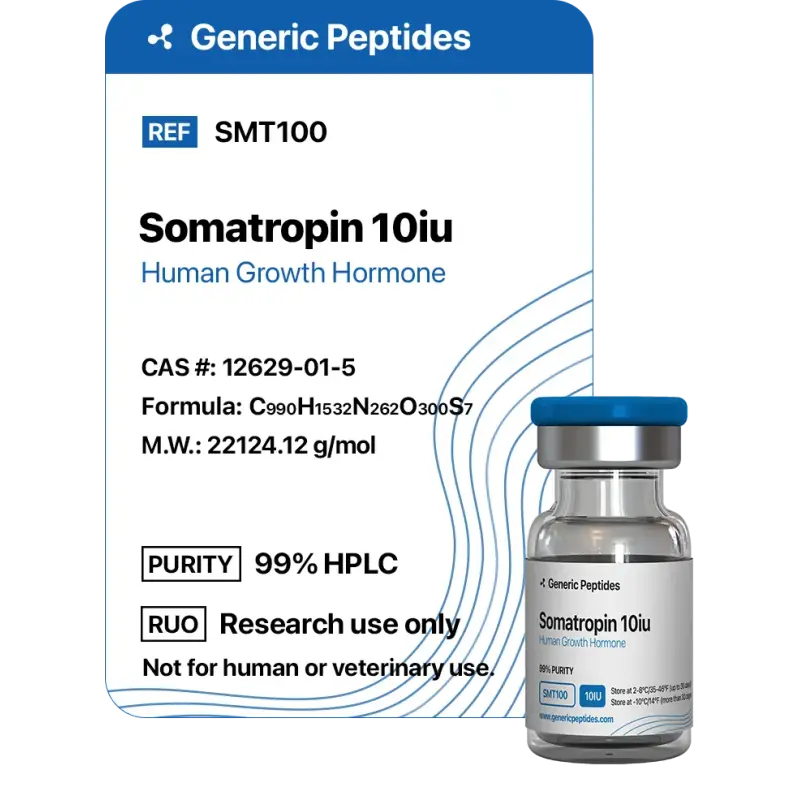
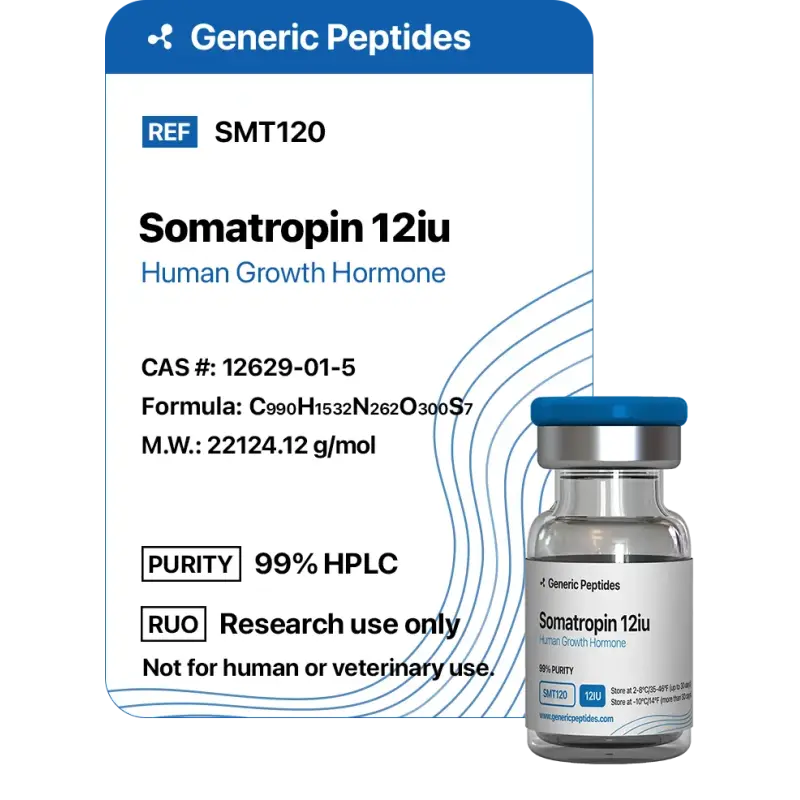
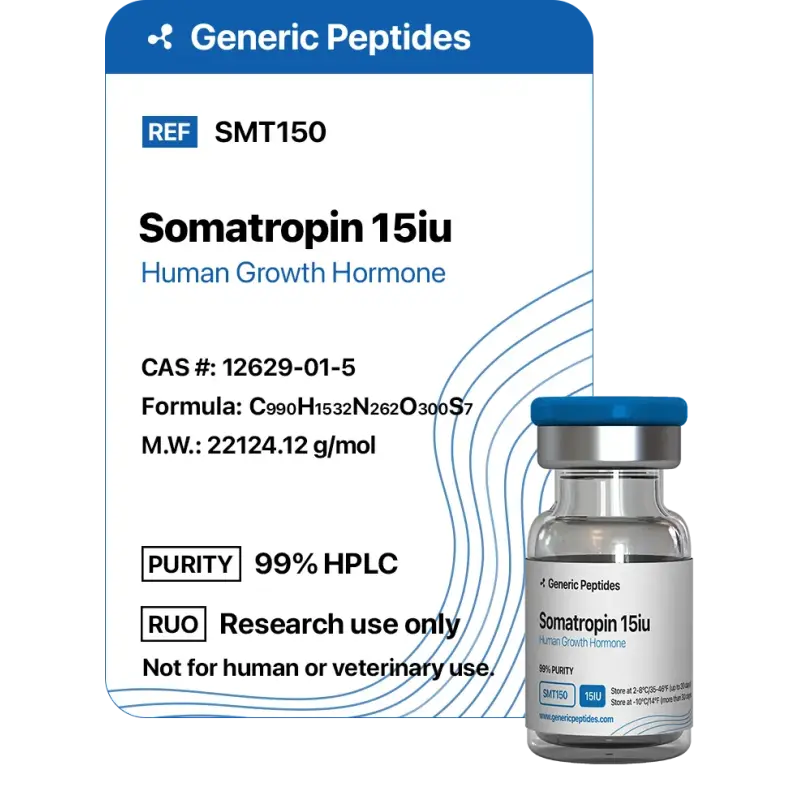
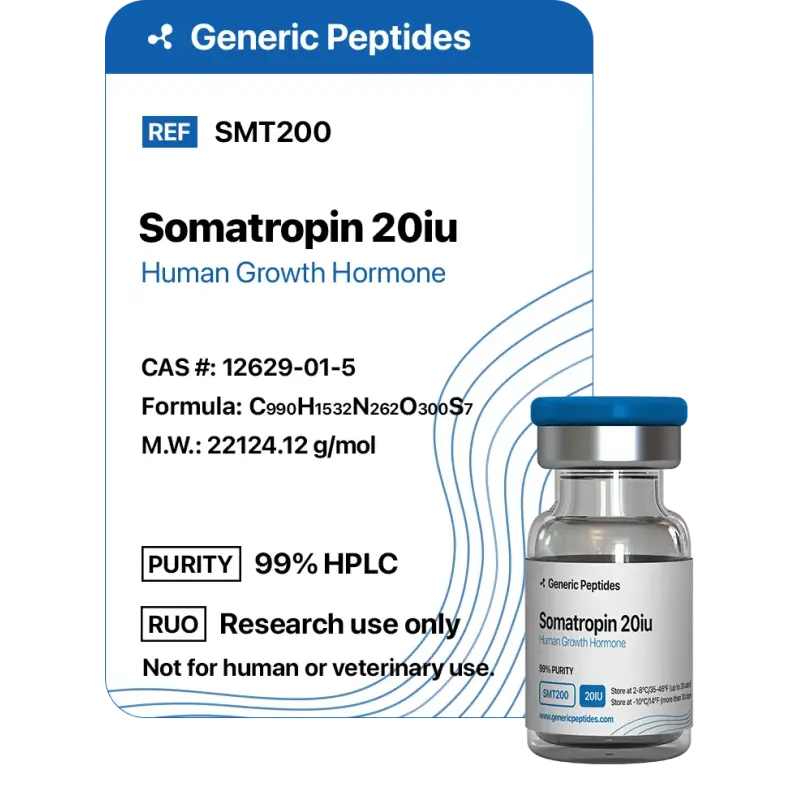
Generic Peptides lists somatropin as four kit sizes: 100 IU, 120 IU, 150 IU and 200 IU. The 100 IU box is ten vials of 10 IU, the 200 IU box is ten vials of 20 IU, and the two middle sizes sit between those splits. The powder is freeze dried and needs a solvent before use, and no bacteriostatic water travels inside the pack.
Somatropin is the recombinant 191 amino acid form of human growth hormone, identical in sequence to the pituitary version. It is not a steroid and not a peptide secretagogue: it supplies the finished hormone rather than asking the pituitary to release more of it. That distinction shapes everything below, including the absence of any post-cycle protocol, because growth hormone does not suppress the gonadal axis.
The unit system on the label is international units. The conversion used throughout this page is 3 IU to 1 mg, which makes a small 10 IU vial worth about 3.33 mg of peptide and a 20 IU vial twice that. Buyers who count in milligrams and buyers who count in IU are describing the same vials, and the kit size is the only thing that changes across the line. Anyone who wants the pituitary to produce the hormone instead can study the release side of the same pathway, where CJC-1295 no DAC acts on the GHRH receptor.
Dosage Protocol
The table collects the dose ranges that published material and label data support. They are reference points for reading a study, not a prescription for a kit.
| Level | Dose | Length | Notes |
| Beginner | 2 IU daily | From 8 weeks | The lower practical edge; medical replacement doses for adults run lower still |
| Intermediate | 3-4 IU daily | 3-6 months | Divided across six or seven subcutaneous shots each week |
| Advanced | 5-8 IU daily | 6 months or more | Higher volume brings visible swelling, joint pain and a rise in blood sugar |
| Female | 1-2 IU daily | As above | No separately validated female schedule was found in the sources |
| Route | Subcutaneous | - | Weekly volume is divided across 6-7 injections; intravenous use is excluded by the label |
Two numbers decide the schedule more than the milligram figure does: the roughly 2.5-4 hour subcutaneous half-life and the slow build-up of effect over months. A once-weekly depot is not what this molecule does, and doubling a dose does not shorten the wait for visible change. Users who take the middle of the intermediate band should expect the paper arithmetic to matter more than the exact IU chosen.
Suggested Protocols
Growth hormone work is long by design. Blocks run for months, and the pairing logic is to add a second signalling route rather than a second identical dose.
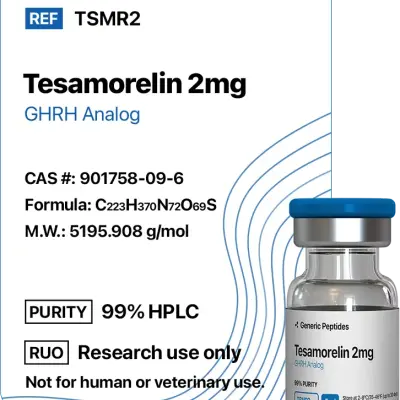
Recovery-focused work uses the same molecule in shorter daily amounts, and research on local tissue signalling belongs to a different shelf: PEG MGF is studied for local repair, while Tesamorelin is the GHRH analogue with visceral fat data behind it. If appetite rather than growth is the variable, GHRP-6 covers that ground.
What to Expect
- Weeks 2-4: puffiness and tingling. Swollen hands, general fluid and pins and needles in the wrists are the usual first signal that the dose is being felt.
- Weeks 3-6: sleep and recovery. Most accounts describe better sleep quality and easier recovery before any change in shape.
- Months 2-3: body composition. Visible change in fat distribution arrives late and only with continuous use.
- Months 3-4 at high doses: acromegaloid drift. Coarser features, larger hands and feet mark the upper edge of sensible dosing.
- Fasting glucose. Growth hormone lowers insulin sensitivity, so morning sugar can creep upward even when nothing else changes.
- Joint complaints cut the dose, never raise it. When wrists or knees hurt, the answer in the sources is less, not more.
- Cold chain. The lyophilised vial wants cold storage and the mixed solution has a short working life; exact shelf figures for this kit are not confirmed in the sources.
Side Effects and Management
Almost every complaint in this group is dose-linked and reversible when the amount comes down.
Post-Cycle Therapy (What Applies Instead)
A SERM protocol has no place here. Growth hormone leaves testosterone production alone, so a drug that restarts the axis has no target on this page. What replaces a PCT is a taper and a set of observations.
Because the material is a protein, storage decides how much of the dose survives to the syringe. Keep the lyophilisate cold and dark, mix gently against the wall of the vial rather than shaking it, and do not leave a mixed solution at room temperature for long stretches. Any vial that came from a warm parcel is a question mark, not a bargain.