Product Overview
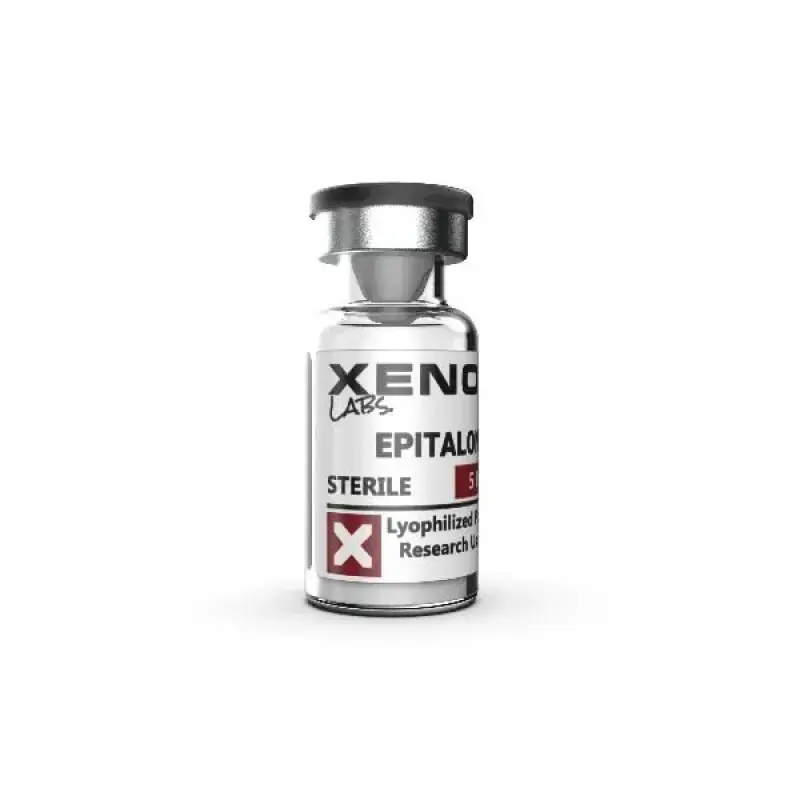
Xeno Epitalon is a single vial of 5 mg lyophilised peptide. The molecule is the tetrapeptide AEDG, alanine-glutamate-aspartate-glycine, a short synthetic sequence associated with the pineal peptide line of research and with the name epithalon.
It is supplied as a research material. The studies that made the peptide visible used cell cultures rather than people, and the human work that exists is small and concentrated in a narrow set of publications. Reading those limits carefully is more useful than a rounded summary, because the difference between what was shown in a dish and what happens in a body is the whole story with this compound.
Mixing and Concentration
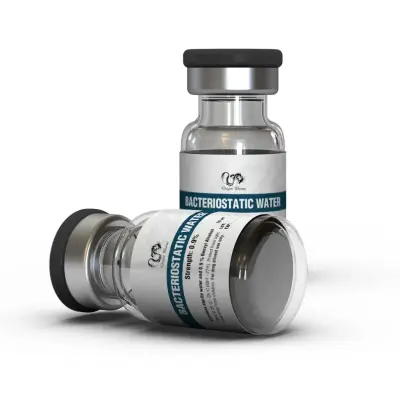
A lyophilised fill is dissolved in bacteriostatic water, and the resulting strength is arithmetic from the fill weight. Five milligrams in 2 ml gives 2.5 mg per ml, so ten units on a U-100 barrel carries 500 micrograms; the same vial in 5 ml gives 1 mg per ml and halves that reading.
Storage follows the usual peptide pattern: powder in the refrigerator, reconstituted solution at 2-8 C and used within about four weeks, and never frozen. Because the fill is small, a table of concentrations written out before the first draw removes the most common source of error.
Research Use
There is no approved dose. The figures below are the published research patterns and community references, presented as such.
| Beginner reference | 5 mg daily for ten days |
| Intermediate reference | 5-10 mg daily across 10-20 days, occasionally repeated once a year |
| Advanced reference | 10 mg daily for as long as 20 days |
| Female | The sources give no separate protocol for women |
| Administration | Subcutaneous or intramuscular; 5 mg in 2 ml means 10 units carries 500 micrograms |
One discrepancy deserves a note. Human clinical work used amounts around 0.5-1 mg a day, while the widely copied 5-10 mg protocol comes from studies of epithalamin, a crude pineal extract, and the transfer has been criticised in print as a possible dose error. Anyone working with the pure tetrapeptide is working outside a validated range either way.
Suggested Protocols
- Telomerase research interest. The cultured-cell work is the origin of the compound's reputation, and it stays a cell-culture result in any honest reading.
- Circadian angle. A separate line of study looked at clock-gene rhythms and melatonin patterns, again without human outcome data.
- Short courses. Ten to twenty days, occasionally repeated yearly. Longer exposure has no published backing.
- Peptide stacks. In this line it is discussed with Selank and Semax, and with the BPC-157 on the growth-hormone side.
- Metabolic context. In the weight-management line the Tirzepatide page covers the incretin peptides that this range also stocks.
- Storage discipline. Reconstituted solution at 2-8 C and used within about four weeks; freezing degrades it.
What to Expect
- Cell-culture lengthening was shown. Telomeres extended in cultured human cells exposed over several days.
- In-vivo effect is not established. No study demonstrated telomere lengthening in a living organism, which is the central limitation.
- Sleep and rhythm interest. Separate data describe effects on circadian gene activity rather than on sleep quality as a measured endpoint.
- Timelines run in weeks. Research schedules are assessed over a course, not over days.
- No outcome data. There are no large independent human trials and no disease or mortality endpoints.
- The dose transfer is contested. Criticism of carrying epithalamin amounts to the pure peptide is published, which is why the range is wide.
Side Effects and Management
Recovery and Follow-up
This peptide has no hormonal action, so no recovery therapy applies. What stands in its place is a defined course length and an acknowledgement of how thin the evidence is.
Buying This Vial
The 5 mg vial is listed in the Xeno Laboratories range with the other research peptides Selank, Semax and BPC-157, and with the injectables HCG 5000 IU and HMG 75 IU that this line often ships alongside. Each page states the fill weight, the format and current availability.
The names deserve a note as well. Epitalon, epithalon and epithalone all appear in the literature for the same molecule, and it is easy to assume the spellings describe separate products when they do not. What genuinely differs between papers is the material studied: some work used the purified tetrapeptide AEDG, while other studies used epithalamin, a pineal extract that contains the sequence plus many other compounds. Comparisons that ignore which of the two was used are the source of most of the confusion around this peptide.
The practical consequence is a narrow recommendation. A researcher working with the pure tetrapeptide should stay inside the published ranges and treat the wider vendor figures with caution, because those figures describe a different preparation. Nothing about the vial here changes the underlying picture: a small amount of cell-culture evidence, no in-vivo demonstration, and no outcome data of any kind.