Product Overview
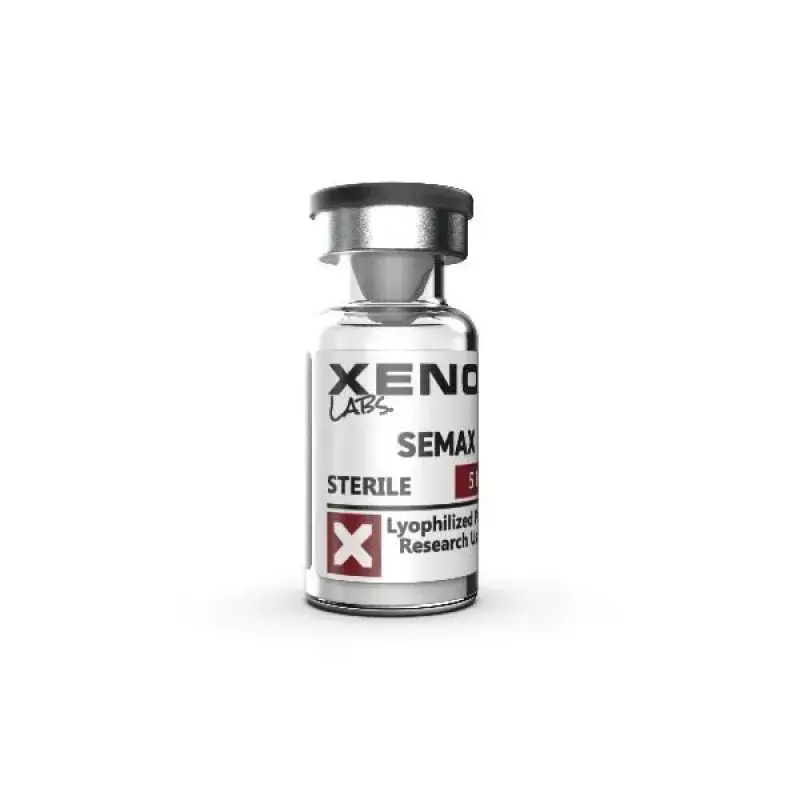
Xeno Semax is a 5 mg vial of lyophilised heptapeptide. The sequence is a synthetic analogue of the ACTH(4-10) fragment, the part of the adrenocorticotropic hormone chain that retained cognitive effects without the hormonal activity of the full molecule, which is why it belongs to the nootropic peptide group.
Its regulatory position is unusual. It is registered as a medicine in Russia, while outside that market the same molecule is sold only as a research peptide. The vial here is the research format: powder, no approved dose, and all handling decisions left to the researcher.
Mixing and Concentration
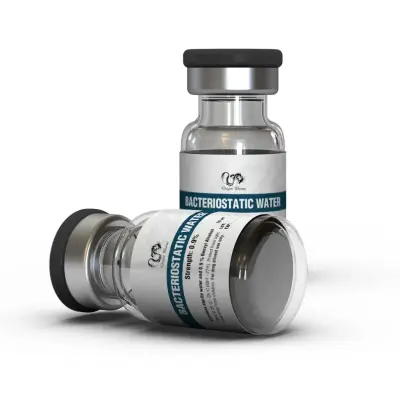
Bacteriostatic water dissolves the powder, and strength is set by the volumes chosen. A two milligram fill taken up in 2 ml works out at 1 mg per ml, which puts 100 micrograms into every ten units drawn on a U-100 barrel. The five milligram fill behaves differently: with the same 2 ml of diluent it lands at 2.5 mg per ml, so each ten unit draw holds 250 micrograms. The five milligram size sold here is the more concentrated of the two fills seen in the line.
Keep the powder in a refrigerator and the made-up liquid at 2-8 C, to be finished inside about four weeks and never frozen. For the intranasal route, a weaker solution irritates the nasal lining less, so the concentration in the barrel is also a comfort decision and not only an arithmetic one.
Research Use
There is no approved dose for a research vial. What follows comes from vendor material and the published literature.
| Beginner reference | 250 micrograms per dose, 1-2 weeks |
| Intermediate reference | 250-1000 micrograms a dose, once to three times daily, across about two weeks |
| Advanced reference | Up to 3000 micrograms a day in courses |
| Female | No female protocol is set out separately in the sources |
| Administration | Intranasal or subcutaneous; a ten unit draw of 2.5 mg per ml gives 250 micrograms |
The clinical pattern quoted most often is a nasal dose one to three times a day for around a fortnight. What the sources do not provide is a measured concentration-response relationship in humans, so the upper figures describe what has been tried rather than what has been shown to be better. Where a course ends, the published schedules simply stop rather than taper, and no withdrawal effect is described in any of the material used here.
Suggested Protocols
- Activation rather than sedation. The reported profile is stimulating, which is why the dose is taken in the first half of the day.
- Paired with a calming peptide. Selank covers the anxiolytic side of the same family, and the two are frequently discussed together.
- Rehabilitation interest. A Russian clinical report describes improved motor recovery after ischaemic stroke, which is a supervised setting and not a self-administration protocol.
- Wider context. The BPC-157 and Epitalon pages cover the repair-side and circadian peptides run across the same weeks.
- Cold chain discipline. Powder stays cold, the mix at 2-8 C, finished inside about four weeks.
What to Expect
- Cognitive reports appear early. In the Russian schedules change is assessed within the first days of a course.
- BDNF data come from animals. Increases in hippocampal BDNF and TrkB were measured in rodents; human data are limited.
- Mood effects are preclinical. Antidepressant-like and anxiolytic-like behaviour is described in animal models.
- Stroke recovery was a supervised finding. Functional and motor improvement was reported in a Russian trial setting, not in self-directed use.
- Stimulation without sedation. The reported profile is closer to an activating nasal peptide than a calming one.
- The mechanism is not settled. Even review papers describe an incompletely established mechanism of action, and no western registration trial exists.
Side Effects and Management
Recovery and Follow-up
The peptide never reaches the gonad axis, so nothing in the way of recovery therapy is needed. A fixed course length takes its place, together with a note of what remains unmeasured.
Buying This Vial
Semax appears in the Xeno Laboratories range together with Selank, Epitalon, BPC-157 and Tirzepatide, and with the HCG 5000 IU and HMG 75 IU injectables. Fill weight, pack format and current availability appear on the individual page.
The difference between the two sizes in the line is worth understanding even though only the five milligram fill is sold here. A smaller fill at the same diluent volume gives a weaker solution, which matters for the nasal route where concentration, not only dose, drives how the mucosa tolerates the peptide. A larger fill at the same volume does the opposite, and it is the reason the barrel reading has to be recalculated every time the fill or the diluent amount changes.
It is also worth being clear about what the Russian registration does and does not settle. Approval in one market confirms that regulators there accepted a file on the molecule; it does not transfer as evidence of efficacy in a western trial, and it does not make the research vial sold here a pharmacy product. The vial remains a powder for experimental work, with the same absence of a validated human dose that applies to the other peptides in this section.