Product Overview
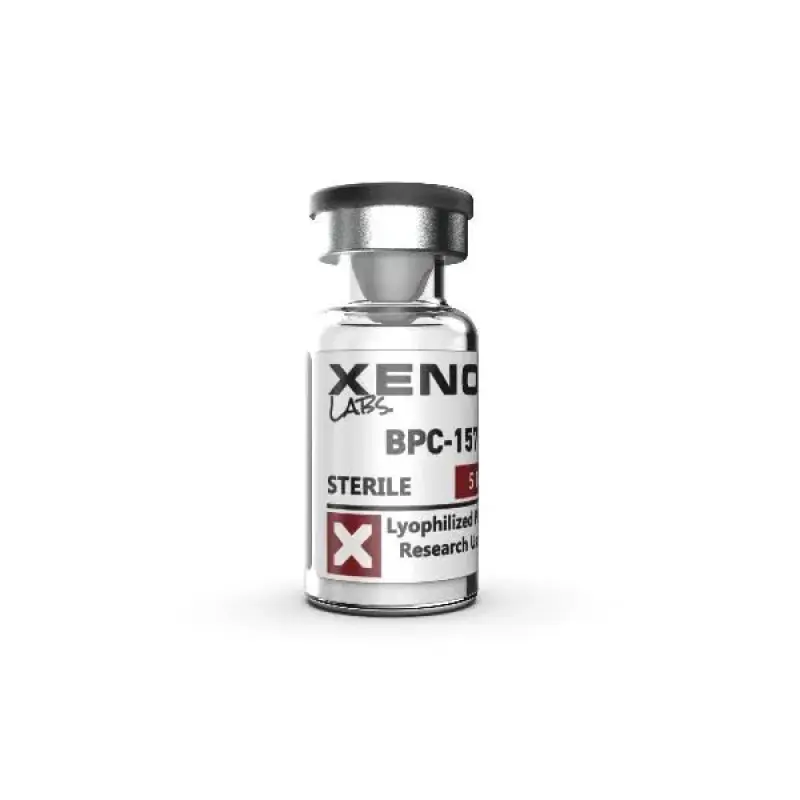
Xeno BPC-157 is one vial holding 5 mg of lyophilised pentadecapeptide. The chain runs to fifteen residues and comes from a protein fragment first identified in gastric juice, which is where the older name body protective compound originates. A 5 mg fill is the middle size in the catalogue and reconstitutes into a workable concentration with a small volume of diluent.
Nothing about the label makes it a licensed medicine rather than a laboratory material, and neither the amount used nor the route taken alters that position. The published work behind the vial is almost entirely preclinical: rodent models of tissue repair, tendon healing and gut protection. Human pharmacokinetics were never established, and the review literature is explicit that clinical data are thin.
Reconstitution and Concentration
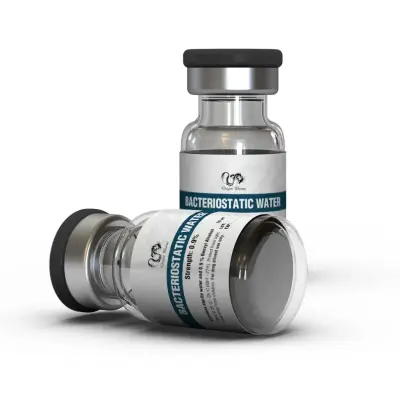
A lyophilised peptide has to be dissolved before use, and the concentration depends only on how much diluent is added. Bacteriostatic water is the usual choice. Taken up in 2 ml, the 5 mg fill works out at 2.5 mg per ml, so a ten unit draw on a U-100 insulin barrel delivers 250 micrograms; adding 5 ml instead brings the same vial to 1 mg per ml and halves the amount in the same draw.
Two practical rules follow. Write the arithmetic down before the first draw, because a mis-set concentration is the most common error with vials of this kind. Then keep the whole chain cold: the powder is stored in a refrigerator, and the reconstituted solution is kept at 2-8 C and used within weeks rather than months, without freezing.
Research Use
With no validated human protocol, the figures below are vendor and community reference points and should be read as such. The vials are supplied for laboratory work, so route, frequency and duration are decisions taken by the researcher.
| Reconstitution | Bacteriostatic water into the vial; the 5 mg fill in 2 ml works out at 2.5 mg per ml |
| Research quantity | 250-500 micrograms a day in vendor descriptions |
| Duration | Short blocks in community use; no validated length exists |
| Route | Subcutaneous or intramuscular, more often local than systemic in practice |
| Storage | Lyophilisate cold; reconstituted solution at 2-8 C, never frozen |
The one figure that is measured rather than assumed is the elimination half-life of 7.9 to 30 minutes, and it comes from rat studies after intravenous or intramuscular dosing. A short half-life in a rodent does not translate directly into a human schedule, which is one reason the dosing figures above vary so widely between sources.
Suggested Protocols
- Local emphasis. Most community use is at or near the site of interest, which is why this peptide is often paired with the systemic BPC-157 in the same line.
- Short blocks. Courses are short and followed by a break; nothing in the sources supports continuous use, because nothing long-term has been measured.
- Sterile technique is the whole protocol. As a research peptide the material carries no sterility guarantee for human use, so technique and site rotation are the user's responsibility.
- Testing status matters. WADA lists the peptide under class S0 among substances that are not approved for human use, which makes it relevant to anyone subject to testing.
What to Expect
- No human timeline exists. Expectations are built from animal models and vendor notes rather than from measured human data.
- Reports are subjective. Users often describe less discomfort around a joint or tendon, which is not the same as a measured healing endpoint.
- Little in the literature on harm. Few serious effects are reported, but the absence of a signal in small animal studies is not evidence of safety in people.
- Half-life is measured only in animals. The 7.9-30 minute figure is from rats, and human clearance is simply unknown.
- Quality rests with the user. With a research vial, sterility and accurate dosing are entirely in the hands of whoever prepares it.
- Regulatory status is settled. The substance sits in WADA class S0, which bans it at every point of a tested athlete's season.
Side Effects and Management
Recovery and Follow-up
Nothing here suppresses the hormone axis, so there is no post-cycle therapy in the usual sense. What replaces it is a considered stopping point and a check on how the material was handled.
Buying This Vial
The 5 mg vial sits in the Xeno Laboratories range beside the other research peptides Epitalon, Selank, Semax and Tirzepatide, and beside the HCG 5000 IU and HMG 75 IU injectables that users of this line often order at the same time. Concentration, pack size and availability are shown on each page.
Two more practical points follow from the research status of the vial. First, a 5 mg fill is small, so the same vial supports either a few larger doses or many small ones, and the choice belongs to the written protocol rather than to convenience. Second, a peptide that is not manufactured as a medicine carries no guarantee of sterility, so technique, a clean work surface and a fresh needle are not optional extras but the substance of the whole preparation.