Product Overview
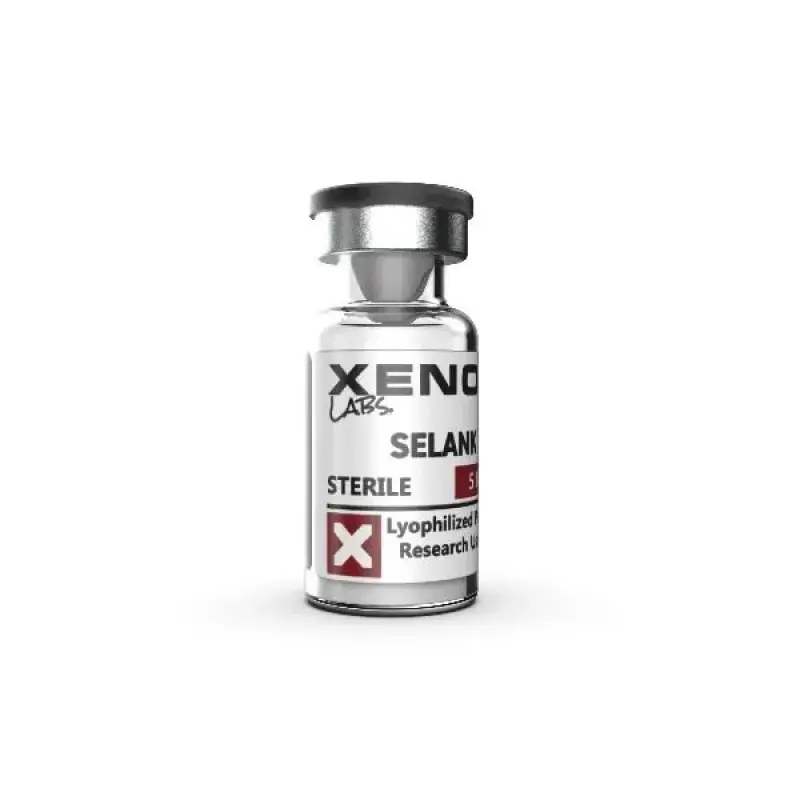
Xeno Selank is one 5 mg vial of lyophilised heptapeptide. The sequence is a synthetic analogue of tuftsin, the naturally occurring immunomodulatory tetrapeptide, and it sits in the anxiolytic and nootropic family of Russian-developed peptides.
The vial holds powder for reconstitution, which is not the same thing as a finished nasal spray. That distinction matters practically, because the clinical material described in the literature is a pharmacy spray with a defined dose per actuation, while a research vial leaves concentration and route to the user.
Mixing and Concentration
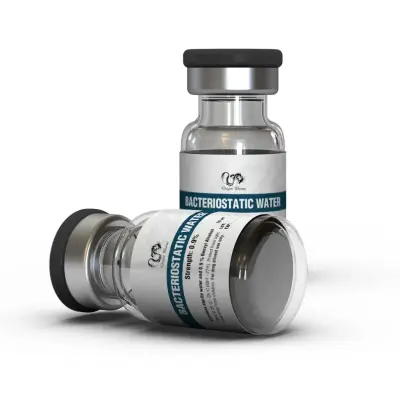
Bacteriostatic water is added to the powder, and the strength follows from the fill and the volume. How strong the mix turns out depends on the volume chosen. Dissolve the 5 mg fill in 2 ml and each millilitre holds 2.5 mg, which works out at 250 micrograms per ten unit insulin draw; dissolve it in 5 ml and each millilitre holds 1 mg, halving the amount in that same draw.
If the material is used intranasally, concentration changes the mucosal tolerance as much as the dose, because a more concentrated solution irritates the nasal lining more. For subcutaneous use the arithmetic is the same and the practical concerns are site rotation and clean technique. Either way the powder is kept cold and the made-up liquid held at 2-8 C; it should be finished inside roughly four weeks and never put in a freezer.
Research Use
A research vial has no approved dose attached to it. What follows is drawn from vendor material and published reports.
| Beginner reference | 250 micrograms per intranasal dose, 1-2 weeks |
| Intermediate reference | 250-500 micrograms a dose, taken once to three times daily, over roughly two weeks |
| Advanced reference | Up to 500-1000 micrograms a day in courses |
| Female | The sources describe no separate protocol for women |
| Administration | Nasal or subcutaneous; ten units of a 2.5 mg per ml mix equals 250 micrograms |
The clinical pattern most often quoted is a nasal dose three times a day for roughly two weeks. Self-reported scales rather than measured biological endpoints dominate that literature, which is the reason the amounts should be treated as a starting reference rather than a target. Courses in that literature run for roughly two weeks before a break, and the pause is practical rather than pharmacological: no human data covers what continuous use past that point does, so a defined course with a clear stopping point is the arrangement the record supports.
Suggested Protocols
- Cognitive and calm angle. The reported profile is anxiolytic without sedation, which is what separates it from conventional sedatives in the descriptions.
- Subcutaneous alternative. The same range is used by injection once a day, with the same course length.
- Paired with a stimulating peptide. It is commonly discussed beside Semax, where one is activating and the other calming.
- Related reading. The BPC-157 and Epitalon cards deal with the repair-side and sleep-related peptides that often share the same period.
- Cold chain throughout. Keep the powder cold and the mix at 2-8 C, finish it inside roughly four weeks and never freeze it.
What to Expect
- Anxiolytic reports without sedation. Russian studies describe a calming effect that did not impair memory at low doses.
- Mood effects shown in animals. Antidepressant-like behaviour is documented in animal models rather than in controlled human trials.
- Cognitive data are preclinical. Rapid BDNF increases were measured in rat hippocampus; human evidence is very limited.
- Onset inside a course. Clinical schedules assessed change within the first days rather than weeks.
- Some immune interest. Cytokine modulation, including interleukin-6 and T-helper balance, appears in the preclinical work.
- Origins limit the evidence. Nearly all data are preclinical or from small national studies, and the results do not carry across directly.
Side Effects and Management
Recovery and Follow-up
The peptide leaves the hormone axis untouched, so recovery therapy has no place here. What replaces it is a fixed course and a clear stopping point.
Buying This Vial
Selank is listed in the Xeno Laboratories range beside Semax, Epitalon, BPC-157 and Tirzepatide, and beside the HCG 5000 IU and HMG 75 IU injectables. Every page sets out the fill weight, the format and what is currently available.
The route deserves separate attention because it changes what a user actually experiences. A nasal preparation acts through the mucosal surface and produces local irritation when the solution is too concentrated, while a subcutaneous injection bypasses the nasal lining entirely and delivers the same amount by a different path. The two are not interchangeable in a study design, and mixing them inside one course makes it impossible to attribute an effect to either.
A second point concerns the origin of the evidence. Selank was developed inside a national research programme, and the published record reflects that: small samples, self-reported scales and a strong preclinical component. It is not that the findings are contradicted by later work; it is that they were never replicated at the scale western regulators would require. That is the honest baseline for anyone reading about anxiolytic or cognitive effects, and it is why the figure ranges here are presented as starting references.