Best Anabolic Steroids

Press Enter to search the full catalog.

US Domestic discreet shipping
Third-party batch tested
HPLC & MS verified purity
Trusted Anabolic Manufacturers Only
US Domestic discreet shipping
Third-party batch tested
HPLC & MS verified purity
Trusted Anabolic Manufacturers Only
Back to all products
GHK-Cu Copper Peptide - Dragon Pharma GHK-Cu Copper Peptide - Dragon Pharma

Dragon Pharma

GHK-Cu Copper Peptide - Dragon Pharma

Injection · 10 mg · vial

In stock · ships within 24h Out of stock Ships from International · U.S Domestic
CompoundGHK-Cu copper peptide
ClassResearch copper peptide
Half-lifeNot established in humans
DetectionNot applicable
Liver toxicityLow
Water retentionNone
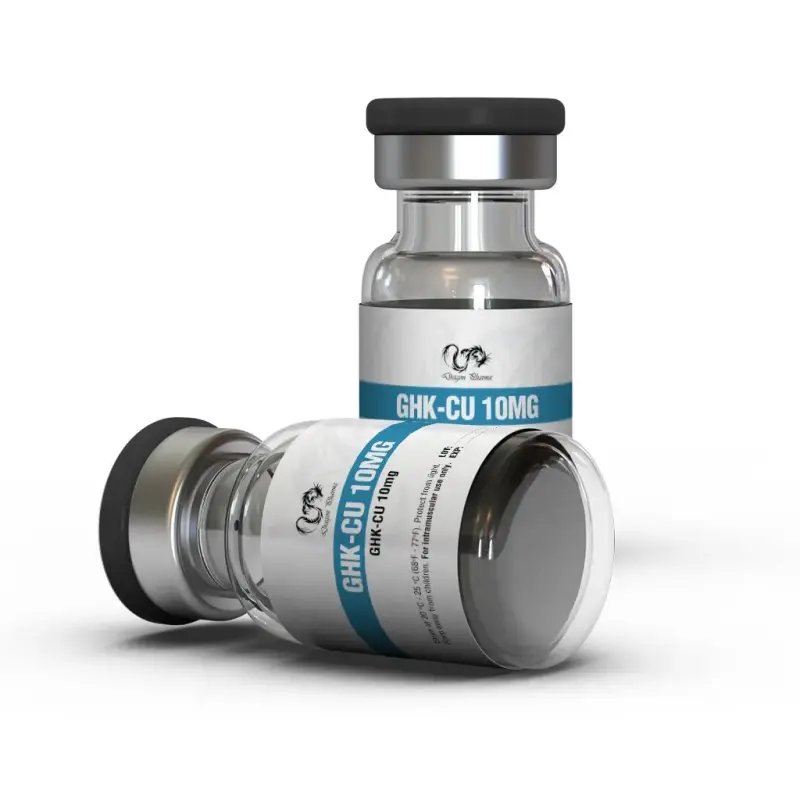
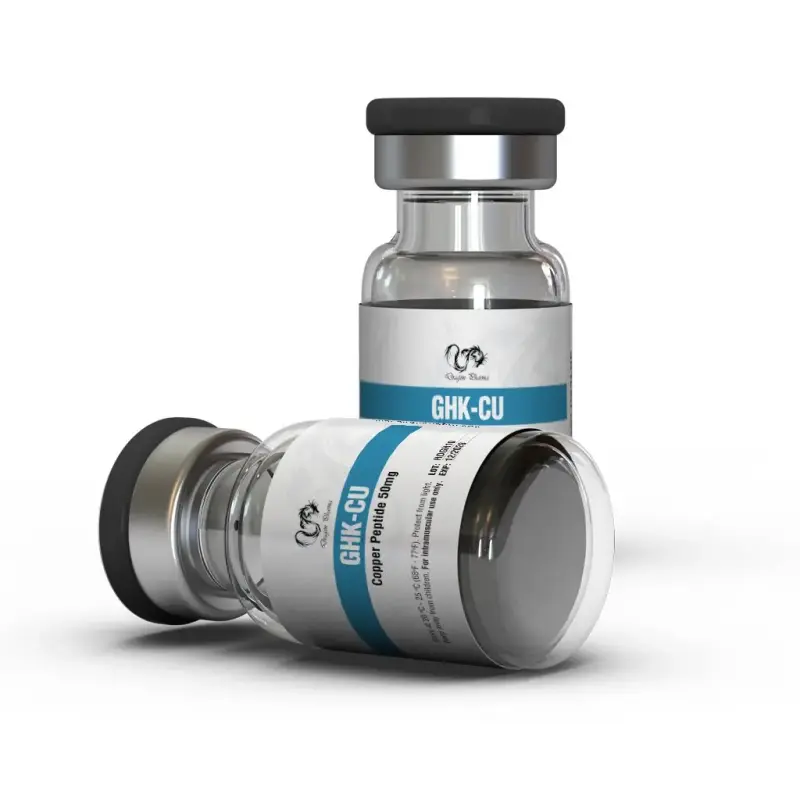
Two vial sizes of the GHK tripeptide bound one-to-one to copper, a 10 mg fill and a 50 mg fill, both lyophilised powder for reconstitution. The complex occurs naturally in plasma and is studied for collagen synthesis and wound contraction, yet almost all of that evidence comes from cell work and topical use, and no human half-life has been established. Vendor arithmetic for the 50 mg vial gives roughly 10 to 25 mg per ml from 2 to 5 ml of solvent, while the 10 mg vial dilutes to a fifth of that. This is a research material with its own cold chain rather than a cosmetic product.
Strength

Not available in this combination

Shipping

Not available in this combination

GHK-Cu Copper Peptide - Dragon Pharma
Order Now, Ships Today
$45.00
1
Quality First

All products are manufactured under strict quality standards and independently tested before release. By purchasing, the buyer agrees to use these products in compliance with all applicable laws.

Product Overview

Both GHK-Cu vials of the Dragon Pharma line are listed here: the 10 mg fill and the 50 mg fill. Each holds the same copper tripeptide as a lyophilised powder, a GHK sequence bound one-to-one to a copper ion, and each is reconstituted with bacteriostatic water before it is used in any research setting.

The two sizes differ only in how much material they contain and, because of that, how convenient the arithmetic is. The 10 mg vial is dosed out in small amounts and suits a short experiment; the 50 mg vial carries five times the powder and suits longer protocols or work that uses larger quantities at once.

The warning that belongs at the top is about evidence rather than handling. Almost all published work on this complex comes from cell cultures and from topical application, no human half-life has ever been established, and the catalogue vials are research material rather than an approved medicinal product. Nothing below describes a validated human dose, because none exists in the sources.

The Two Vial Sizes

GHK-Cu 10 mg

The smaller fill. Because the vial holds only 10 mg, the dilution arithmetic has to be planned before the solvent is added: a small volume of water produces a concentrated solution that is hard to measure accurately, so most research notes use a larger volume instead and accept a weaker concentration.

GHK-Cu 50 mg

The larger fill, and the size most reconstitution guides are written around. A vendor guide for 50 mg suggests 2 to 5 ml of solvent, which lands between roughly 10 and 25 mg per ml depending on the volume chosen. The extra powder gives more room for error in the arithmetic.

GHK-Cu 10 mg Small fill; dilution must be planned before the solvent is added
GHK-Cu 50 mg 2-5 ml of solvent gives roughly 10-25 mg per ml
Shared by both Same copper tripeptide, same powder form, same cold chain

What the Tripeptide Does

GHK is a three amino acid sequence that occurs naturally in human plasma and binds copper tightly; the complex is studied for collagen synthesis, wound contraction and a modulating effect on inflammation. Copper is the active part of that story, which is why the complex rather than the bare peptide is what appears in most laboratory work.

The practical consequence for anyone reading this card is a limitation, not a mechanism. Human pharmacokinetics have not been described, so there is no basis for an injection interval or a blood level target, and the quantities quoted in research models, typically 1 to 2 mg a day systemically, are model figures rather than a protocol.

Reconstitution Arithmetic

Both vials take the same solvent and the same technique, and the powder is delicate enough that the method matters as much as the numbers.

Solvent Bacteriostatic water, run down the wall of the vial rather than aimed at the powder
50 mg vial 2-5 ml gives roughly 10-25 mg per ml; more water means a weaker, easier-to-measure solution
10 mg vial The same volumes give one fifth of the concentration, so the vial is finished far sooner
Research amount 1-2 mg a day systemically in model work; an experimental figure, not a human dose
Duration No validated length of use exists in the material consulted

Research Context and Combinations

In the catalogue this complex normally sits beside the other reparative peptides, and the combinations below are context rather than recommendations.

Reparative peptide context
Both appear in wound healing literature; the comparison ends there, because their human data sets are not equivalent
Blend containing the same peptide
GHK-Cu - the copper peptide + BPC-157 and TB-500 blend - comparison
Read the label carefully: this complex also appears inside multi-peptide blends that are sold as separate cards
Mitochondrial and repair line
GHK-Cu + MOTS-c - 10 mg + NAD+
Grouped here only because they share the research category, not because the combination has been studied

What to Expect

  • No measurable marker. There is no published assay or blood level to track, so a protocol cannot be steered by numbers.
  • Local or topical evidence. Most of what is described comes from skin and wound models, which says nothing about an injected dose.
  • Powder quality matters. The lyophilisate should look uniform; clumping or discolouration after solvent is added is a reason to stop.
  • Bacteriostatic water, not sterile water. The preservative is what keeps a multi-use vial usable for more than a day.
  • Limitation. This is a laboratory material and no regulator has approved it for human use.

Side Effects and Precautions

Because human use is not documented, the list below is about handling and the theoretical risks of an uncharacterised peptide rather than a reported profile.

Reaction at the application siteThe commonest report for copper peptides is local irritation with topical use; keep the technique clean and stop if redness spreads.
Contamination of a multi-use vialSwab the stopper, use a fresh needle and keep the vial cold; a cloudy solution should be discarded.
Copper exposureThe complex carries copper in a 1 to 1 ratio, so amounts are not unlimited; no human toxicity threshold is published for this form.
Unknown interaction profileNo drug interaction data exist; anyone taking medication has no basis for combining it.
No regulatory approvalTreat the material as a research reagent, keep it out of reach of children and follow local rules.

Handling and Cold Chain

Stability is the practical problem with this peptide, and it is the same for either fill size. Reparative peptides often compared with it include Epitalon and TB-500.

LyophilisateCold storage with light protection; the powder is the stable form
After mixingRefrigerated only; no exact shelf life for either catalogue vial is confirmed in the sources consulted
FreezingRepeated freeze and thaw cycles should be avoided once the powder is in solution
HandlingSwirl, never shake; foam and bubbles indicate mechanical damage to the peptide
Record keepingNote the volume of solvent added to each vial, because the concentration depends on it entirely

Which Vial Size to Choose

The 10 mg vial is the smaller commitment and the harder one to measure accurately, because small volumes of solvent turn it into a concentrated solution. Buyers who want a simple dilution and a longer shelf life after mixing take the 50 mg fill and use the vendor arithmetic of 2 to 5 ml that was written for exactly that size; buyers who only need a small quantity in one sitting take the 10 mg vial and accept that it is gone after a few reconstitutions.

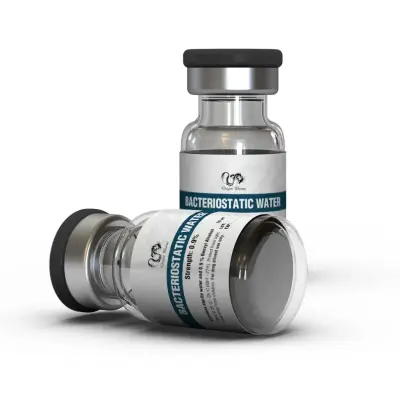
Either way, add Bacteriostatic water to the same order and treat both vials as laboratory material rather than a cosmetic product. The evidence base behind the complex is thin, and no amount of careful arithmetic fills that gap.
This material is published as educational and research reference only. GHK-Cu is supplied here as a laboratory peptide, not as an approved medicine, cosmetic or dietary supplement, and the quantities mentioned are experimental figures from published model work rather than a human dose, a prescription or a recommendation. No human pharmacokinetics have been established for this complex, so nothing on this page should be read as guidance for use in people. Nothing here is medical advice. Keep all products away from children and observe the laws of your country.
What is GHK-Cu?
A tripeptide of glycine, histidine and lysine bound one-to-one to copper, written as copper tripeptide-1. It was first isolated from human plasma and is also found in saliva and urine, so it is a naturally occurring complex rather than a laboratory invention. Research interest centres on collagen synthesis, wound healing and inflammation.
What is GHK-Cu used for in research?
Tissue repair work. Fibroblast cultures show increased collagen and glycosaminoglycan production, wound models show faster healing and more contraction, and an anti-inflammatory effect is described in the same literature. Most of the observations come from cells and from topical application, so the subject is skin and connective tissue rather than muscle.
What is the half-life of GHK-Cu?
Human pharmacokinetics do not exist, and the reference sources state that the human half-life is not established. That is why an injection interval cannot be calculated honestly for this compound: every schedule circulating online is a vendor convention rather than a measured value, and the unit arithmetic on this page is only division from the vial content.
How do you reconstitute the Dragon Pharma 10 mg GHK-Cu vial?
Run bacteriostatic water down the inside of the glass and swirl the vial instead of shaking it. The published guide covers the larger 50 mg presentation, so here two ml of solvent give 5 mg/ml and five ml give 2 mg/ml, which is simply division from the nominal content. In the stronger mix, each ten units of a U-100 barrel carry half a milligram. Write the volume you chose on the label.
Why does reconstituted GHK-Cu look blue or green?
Because the peptide is a copper complex. Each GHK molecule carries one copper(II) ion in a one-to-one ratio, and that coordination is what colours the solution. A blue-green tint in the liquid is expected chemistry, not contamination or spoilage, though the powder itself should be a clean cake with no clumping before any solvent is added.
What are GHK-Cu side effects?
The record is small and mainly local: injection site reactions, and irritation when the material is applied topically. Copper intolerance is the specific caution, since the complex carries copper by design, and any sign of an allergic reaction means stopping at once and seeking medical attention. There is no dedicated human safety dataset for systemic use.
Is GHK-Cu legal or banned by WADA?
The compound does not appear in a search of the WADA prohibited list, and the sources used for this card found no official ban either. That is an absence of a listing rather than a documented permission, and it says nothing about legality in a given country, where a research material can be regulated separately from medicines.
Is Dragon Pharma GHK-Cu legit, and what do buyers check?
Counterfeit vials appear for any popular item. Start with the aluminium seal and look for damage, confirm the rubber stopper is untouched, watch whether the powder pulls against the pressure as water is introduced, and check that the printed batch code agrees with the box. If the code looks unfamiliar, post photographs of the vial in the community before ordering.

No reviews yet

Be the first to share your experience with GHK-Cu Copper Peptide - Dragon Pharma

Log in to write a review
GHK-Cu Copper Peptide - Dragon Pharma
50 mg · International

Complete the protocol

Stack it with

View all →
Added to cart