Best Anabolic Steroids

Press Enter to search the full catalog.

US Domestic discreet shipping
Third-party batch tested
HPLC & MS verified purity
Trusted Anabolic Manufacturers Only
US Domestic discreet shipping
Third-party batch tested
HPLC & MS verified purity
Trusted Anabolic Manufacturers Only
Back to all products
Semaglutide 2-10 mg Vials - Generic Peptides Semaglutide 2-10 mg Vials - Generic Peptides Semaglutide 2-10 mg Vials - Generic Peptides

Generic Peptides

Semaglutide 2-10 mg Vials - Generic Peptides

Injection · 2 mg · vial

In stock · ships within 24h Out of stock Ships from International · U.S Domestic
CompoundSemaglutide
ClassGLP-1 receptor agonist
Half-lifeAbout one week
DetectionMonitored, not banned
Liver toxicityLow, not confirmed
Water retentionNot described
Three freeze-dried vials of the GLP-1 receptor agonist whose approved form is injected once a week. It slows gastric emptying and acts on central hunger signalling, and appetite drops within the first weeks while weight change shows up on the 0.5 mg steps and above. The dose ladder that follows, 0.25 mg up to 2.4 mg weekly, belongs to a prescription product with fixed pens, not to a research vial. GLP-1 agonists are not prohibited by WADA but sit on the monitoring programme, and about two thirds of lost weight returns within a year of stopping.
Strength

Not available in this combination

Shipping

Not available in this combination

Semaglutide 2-10 mg Vials - Generic Peptides
Order Now, Ships Today
$45.00
2
Quality First

All products are manufactured under strict quality standards and independently tested before release. By purchasing, the buyer agrees to use these products in compliance with all applicable laws.

Product Overview

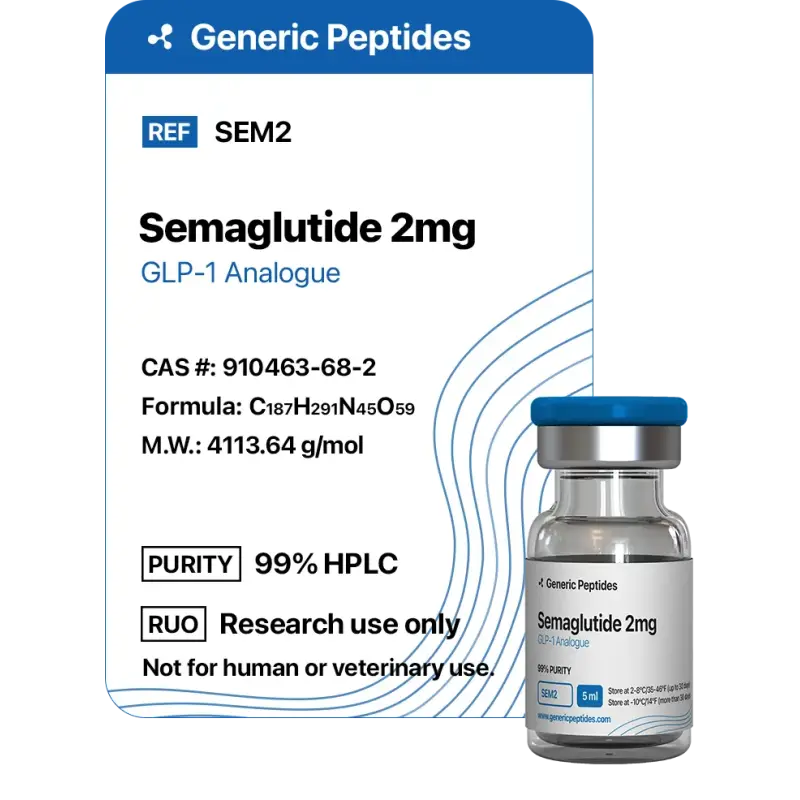
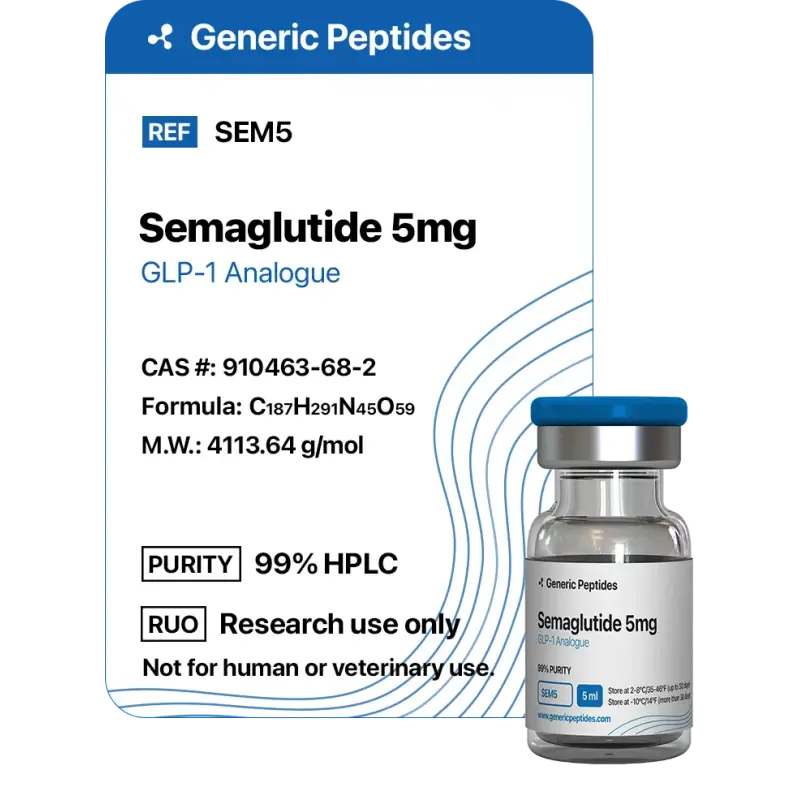
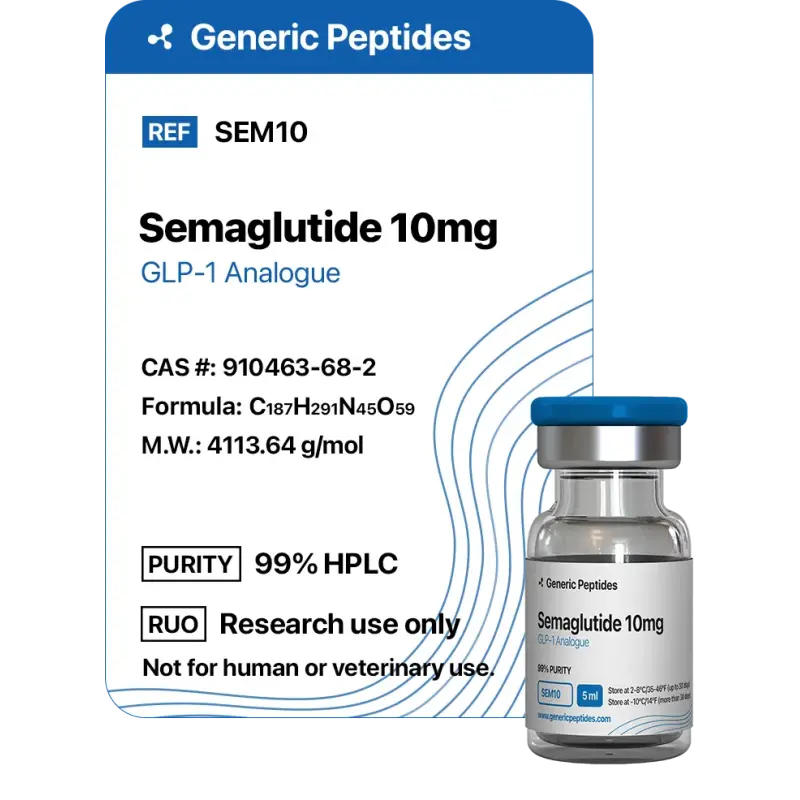
Semaglutide imitates the incretin hormone GLP-1 and is the ingredient behind the well-known weekly pens. Generic Peptides supplies it as three freeze-dried vials holding 2 mg, 5 mg and 10 mg, and none of the three carries an approved dose. Nothing in the box is a pen, so every amount has to be worked out from a syringe and a chosen concentration.

The mechanism is worth knowing before the numbers. Stimulating the GLP-1 receptor slows the movement of food out of the stomach and changes the hunger signals arriving in the brain, which is why the first thing users notice is not energy or body shape but appetite. The pharmacokinetics are unusually friendly to a weekly rhythm: the half-life is around one week, and the substance is still measurable in blood for weeks after the final dose.

Two regulatory details belong on the first screen. The class is absent from the WADA banned list yet appears on the monitoring programme, so a tested athlete is not looking at a sanction. And the approved pen carries a serious warning about thyroid C-cell tumours drawn from rodent data, with medullary thyroid carcinoma or MEN-2 in the family history listed as a reason not to use it. A research vial inherits the biology but none of the oversight attached to that warning.

Dosage Protocol

The ladder below is the approved titration from the prescription product, quoted so the numbers in the literature make sense. It is not a schedule for a lyophilised vial, and no separate female dose is confirmed.

Level Amount Length Note
Beginner step 0.25 mg weekly 4 weeks at the step An adaptation step; appetite settles, weight usually does not move yet
Intermediate 0.5-1 mg weekly 4-week steps Raised only as tolerated, which is where most complaints appear
Advanced 1.7-2.4 mg weekly Up to 68 weeks in STEP-1 The trial used 2.4 mg weekly for 68 weeks alongside diet and activity work
Female Not separately confirmed - STEP-1 enrolled adults of both sexes without diabetes
Route Subcutaneous Weekly Same time each week, with the injection site rotated

Vial arithmetic does the rest. One millilitre added to the 2 mg vial yields 2 mg per millilitre, which makes a 0.5 mg week a quarter of a millilitre, or 25 units on a U-100 scale. For the 5 mg vial, two millilitres produce 2.5 mg per millilitre and 0.5 mg measures 0.2 ml, or 20 units. Once mixed, the 10 mg vial is equivalent to two of the 5 mg.

Suggested Protocols

Weight-loss research rarely uses one compound alone, but combinations here are catalogue arrangements rather than tested stacks. The one hard result worth carrying is from STEP-1: 1961 adults without diabetes, 2.4 mg weekly, 68 weeks, with diet and activity support.

Incretin comparison
Semaglutide - single GLP-1 action + Tirzepatide - GIP and GLP-1
Read as alternatives rather than a stack: two receptor routes against one, and no head-to-head trial of the vial forms
Investigational arm
Semaglutide - approved template + Retatrutide - triple agonist
A newer triple-agonist messenger beside the best documented single one; the newer molecule is still investigational
Fat-loss shelf
Two fragments aimed at fat metabolism; neither has the trial record behind it that semaglutide does

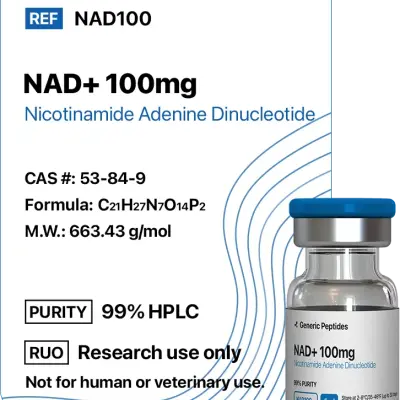
Metabolic shelf neighbours include Adipotide for the vascular-targeting approach, Tesamorelin where visceral fat is the outcome of interest, Somatropin for growth-hormone-driven recomp, and NAD+ for the cellular-energy angle.

What to Expect

  • Appetite first. Reduced hunger arrives in the opening weeks, well before any change on a scale.
  • Weight moves on the higher steps. Visible loss shows up from 0.5 mg upwards, and the STEP-1 result was measured across 68 weeks.
  • Gastrointestinal complaints dominate. Nausea, vomiting, diarrhoea, constipation and abdominal pain are dose-linked and peak on the weeks when the amount goes up.
  • Digestion slows. Belching and indigestion come from delayed gastric emptying, and rare gastroparesis is reported. Gallbladder disease risk also rises with rapid weight loss.
  • Resting pulse creeps up. A rise of about three beats per minute is described as a class effect worth tracking.
  • Stopping brings weight back. Roughly two thirds of the weight lost returns within the following year, so the compound manages appetite rather than resolving anything.
  • Thyroid history matters. The boxed warning covers medullary thyroid carcinoma, and a family or personal history is a contraindication.

Side Effects and Management

Almost everything reported here is gastrointestinal and dose-related, which makes the pace of escalation the main tool for managing it.

Nausea and vomitingSmaller portions, less fat, slower escalation. Dose-linked, with symptoms peaking on each increase.
Diarrhoea or constipationFluids plus fibre, and a dose review if it persists. Common across the class.
Reflux, belching, indigestionSlow escalation and medical advice if it holds, since gastroparesis is rare but real.
Gallbladder problemsSeek review for right upper abdominal pain. Risk rises with fast weight loss.
Resting heart rateTrack pulse and blood pressure. An expected class effect of roughly three beats per minute.
Thyroid C-cell signalA rodent finding behind the boxed warning; a personal or family history of medullary carcinoma or MEN-2 is where it stops.

Post-Cycle Therapy and What Follows Instead

No hormonal axis is suppressed here, so a SERM has nothing to restart and no PCT is described anywhere in the sources. What follows the last injection is a different problem: appetite returns and weight comes back.

OnsetAppetite falls within the first weeks of use
PCTNot applicable; GLP-1 agonism does not suppress testosterone production
After stoppingRoughly two thirds of the weight lost returns during the following year
SportNot on the WADA prohibited list, though the class sits on the monitoring programme
Research caveatThe dose ladder comes from an approved pen product; a lyophilised vial has no approved amount at all

Handling is the same as for any peptide: keep the powder cold and dark, refrigerate the mixed solution, and avoid shaking or freezing. Because a 10 mg vial at 2.5 mg per millilitre covers many weekly amounts, the practical question is not supply but how long a mixed solution can be trusted, and the sources give no shelf figure for this particular vial.
This material is published for educational and research reference purposes only. The compounds described are research-grade materials supplied for laboratory work and are not presented here as medicines or as a treatment for any condition. Dosing information reflects published clinical and reference data for the active substances, not a recommendation or a prescription. Nothing on this page should be read as medical advice. Keep all products out of reach of children and follow the regulations that apply in your country.
What is semaglutide and how does it work?
A synthetic analogue of the hormone GLP-1 that activates the GLP-1 receptor. It slows how quickly the stomach empties and shifts the hunger signals the brain receives, so appetite falls before anything else changes. The vial sold here is a lyophilised research format.
How is the weekly amount built up?
The approved product starts at 0.25 mg once a week for four weeks, moves to 0.5 mg and then 1 mg in four-week steps, and reaches 1.7 or 2.4 mg for the upper band. Trial experience of 2.4 mg weekly ran for 68 weeks. That ladder belongs to a fixed-dose pen, not to a research vial.
How long does it stay in the body?
Around one week for the half-life after a subcutaneous dose, and the substance remains measurable for several weeks after the last injection. That long tail supports the weekly rhythm and also means that stopping does not end the effect immediately.
How is a 2 mg, 5 mg or 10 mg vial mixed?
Add one millilitre to the 2 mg vial and the concentration is 2 mg per millilitre, so a 0.5 mg week equals a quarter of a millilitre, or 25 units. The 5 mg vial takes two millilitres, giving 2.5 mg per millilitre: 0.5 mg is then 0.2 ml, or 20 units. Mix the 10 mg vial the same way and every figure doubles.
What happens after stopping?
Appetite comes back and so does much of the weight. On average around two thirds of what was lost returns within the following year, and many users return close to their starting weight. The compound manages appetite while it is present rather than changing the underlying situation.
Does it need a PCT?
No. Nothing in this class suppresses natural testosterone production, so tamoxifen or clomiphene has no role, and the sources describe no recovery protocol at all. The realistic follow-up is what happens to appetite and weight once the substance clears.
What are the main side effects?
Gastrointestinal effects lead the list: nausea, vomiting, diarrhoea, constipation and abdominal pain, all worse in the weeks when the amount is raised. Slower digestion brings belching and indigestion, gallbladder risk rises with rapid weight loss, and resting heart rate climbs by about three beats per minute.
Is it banned in sport or is there a thyroid warning?
The class is absent from the WADA banned list yet appears on the monitoring programme. The approved pen also carries a serious warning about thyroid C-cell tumours based on rodent data, and medullary thyroid carcinoma or MEN-2 in the family history is listed as a reason not to touch it.

No reviews yet

Be the first to share your experience with Semaglutide 2-10 mg Vials - Generic Peptides

Log in to write a review
Semaglutide 2-10 mg Vials - Generic Peptides
2 mg · International

Complete the protocol

Stack it with

View all →
Added to cart